
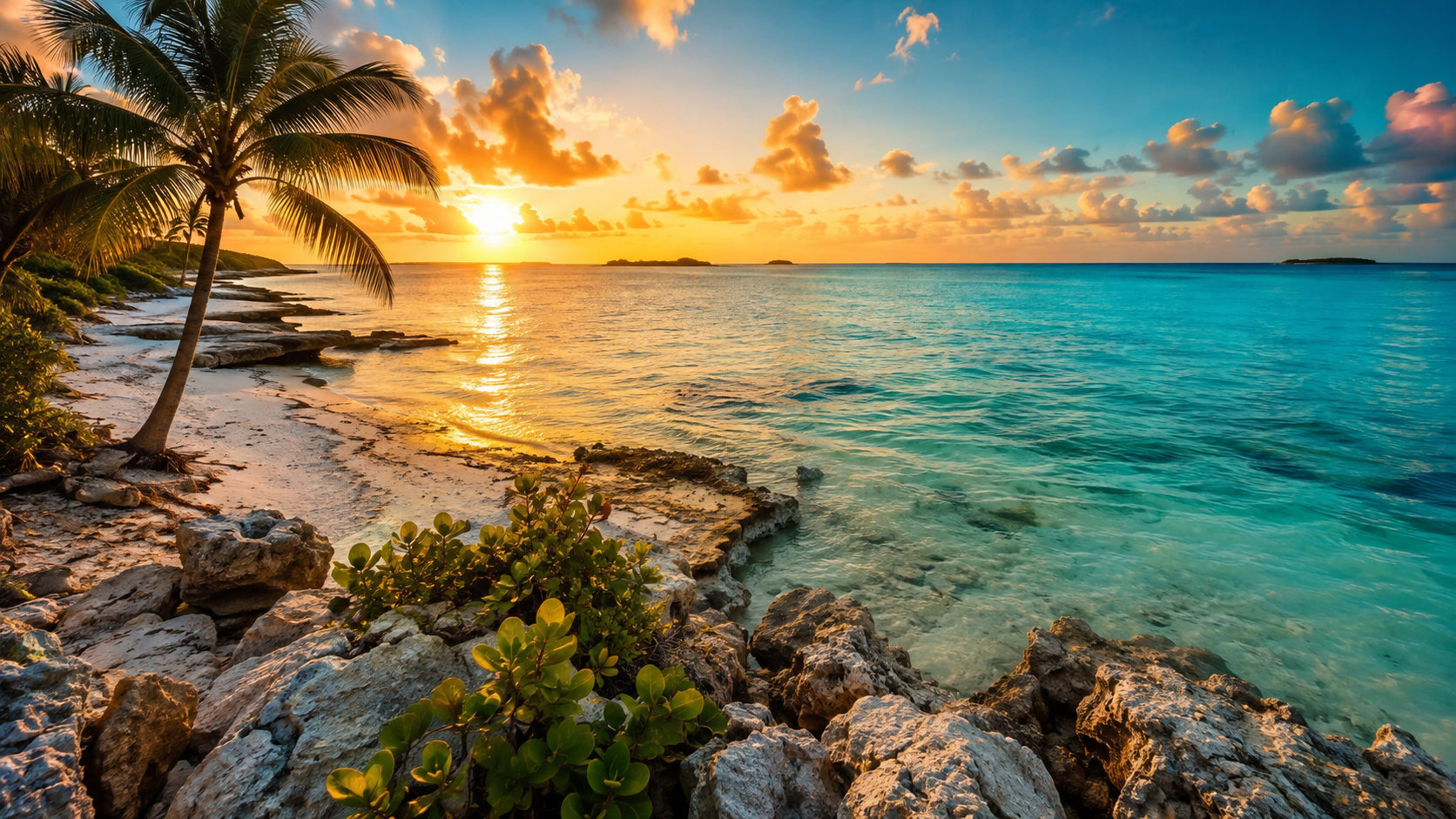
Why Florida Sunrises Are Worth Planning For
Atlantic vs. Gulf Coasts
Chasing sunrise in Florida starts with one simple choice: ocean or bay. The Atlantic side delivers the classic look—open water swallowing the last stars, a clean horizon, and the sun’s first spark turning waves to copper. From Miami Beach to Amelia Island, you get front-row seats and dependable angles.
On the Gulf coast, the show is different. The Gulf is famous for sunsets, but dawn is far from a wash. Bayside angles, inlets, and east-facing causeways turn morning light into soft pastels over calm water. Tampa’s wide bay, Sarasota’s marinas, and the mangrove edges around Naples Bay all glow at first light. Save those open-Gulf horizons for the evening; at sunrise, aim toward bays and backwaters for the best color.
Weather and Light
The best color often isn’t when the sun breaks the line—it’s 10 to 20 minutes before and after the published time, especially when thin or broken cloud cover catches and bounces the light. Cool-season mornings—from roughly November through April—tend to be crisp and clear, great for high-contrast silhouettes and long views. Summer trades clarity for drama: tropical moisture builds tall cloudscapes, and mist lingers over rivers, marshes, and backcountry flats. On windless mornings, the water acts like glass and doubles the sky.
Wildlife Moments
Dawn belongs to birds and fish. Pelicans draft over the surf, ospreys circle with a high-pitched whistle, and mullet pop in the shallows. Watch for dolphin working bait schools just inside inlets. In late fall and winter, migrating shorebirds stitch along the waterline. If you’re near mangroves or salt marsh, carry binoculars—roseate spoonbills, herons, and egrets feed hard in the first light.
Best Sunrise Spots in South Florida
Miami & Miami Beach
Miami makes sunrise feel like an event. The Atlantic horizon is wide open, and the city wakes behind you in a low hum. Three spots always deliver:
- South Pointe Park Pier (South Beach, near 1 Washington Ave): The channel funnels cruise ships and tugs past the jetty, so you can frame steel against neon sky. Shallow tide pools sometimes collect along the rock groins, perfect for reflections. Street parking is usually available pre-dawn; meters start later in the morning.
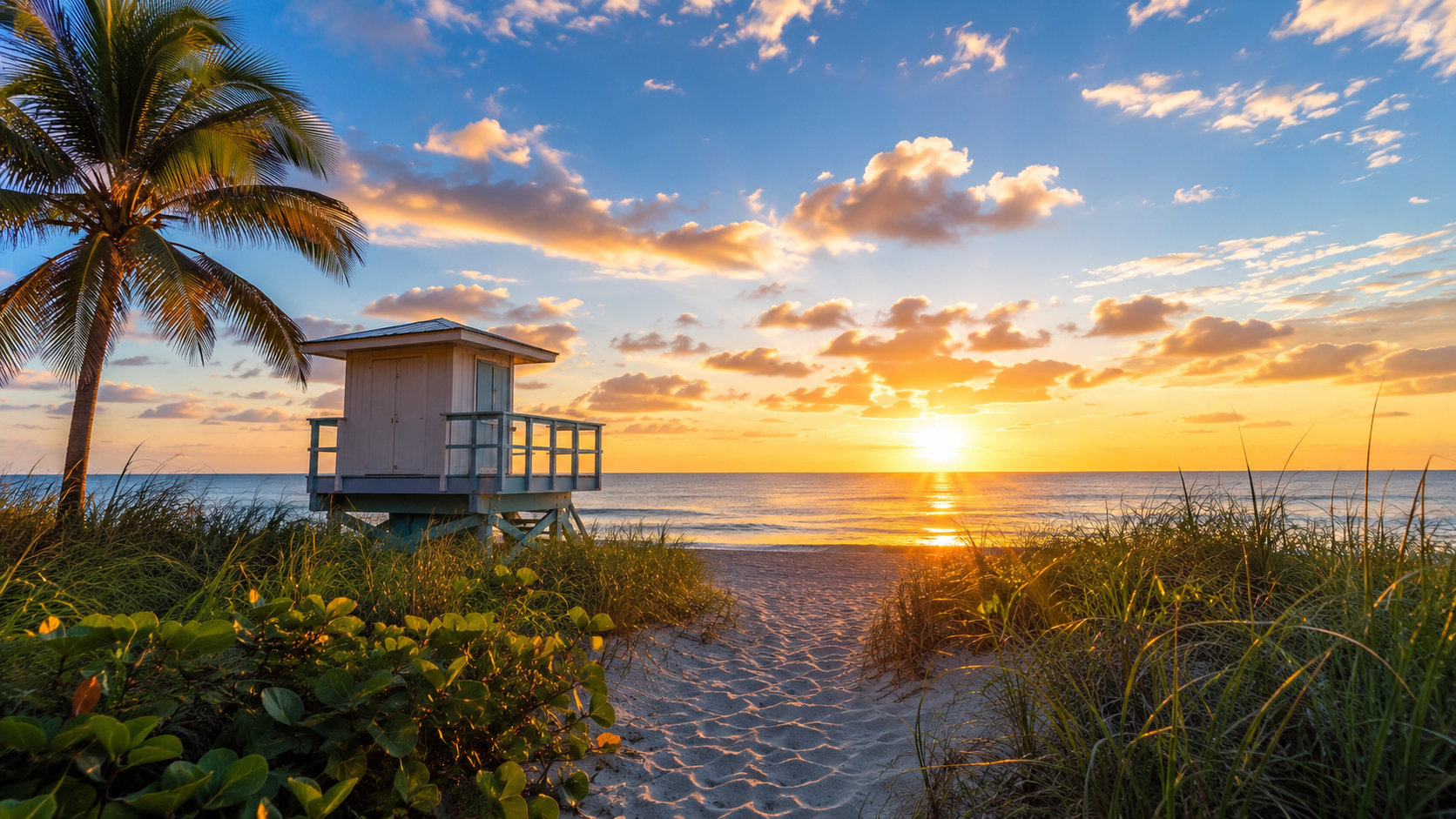
- 12th Street Beach: A straight shot from Ocean Drive puts you on soft sand with lifeguard stands that silhouette beautifully. If the surf is up, you’ll catch early surfers under candy-colored clouds.
- Haulover Inlet jetty: North of Bal Harbour, the inlet’s rock fingers and the curve of the beach give strong leading lines. Boats heading for the Gulf Stream cross the orange line at just the right moment.
Tip: On glassy mornings, walk the high-tide line where the backwash leaves mirror-thin water. That’s your money shot for “sunrise Florida” with sky doubling at your feet.
Florida Keys
The Keys run on island time and sideways light. Sunrise angles shift with bends in US-1 and the tangle of bays and ocean flats. Favorites for a first-light fix:
- Islamorada’s Anne’s Beach (MM 73): Shallow water fans out over hardpack sand and turtle grass. When the tide is low, long ridges and puddles become natural mirrors. Boardwalk pull-offs make it easy to arrive in the dark.
- Key Largo’s oceanside piers: Public access around Mile Markers 99–100 puts you on old-school planks with palms for foregrounds. If thin clouds sit offshore, the color lingers.
- Bahia Honda State Park, Atlantic shore (MM 37): The old bridge frames the sun as it clears the horizon. Early light turns the seagrass lines and shallows into watercolor. Check Florida State Parks for park hours and entry fees if you’re aiming for the gate at first light.
Heading out on the water? The reef line and backcountry flats can be glass at dawn but change fast with wind and tide. Before you launch, check the National Weather Service – Key West marine forecast for wind, chop, and storm chances around the Lower, Middle, and Upper Keys.
If you’re anchoring or drifting near patch reefs after sunrise, mind sanctuary rules and use mooring buoys where provided—details live with the Florida Keys National Marine Sanctuary, which also maps protected zones.
Everglades and Biscayne
Sunrise over grass and mangrove feels otherworldly. At the end of the road in Everglades National Park, Flamingo Marina looks east across shallow Florida Bay flats that light up in bands of pink and gold. Wading birds stack the scene. Mosquitoes can be fierce in summer—cover up and bring repellent.
On Biscayne Bay, the lookout points near Convoy Point in Homestead offer a calm, big-sky canvas. Palms, a long horizon, and soft chop make it an easy dawn walk with a thermos and a camera. A light northeast breeze adds texture to the water without killing reflections.
Central East Coast: Space Coast to Palm Beaches
Space Coast Launch Views
Rocket launches at sunrise turn the sky into a sci‑fi painting. Cocoa Beach Pier gives you pilings and surf in the foreground, with Cape Canaveral off to the north. On clear mornings at Playalinda Beach (Canaveral National Seashore), a launch track can slice through the day’s first color. Even without rockets, the low dunes, coquina flecks in the sand, and clean Atlantic line make it a reliable “sunrise Florida” shot. Get there early—gates may open at or before dawn depending on season and schedule.
Treasure Coast
Stuart and Jensen Beach serve texture. Stuart’s House of Refuge sits on a rocky outcrop where broken coquina forms tide pools and channels; the rocks add scale and drama when waves slap in, and in winter the air is often crystal. A few miles south, Jensen Beach has gentle slopes and sandbars that catch light, perfect for minimalist compositions.
Palm Beaches
Juno Beach Pier might be the most photogenic sunrise pier on the coast. Walk under for repeating arches, or step back and use the pier as a leading line to the rising sun. North of there, Coral Cove Park shows off natural bluffs and sculpted coquina. At mid to high tide, water fingers through the rock and throws spray into the warm glow. Parking is close, and weekday dawns are quiet.
North Florida Atlantic: Jacksonville to St. Augustine
Beaches & Piers
North Florida stretches wide and open, with dunes and sea oats that sway under clear winter skies. Amelia Island’s Main Beach Park is a sunrise classic: easy access, long shoreline, and a deep horizon. South of there, Jacksonville Beach Pier gives you lines, angles, and a vantage far out over the waves. Pelicans often loaf on the rails, and surfers paddle out at first light when the sandbars are working.
Historic Backdrops
For history with your morning color, head to St. Augustine. St. Augustine Beach is a gentle sweep with space to walk and sky to spare. At Vilano Beach, pockets of coquina rock add foreground interest you won’t find elsewhere in the region. Farther south, Crescent Beach spreads out in quiet layers and works well on foggy mornings when the world feels muffled.
Photographers who like a city stroll should start before sunrise near the Castillo de San Marcos. Blue hour lights the coquina walls and Matanzas River while the sky shifts. As the sun edges up, you’ll catch the Bridge of Lions and harbor boats in a soft wash of color before the crowds arrive.
Finding Sunrise on the Gulf Coast and Panhandle
Bayside Angles
On the Gulf side, the trick is finding the right turn to face east. Seek bays, causeways, and river mouths where the water opens toward morning. Tampa’s Bayshore Boulevard frames sunrise over a long seawall with runners and cyclists drifting through the scene. In Sarasota, the Bayfront Park marina lines up masts against warm clouds, and art installations offer playful silhouettes. Naples Bay is all about stillness—quiet docks, mangrove hems, and pastel gradients on glassy water.
Barrier-Island East Ends
Barrier islands often arc so their tips face the right way. On Sanibel, the Lighthouse Beach looks east across San Carlos Bay; the historic iron tower and shell-streaked flats glow when the tide runs low. At the south end of Pass-a-Grille, swing to the bay side for sunrise over Boca Ciega Bay, then flip to the Gulf side in the evening for sunset—two shows, one parking spot. In the Panhandle, Fort Pickens areas along Pensacola Bay face the rising light; dunes and pines make strong silhouettes when the sky turns sherbet.
Panhandle Tips
Expect softer, pastel dawns compared to the Atlantic. Humidity often paints the horizon in layers of peach, lavender, and blue. Use piers, dune walkovers, and pine stands to anchor your frames. Keep an eye on tides—bay shallows expose ripples and sand textures that shine in low-angle light.
Timing Your Sunrise: Seasons, Tides, and Tools
Best Months
November to April is prime for crisp sunrises—cooler, drier air clears haze and cuts the bugs. Storm risk drops, and the Atlantic often runs a tidy swell under a clean sky. Summer flips the script with pre-dawn humidity, bigger cloud stacks, and frequent early showers, but the payoff can be spectacular color and dramatic shafts of light.
What Time Is Sunrise?
Times swing more than an hour across the year. In South Florida, sunrise lands around 7:10 a.m. in early January and around 6:30 a.m. in late June. Farther north, it shifts a few minutes earlier in summer. Arrive 30–45 minutes before the listed time to catch nautical and civil twilight. That’s when the deep blues, purples, and first pinks happen, and when you can set up without rushing.
Apps to Use
If you’re planning a “sunrise Florida” mission, stack your deck:
- Use NOAA tide tables to line up low tide with first light at coquina reefs, flats, and rocky beaches. Exposed textures and tide pools make the frame.
- Check cloud forecasts and wind with Windy to pick mornings with thin mid-level clouds and light breezes.
- Map sun angle and elevation with Sun Surveyor or PhotoPills, then mark where the disk will rise relative to a pier, lighthouse, or jetty.
Photography and Drone Tips for Florida Sunrises
Camera Settings
Start around ISO 100–400, f/8–f/11, and shutter between 1/4 and 1/60 second on a tripod. As the sky brightens, tighten your shutter and keep ISO low to preserve color gradients. Bracket exposures—two stops under, base, two stops over—and blend later if the sun-to-shadow range is wild. If water is choppy, a 1/2–2 second exposure can smooth texture without losing shape; for moving clouds, push to 10–30 seconds with an ND filter.
Compositions
Florida’s coast is full of anchors. Build layers:
- Piers and jetties as leading lines to the sun.
- Dunes and sea oats for framing and scale.
- Coquina rock at Coral Cove, Vilano, and House of Refuge as textured foregrounds.
- Palm silhouettes—Juno, Miami Beach, Islamorada—against a high-key sky.
- Tidal pools and wet-sand mirrors for reflection symmetry.
Turn around after the sun clears. The best color often lights the western sky for a few minutes, bathing dunes and city facades in soft gold.
Drone Rules
Sunrise is perfect for aerials—soft light, calm air. Fly only where permitted and away from wildlife. Many state parks and some city beaches limit or require permission for drone use; check local guidance and Florida State Parks’ site for park rules and policies before you launch. Keep clear of airports and heliports, and avoid buzzing anglers, sea turtles, birds, or other beachgoers.
Wildlife, Safety, and Beach Etiquette at Dawn
Sea Turtles & Nesting Birds
From spring through early fall, coastal beaches host nesting sea turtles. Follow FWC guidance on sea turtle nesting season: never disturb marked nests, keep a respectful distance from turtles or hatchlings, and avoid bright white lights on the beach. Use a red-light headlamp if you need illumination, and don’t reposition or lean on protective stakes.
Shorebirds—including least terns and black skimmers—nest in colonies right on the sand. If birds flush or call loudly, you’re too close. Give them room and steer clear of closed sections.
Personal Safety
Pre-dawn is quiet and beautiful, but stay smart. Park in visible areas. Bring a buddy or let someone know where you’re going. On rocky coquina, watch your step—wet rock can be slick, and at high tide waves can sweep ankles. Scan for rip currents before wading in; if you can’t read the surf, stay on dry sand. In summer marshes and backcountry, pack bug spray and a light breathable layer.
Leave No Trace
Carry in, carry out. Dawn is prime time for anglers and walkers—keep music low, give space on piers and jetties, and don’t set up tripods in narrow access points. Respect private property lines, dunes, and revegetation areas. If you see balloon strings, monofilament, or bottle caps, scoop them up; it takes seconds and keeps the morning clean.
Logistics: Parking, Fees, and Accessibility
Parks & Piers
Some coastal parks and piers charge small entry or parking fees. Hours vary, and gates may open at or just before sunrise depending on location and season. If you’re planning a first-in-line entry for beaches like Bahia Honda, Honeymoon Island, or Bill Baggs, check Florida State Parks for current hours and fees the night before and have a backup spot in case capacity fills on weekends.
City beaches often allow street or lot parking at dawn with meters activating later; always read the signs. Piers may have separate hours from adjacent beaches, and some require a small fee even to walk, so carry cash or a card.
Transit & Rideshare
In dense areas—South Beach, Downtown Miami, Fort Lauderdale—rideshare can save time and parking stress. If you’re hitting Juno Pier or Cocoa Beach Pier for sunrise, arriving 45 minutes early typically guarantees a spot and gives you scouting time before the sky turns.
Accessibility Notes
Many major beaches provide accessible features. Look for beach mats at popular entries, ramps to piers, and accessible restrooms. Juno Beach, Jacksonville Beach, and popular stretches of Miami Beach usually maintain firm paths from parking to sand. Flat, wide beaches like St. Augustine and Amelia Island make dawn rolling or walking straightforward once you reach the strand.
Quick-Strike Sunrise Itineraries
Miami 24-Hour Dash
Arrive the night before, sleep in South Beach, and set an alarm. Walk to 12th Street Beach 45 minutes before sunrise for pastel twilight and lifeguard stand silhouettes. After the show, grab a cafecito and head to South Pointe for a second round of golden hour along the jetty. If the wind is light, finish with a calm-bay look from the Venetian Causeway on your way out.
Keys Weekend
Base in Islamorada. Day one: blue hour at Anne’s Beach, then paddle a flatwater board as the sun lifts. Midday snorkel or fish the bridges, then sunset on the bayside. Day two: drive early to Bahia Honda’s Atlantic shore; frame the old bridge as the sun clears low clouds. Check the Sanctuary site if you’re boating later to respect zones and find mooring buoys on patch reefs.
Atlantic North Run
Stay near St. Augustine. Start at Vilano’s coquina pockets for a rocky-Atlantic look at sunrise, then work back to the Castillo for warm side light on the walls. Next morning, swing north to Amelia Island for a wide-horizon beachwalk before breakfast in Fernandina Beach.
Field Checklist for “Sunrise Florida”
- Arrive 30–45 minutes early; scout high-tide lines, rocks, and reflection pools.
- Tripod, remote, and microfiber cloth for sea spray.
- Headlamp with red mode to protect night vision and wildlife.
- Light jacket in winter; bug spray in summer; water year-round.
- Respect turtles, birds, anglers, and early swimmers; keep distance and keep it quiet.
- If you’re in the Keys or offshore, check the NWS Key West marine forecast before first light runs.
Florida doesn’t do the same sunrise twice. Some mornings it’s a soft watercolor washed over flats. Other days, clouds stack and burn like a kiln. Plan your spot, mind the tides, and give yourself time before and after the official rise. That’s where the best color—and the best stories—live.
Frequently asked questions
Where can I watch sunrise in Miami Beach with easy access and parking?
South Pointe Park Pier, 12th Street Beach, and the Haulover Inlet jetty are dependable Miami Beach sunrise spots. Street parking near South Pointe is usually available pre-dawn, with meters starting later in the morning. You’ll get open Atlantic horizons, lifeguard stand silhouettes, and boats crossing the light line.
Is Florida’s Gulf Coast good for sunrise, and where should I go?
Yes—aim for bays, inlets, and east-facing causeways rather than the open Gulf. Tampa’s Bayshore Boulevard, Sarasota’s Bayfront Park marina, and Naples Bay all set up pastel morning light over calm water with great silhouettes. Save open-Gulf horizons for sunset.
What time around sunrise has the best colors in Florida?
The richest color often happens 10 to 20 minutes before and after the published sunrise time. Thin or broken clouds amplify the glow, with November–April offering crisp, clear mornings and summer bringing dramatic cloudscapes and mist. On windless days, glassy water mirrors the sky.
Where are the best sunrise spots in the Florida Keys?
Anne’s Beach in Islamorada (MM 73), Key Largo’s oceanside piers around MM 99–100, and the Atlantic shore at Bahia Honda State Park (MM 37) are standout choices. The old Bahia Honda bridge frames the rising sun, and shallow flats at Anne’s Beach create natural mirrors at low tide. Check Florida State Parks for Bahia Honda hours and entry fees if you’re targeting first light.
Can I see a rocket launch at sunrise, and where should I watch from?
Cocoa Beach Pier and Playalinda Beach are prime spots for sunrise rocket views near Cape Canaveral. On clear mornings at Playalinda, a launch track can cut through the first color, and gates may open at or before dawn depending on season and schedule. Even without a launch, both offer classic Atlantic sunrise scenes.
Where near Miami can I catch sunrise with good wildlife viewing?
Flamingo Marina in Everglades National Park faces east over shallow Florida Bay flats where wading birds stack up at first light. On Biscayne Bay, the lookout points near Convoy Point offer calm water, palms, and a long horizon for an easy dawn walk. In summer at Flamingo, mosquitoes can be fierce—cover up and bring repellent.