
What It Really Means to Swim with Manatees in Florida
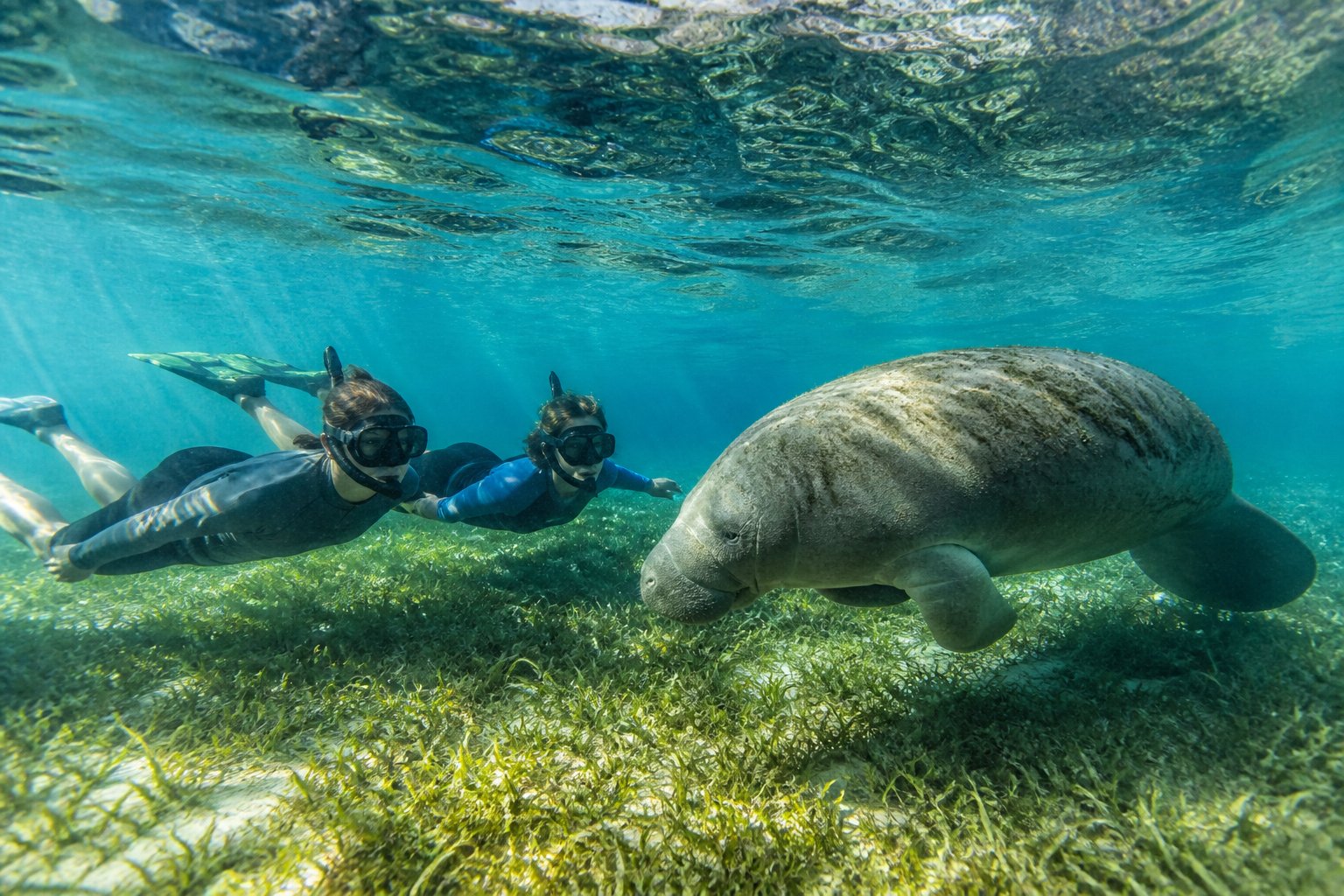
Plenty of wildlife encounters promise something extraordinary and then deliver a crowded, scripted disappointment. Swimming with manatees in Florida is genuinely different — but only if you understand what it actually involves. This is not a swim-with-dolphins show. Nobody hands you a manatee to hug. The experience is built around passive observation: you slip into warm spring water, hold yourself horizontal with a foam noodle, and wait. If a manatee is curious, it will drift over on its own terms. If it isn't, you watch from a respectful distance and count yourself lucky to share the water.
That distinction matters legally as much as ethically. Citrus County — home to Crystal River and Homosassa — is the only place in the United States where regulated in-water encounters with wild manatees are permitted at all. The U.S. Fish & Wildlife Service issues special-use permits to a limited number of operators, and every permitted tour is bound by strict federal guidelines. Everywhere else in Florida, entering the water to interact with manatees is off-limits. Citrus County's network of spring-fed bays and rivers creates a winter refuge that draws manatees in from the Gulf, and the springs themselves maintain a steady 72°F year-round — warm enough for manatees to survive cold snaps, and clear enough to actually see them. The goal, always, is respectful wildlife viewing.
Crystal River: Florida's Epicenter for Manatee Encounters
Kings Bay and Its Springs
Crystal River sits at the northern end of Citrus County, and Kings Bay is its beating heart. More than 70 springs bubble up across the bay floor, keeping water temperatures stable even when a hard cold front rolls down from Georgia and drops air temps into the 40s. That reliable warmth is exactly why manatees congregate here in numbers that can reach several hundred on the coldest winter mornings. Popular gathering spots include Hunter Spring, Jurassic Spring and a quirky little pool locals call Idiot's Delight — names that tell you something about the relaxed, Old Florida character of the place.
Three Sisters Springs Access
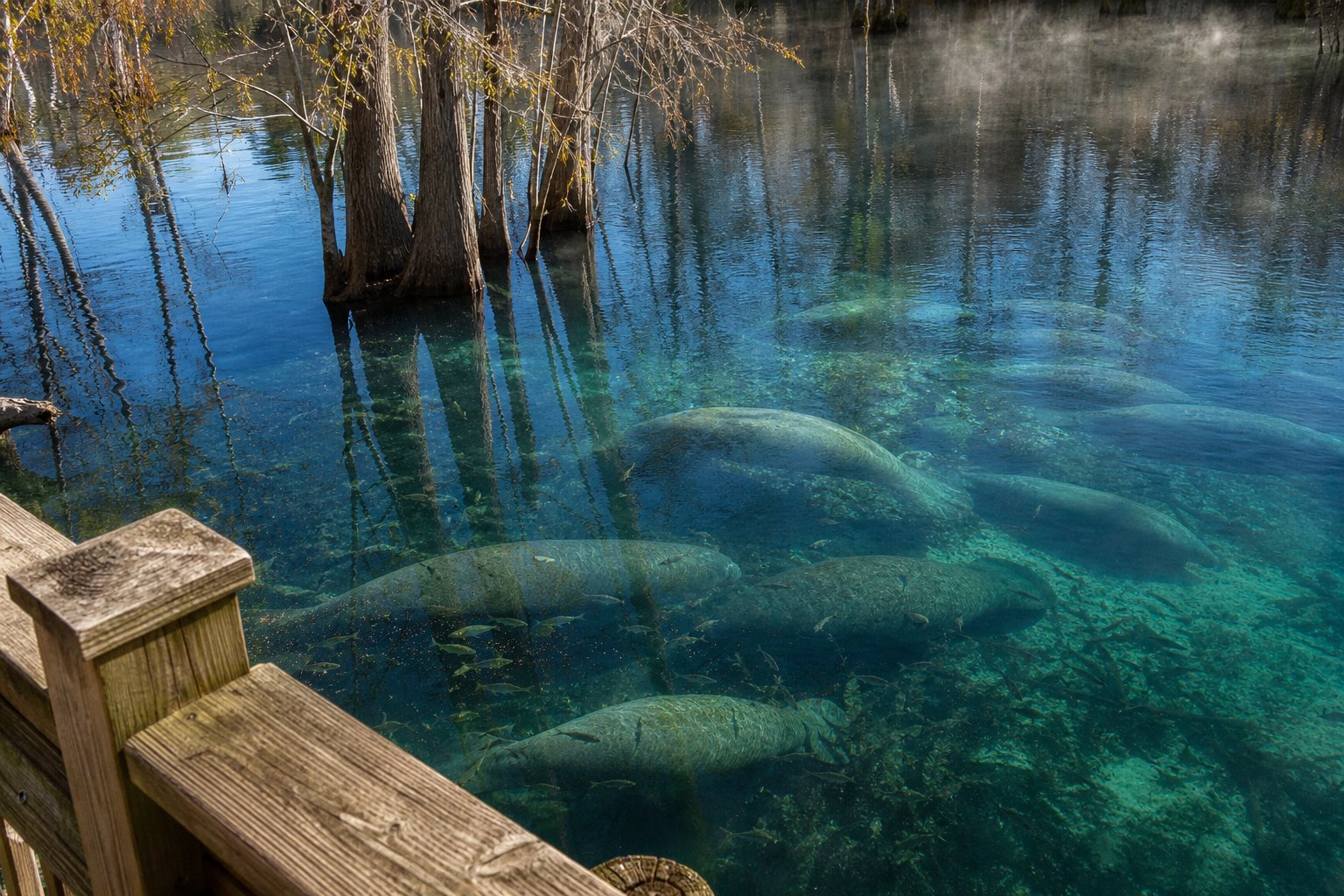
Three Sisters Springs is the most photographed site in Kings Bay, and for good reason: the three interconnected spring pools produce glassy, crystalline water with visibility that can stretch 20 feet on a calm morning. During peak manatee season, the U.S. Fish & Wildlife Service frequently closes the springs to in-water access when manatee concentrations are high enough to warrant sanctuary protection. On those days, a boardwalk perched above the springs offers some of the best elevated viewing you'll find anywhere — you can look straight down at resting manatees without disturbing them at all. Operators will redirect you to Hunter Spring or other sites when Three Sisters is closed, so don't book a tour expecting a guaranteed swim there. The manatees don't read the itinerary.
Most Crystal River manatee tours depart from marinas along US-19 between 6:30 and 8 a.m. Plan for a total outing of about three hours, including the boat ride across Kings Bay and at least one guided in-water session.
Homosassa: Quieter Waters and Classic Old Florida Vibes
The Homosassa River
About 12 miles south of Crystal River, the town of Homosassa moves at a slower pace and draws fewer tour boats. The Homosassa River stays warm through winter thanks to its own spring system, and manatees use the river's deeper pockets and spring runs as cold-snap refuges. Guided snorkel tours here operate in smaller groups, and because the boat traffic is lighter, encounters can feel more intimate — though sightings are never guaranteed anywhere.
Operators launching from Homosassa typically combine river exploration with manatee searching, which means you might spend part of your time floating quietly near a spring boil while mullet jump around you and ospreys work the shallows overhead. It's a fuller picture of the ecosystem, not just a single-species encounter.
Homosassa Springs State Park
Ellie Schiller Homosassa Springs Wildlife State Park sits just off US-19 and is worth pairing with a morning tour. The park's underwater observatory — a floating structure anchored in the spring — lets you watch manatees, fish and turtles through glass panels at eye level, which produces a perspective that snorkeling rarely matches. There is no in-water manatee access inside the park itself, but the boardwalk and observatory viewing are excellent, and the park also houses Florida panthers, black bears and other native wildlife in educational habitats. An adult entry fee runs around $13. Spend your morning on the river, then dry off and head to the park for the afternoon.
Best Time to Swim with Manatees: Months, Weather and Daily Timing
Seasonality
Peak season runs November through March, with December, January and February delivering the most reliable concentrations. Manatees are warm-water animals — they begin moving into the springs when Gulf temperatures dip below 68°F, and a sharp cold front can push dozens more into Kings Bay overnight. Counterintuitively, cold weather is your friend here. Warm winter spells send manatees dispersing back into the Gulf, thinning out the groups near the springs considerably.
October and April sit in shoulder season. Sightings are possible — a few manatees linger around the springs year-round — but you're unlikely to see the massed gatherings that define the winter experience. If peak-season crowds concern you, late November or early March offers a reasonable compromise: decent manatee numbers and slightly fewer tour boats competing for the same spring access.
Daily Rhythm
Early morning tours consistently outperform afternoon ones. Water clarity is at its best before boat traffic stirs up sediment, the manatees are calm, and the light — slanting low across the bay — makes for better viewing and photography. Most experienced guides prefer to be in the water by 7:30 a.m. By midday, Kings Bay can get busy, and water clarity around popular springs drops noticeably. Book the first departure slot your operator offers.
Water Temperature, Visibility and What to Wear
Spring Temps vs. Bay Temps
The springs hold at a steady 72°F regardless of season or air temperature. That sounds comfortable until you've been floating motionless for 45 minutes on a 45°F January morning — passive observation means minimal movement, which means minimal body heat. The surrounding bay and river can drop into the upper 50s during cold snaps. Wetsuit. You need a wetsuit.
Gear Checklist
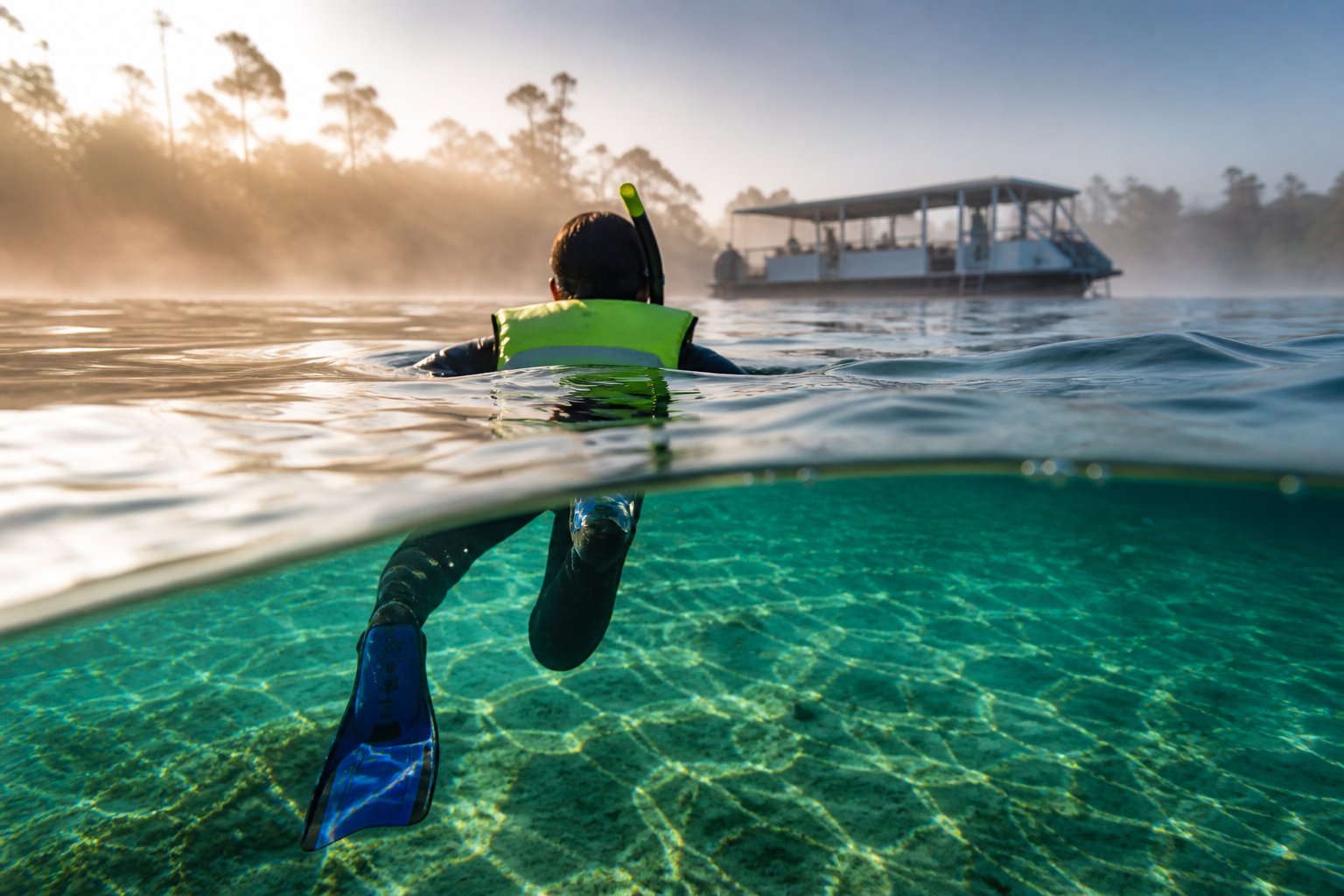
A 3mm wetsuit is the practical minimum; 5mm gives better thermal protection and, crucially, keeps you naturally buoyant for passive floating without effort. Most operators provide mask, snorkel and a foam noodle — the noodle is your tool for staying horizontal without kicking, which is the whole point. Bring your own if you want a guaranteed fit. Many operators prohibit long freediving-style fins or ban fins entirely, since kicking near manatees disturbs them and risks accidental contact. Shorter booties or bare feet are usually fine.
Visibility near the spring heads can reach 15–20 feet on calm, low-traffic mornings. Further from the springs, and after heavy rain or boat traffic, it drops. The water is always worth entering, even on murkier days — a 1,000-pound manatee materializing out of green water two feet away is its own kind of remarkable.
Legal and Ethical Rules: How to Practice Passive Observation
USFWS Guidelines
Federal law protects manatees under both the Marine Mammal Protection Act and the Endangered Species Act. In the Crystal River National Wildlife Refuge, the U.S. Fish & Wildlife Service has layered on additional refuge-specific rules. Sanctuary zones — marked with signs and buoys — are completely off-limits to swimmers and boats during manatee season. The permitted in-water encounter areas exist specifically because the passive-observation model has been shown to cause minimal disturbance when followed correctly.
Do's and Don'ts
The rules are clear, and the penalties for breaking them are real — federal harassment of a manatee carries fines up to $50,000 and possible jail time. More to the point, the manatees deserve the space.
- Stay horizontal and still. Let manatees approach you, not the other way around.
- Never chase, follow, block or encircle a manatee — any action that changes its behavior counts as harassment.
- Do not touch a manatee, even if it nudges you. One-sided contact initiated by the animal is the only acceptable scenario.
- Never separate a mother and calf or position yourself between them.
- Do not dive toward the bottom near resting manatees or stand on the spring floor.
- Keep kicks minimal and directed away from animals.
- No underwater flash photography or bright artificial lights.
- Respect all in-water guide instructions immediately and without argument.
An in-water guide's job is partly to watch the manatees and partly to watch the humans. The best ones do both quietly and efficiently.
How to Choose a Responsible Manatee Tour Operator
Compliance and Training
Start by confirming that any operator you consider holds a current USFWS special-use permit for Crystal River National Wildlife Refuge in-water manatee encounters. Permitted operators are required to deliver the official Manatee Manners briefing before every tour — if a company skips it or rushes it, that's a red flag about how seriously they take the rest of the rules. Look for operators who show a pre-tour ethics video, keep group sizes to eight or fewer swimmers per guide and employ in-water naturalists rather than just boat captains who stay aboard.
On-Water Practices
The details tell the story. Good operators idle through manatee zones, post a lookout on the bow and give wide berth to roped sanctuary areas. They prohibit or limit fins, supply noodles and will relocate the group — sometimes multiple times — to reduce crowding around individual animals. Read recent reviews and look specifically for comments about rule enforcement and wildlife-first decision-making. An operator willing to cut a tour short because manatee behavior signals stress is an operator worth booking again.
Prices typically run $30–$60 per person for a guided snorkel tour, with wetsuit rental adding another $10–$20. Significantly cheaper tours sometimes cut corners on group size or briefing quality.
What to Expect on a Manatee Tour: Step by Step
Sample Timeline
You'll check in at the marina 20–30 minutes before departure — usually between 6:00 and 7:30 a.m. — suit up, listen to the briefing, sign your waiver and board. The boat ride to the springs takes 10–20 minutes depending on the marina's location in Crystal River or Homosassa. Total tour time runs 2.5 to 4 hours.
Once the guide finds manatees, the group enters the water one or two at a time to minimize splash. You float, noodle under your chest, arms relaxed. If a manatee approaches — and many will, especially younger ones that are simply curious — you stay still and let it do what it wants. Most will circle, sniff your mask or nudge your noodle before moving on. A few might stick around for five minutes. Some mornings the water is full of them; other mornings you get one glimpse of a gray shape heading away into the murk. Both are real wildlife experiences.
On-Water Etiquette
Breathe slowly and steadily. Avoid sudden movements. If you need to adjust your mask or clear your snorkel, do it gently and away from any animals. The guide may signal the group to relocate — move quietly when asked. After the water session, most tours wrap up with gear return, sometimes hot drinks at the marina, and the guide's recommendations for land-based viewing spots to round out your day.
Alternatives and Add-Ons: Great Viewing Without Getting Wet
Boardwalks and Overlooks
When Three Sisters Springs is open to foot traffic, the elevated boardwalk delivers a different but equally compelling view — you're looking down into gin-clear water at manatees resting on the spring floor, completely undisturbed. Ellie Schiller Homosassa Springs Wildlife State Park's underwater observatory provides that same eye-level perspective without requiring a wetsuit or a boat. Both are excellent options on warm winter days when manatees disperse from the springs and in-water tours come up empty.
Paddle and Boat Options
Kayak and paddleboard tours operate on Kings Bay and the Homosassa River under strict standoff distances — you do not enter the water, and the craft must maintain space from any manatees. It's a quieter experience and often a lovely one, particularly on calm mornings when the bay is flat and the birds are working the shallows. River cruise and wildlife boat tours cover more ground, showing you the broader ecosystem: dolphins in the river mouth, herons in the mangroves, ospreys overhead, with manatees as a highlight rather than the sole focus.
Before any visit, stop by the Crystal River National Wildlife Refuge Visitor Center on US-19. Rangers post current conditions, sanctuary closure maps and recent sighting reports — information that makes every kind of manatee outing, wet or dry, considerably more productive.
Frequently asked questions
Where can you legally swim with manatees in Florida?
Only Citrus County — specifically Crystal River and Homosassa — allows regulated in-water encounters with wild manatees. The U.S. Fish & Wildlife Service issues special-use permits to a limited number of operators there, and everywhere else in Florida entering the water to interact with manatees is off-limits.
When is the best time of year and day to swim with manatees in Crystal River?
Peak season is November through March, with December, January and February offering the most reliable concentrations. Cold fronts push more manatees into the springs, and early morning tours outperform afternoons thanks to clearer water and calmer animals; most experienced guides aim to be in the water by 7:30 a.m.
Is Three Sisters Springs usually open for swimming with manatees?
No, Three Sisters Springs is frequently closed to in-water access during peak season when high manatee concentrations require sanctuary protection. On closure days you can view manatees from the boardwalk above, and operators will redirect swimmers to other sites like Hunter Spring, so a swim at Three Sisters is never guaranteed.
What should I wear for a manatee snorkel and how cold is the water?
The springs stay 72°F year-round, while the surrounding bay and river can drop into the upper 50s during cold snaps. A wetsuit is essential — 3mm is the minimum and 5mm offers better warmth and easy buoyancy for passive floating; most operators provide a mask, snorkel and foam noodle, and many limit or ban long fins to avoid disturbing manatees.
How long do Crystal River manatee tours take and what time do they start?
Most tours depart between 6:30 and 8 a.m. Plan for a total outing of about three hours, including the boat ride across Kings Bay and at least one guided in-water session.
Can you swim with manatees at Homosassa Springs State Park?
No, there is no in-water manatee access inside Ellie Schiller Homosassa Springs Wildlife State Park. You can watch manatees, fish and turtles from the park’s underwater observatory and boardwalk, and adult entry runs around $13, making it a good add-on after a morning river tour.