
Dry Tortugas from Key West: Your Two Ways to Get There
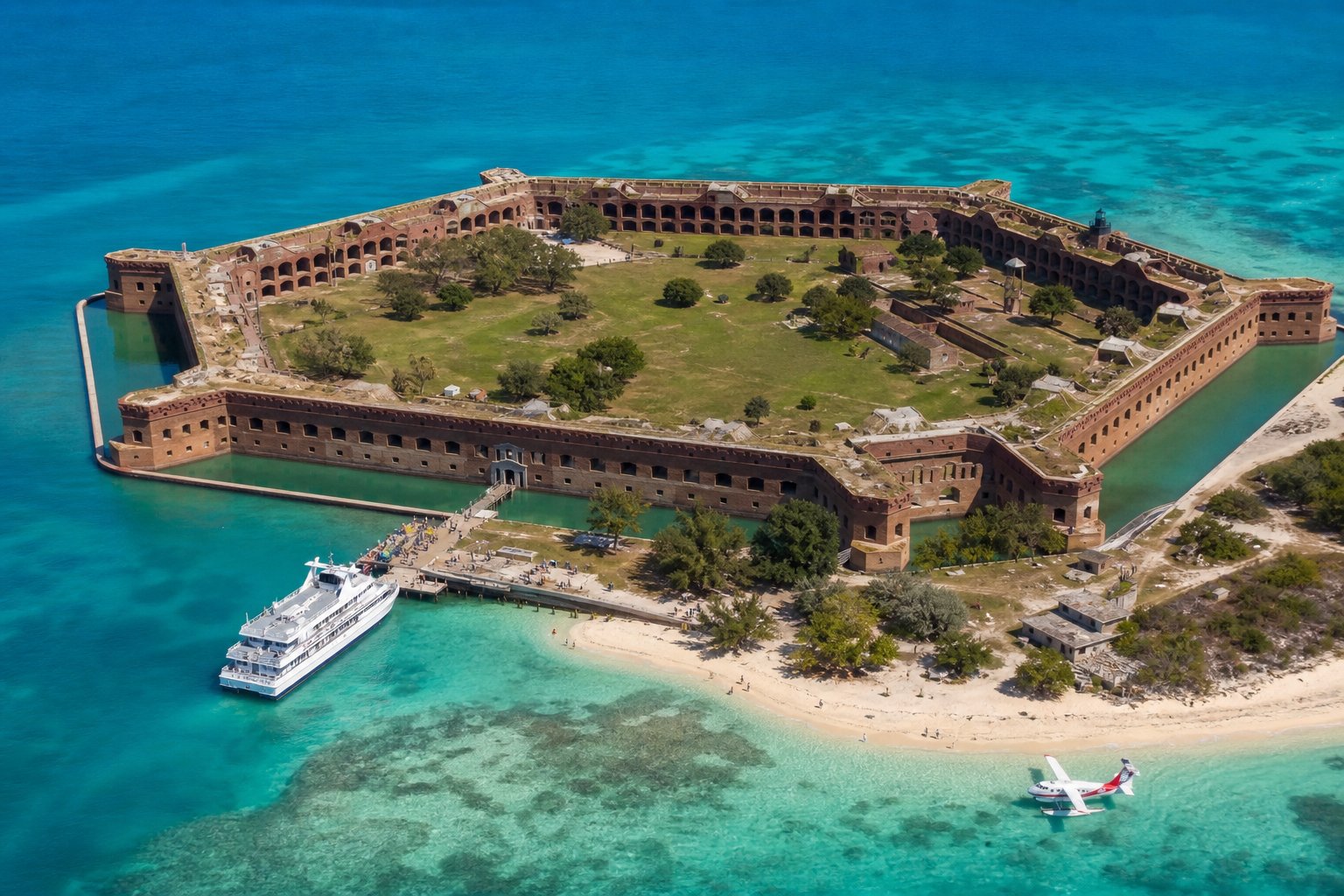
Seventy miles west of Key West, Fort Jefferson rises out of the Gulf like a Victorian-era sandcastle — six-sided, moat-ringed, and impossibly remote. Getting there requires either a fast catamaran or a small seaplane, and the choice shapes your entire day.
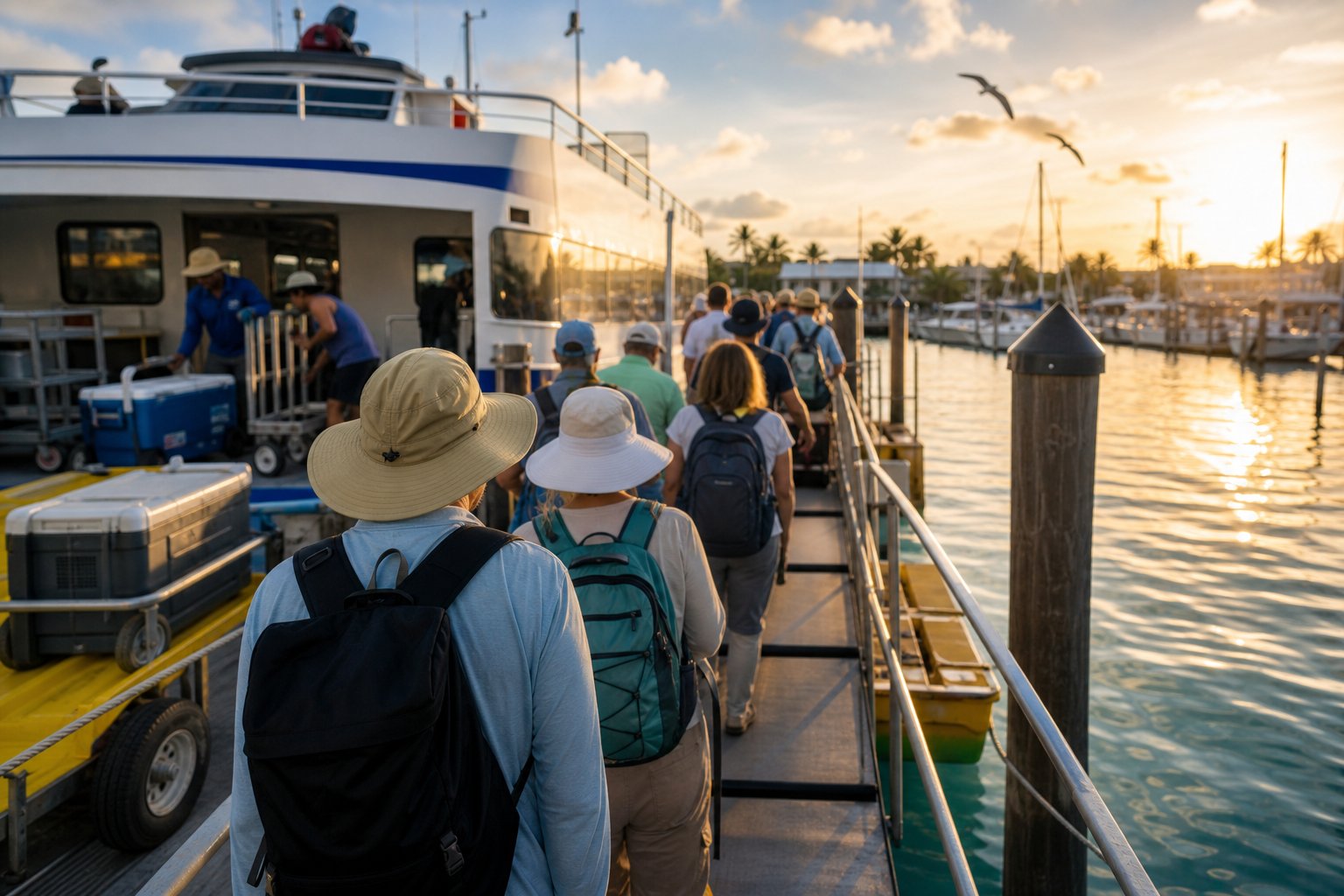
The Yankee Freedom III is the official ferry concession for Dry Tortugas National Park. It's a large, air-conditioned catamaran departing the Key West Historic Seaport each morning and running about 2 to 2.5 hours each way to Garden Key. The Key West Seaplane Adventures operation runs twin-engine Cessnas from the Key West International Airport, covering the same distance in roughly 35 to 45 minutes.
Both land you at Garden Key, which is the only developed island open to day visitors. The ferry docks directly at the pier; the seaplane taxis to a dedicated beach on the island's northwest side. From either arrival point, Fort Jefferson is a short walk.
One logistical reality worth knowing upfront: both options sell out hard in peak season, which runs roughly November through April. Seaplane seats are especially scarce — each flight carries only a handful of passengers — so those fill farthest in advance. Don't assume you can book either on short notice.
Cost and Availability: Budget vs Premium
Typical pricing patterns
The dry tortugas ferry runs around $200 per adult for a day trip, which is genuinely good value given what's included. The seaplane is a different financial conversation: half-day flights typically run $350–$450 per person, and the limited full-day option climbs higher still. If you're traveling as a family of four, that gap adds up fast.
What's included
The ferry fare usually covers the National Park entrance fee, a light breakfast on the outbound leg, a boxed lunch, and snorkel gear — masks, snorkels, and flotation. The seaplane includes the park fee and basic snorkel gear, but food is entirely on you. You'll pack whatever fits within the aircraft's strict weight allowance, which means no elaborate picnic spreads.
How early to book
For the ferry on popular winter weekends, four to eight weeks ahead is a reasonable minimum — though six months out isn't overkill for holiday travel. For the seaplane, think two to four months minimum for peak dates, and longer if your travel window is inflexible. Check both websites directly; neither holds seats for long.
Time on the Island and Schedule Logistics
Transit times
The ferry departs around 8 a.m. and docks at Garden Key by 10:30 or so. It leaves the island around 3 p.m. and returns to Key West by early evening. That's a full day — but the transit accounts for nearly half of it. The seaplane, by contrast, puts you on the island in under an hour from wheels-up.
On-island hours
Ferry passengers get roughly four to four and a half hours on Garden Key, which is enough to tour Fort Jefferson, swim, and snorkel without feeling rushed. Seaplane half-day trips offer about two and a half hours on the island — tighter, but workable if you're organized. The full-day seaplane option gives approximately six and a half hours, essentially matching or exceeding ferry time, but seats for those flights are extremely limited and the premium price reflects it.
Crowd patterns
Here's where the seaplane earns its cost difference for some travelers: early morning and late-afternoon flight slots arrive before or after the ferry crowd peaks. From roughly 11 a.m. to 2:30 p.m., the island is at its busiest and hottest. If you can land at 9 a.m. and leave by noon, the fort and beaches are considerably quieter.
What You Actually See: Fort Jefferson, Beaches, and Views
Fort Jefferson and the moat
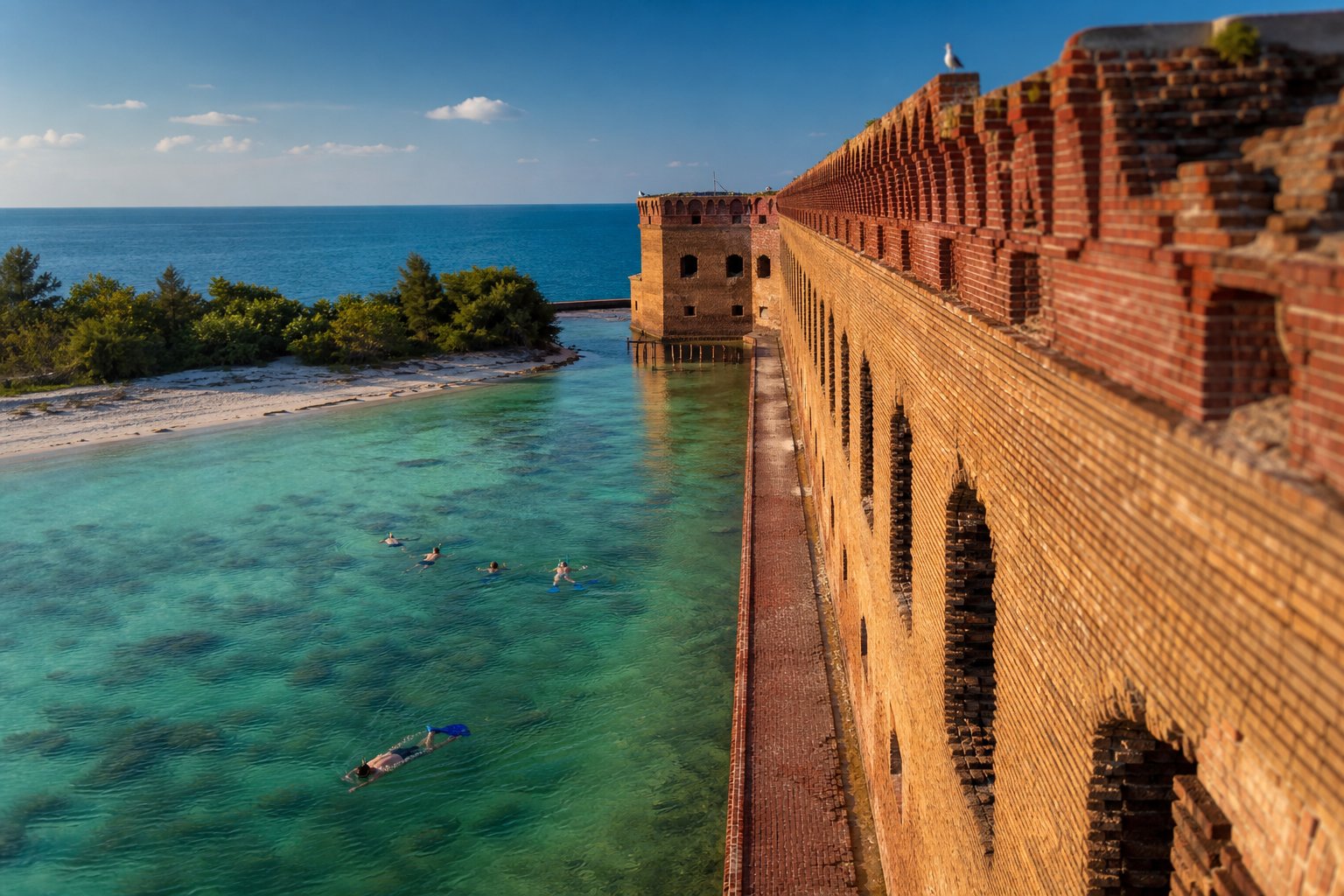
Both options deliver you to the same place, so the destination itself isn't a differentiator. Plan 45 to 60 minutes to walk the bastions, the parade ground, and the moat wall properly. The fort was never finished and never really used for its intended purpose, which makes it oddly compelling — a massive brick structure housing a lighthouse and a complicated Civil War history, surrounded by turquoise water on all sides.
Snorkeling differences
Snorkeling happens off Garden Key's beaches and along the moat wall, where coral, angelfish, and the occasional sea turtle appear in water that's usually clear and calm. Visibility depends on weather and tide, not on how you arrived. Ferry passengers simply have more time in the water — that four-plus hours lets you snorkel twice, dry off, tour the fort, and snorkel again. Seaplane half-day visitors need to prioritize.
Aerial vs sea-level scenery
The seaplane adds something the ferry simply cannot: the approach. Seeing Fort Jefferson's hexagonal outline from 500 feet, surrounded by sandbars and reef-marked shallows in a dozen shades of blue, is one of the better aerial moments in Florida. The ferry experience trades that for open-water crossing — flying fish, frigatebirds riding thermals, occasional dolphins alongside the hull — which is its own kind of rewarding.
Comfort and Seasickness: Ride Quality and Weather Considerations
Sea state vs air bumps
On a flat, calm winter morning, the dry tortugas ferry ride is pleasant — grab a deck chair and watch the Keys fade behind you. On a windy day with a three-foot chop, it's a different story. People who are prone to motion sickness should take medication before boarding, not during, and sit in the midship section on the main deck. The seaplane avoids sea swell entirely, though light turbulence is possible, and the cabin runs warm and loud.
Seasonal patterns
Winter cold fronts can kick up rough seas with little warning. Summer trade winds are steadier but afternoon thunderstorms develop quickly and affect both boat departures and seaplane operations. If weather scrubs your trip, both operators have cancellation policies — read them before booking. Summer crossings are often smoother in the morning before convection builds.
Luggage, Weight, and Gear Limits
The ferry is generous by comparison to the seaplane. You can bring a day pack, soft-sided cooler, personal snorkel fins, and a camera without much stress. Hard-sided large coolers and oversized rolling bags aren't permitted, but a reasonable beach kit is fine.
The seaplane is strict. Soft bags only, and every passenger and bag is weighed before boarding — this is standard small-aircraft procedure, not an inconvenience specific to this company. Leave the heavy camera rig behind. A mirrorless camera or a phone is practical; a full DSLR with a zoom lens is pushing it. Pack light, pack soft, and declare your weight honestly.
A few rules apply regardless of how you arrive. Drones are banned by the National Park Service at Dry Tortugas — don't bring one expecting an exception. Spearfishing is prohibited. Both operators provide masks and snorkels, but if you wear prescription lenses, bring your own corrective dive mask.
Who Each Option Suits — and Our Recommendation
Best for the ferry
The ferry makes the most sense if you're watching your budget, traveling with kids or a group, want included meals without logistics, or plan to spend serious time snorkeling. Families especially benefit — the long island time, the included lunch, and the generally stable experience make for a straightforward key west day trip that delivers on its promise.
Best for the seaplane
The dry tortugas seaplane suits travelers who are short on time, want the aerial perspective as a centerpiece of the experience, or are prone to seasickness. Couples celebrating a milestone, photographers prioritizing that overhead fort shot, and visitors with only a single day in the Keys who want to squeeze out every minute on the island — these are the seaplane's natural audience.
Bottom-line pick
If you can get a seaplane half-day seat and the price doesn't sting, take it. The efficiency and the aerial approach make for a genuinely memorable trip, and the early-morning crowd advantage is real. But seats are scarce and the cost is significant.
For most people — families, budget travelers, snorkelers, first-timers — the ferry is the right call. It costs less, includes more, keeps you on the island longer, and has been delivering visitors to fort jefferson reliably for decades. Book it early, take the seasickness meds if you need them, and let the Yankee Freedom do the rest.
Frequently asked questions
How much does the Dry Tortugas ferry cost compared to the seaplane from Key West?
The ferry runs around $200 per adult for a day trip. Seaplane half-day flights typically cost $350–$450 per person, with the limited full-day option priced higher.
How long is the ferry ride to Dry Tortugas and how much time do you get on the island?
The ferry takes about 2 to 2.5 hours each way and gives you roughly four to four and a half hours on Garden Key. It usually departs around 8 a.m., arrives about 10:30 a.m., leaves the island around 3 p.m., and returns to Key West by early evening.
What’s included with the Dry Tortugas ferry versus the seaplane?
The ferry fare usually includes the National Park entrance fee, a light breakfast, a boxed lunch, and snorkel gear. The seaplane includes the park fee and basic snorkel gear, but no food, and you must pack within strict weight limits.
How far in advance should I book the Dry Tortugas ferry or seaplane?
For the ferry on popular winter weekends, four to eight weeks ahead is a reasonable minimum, and up to six months for holidays. For the seaplane, plan on two to four months ahead for peak dates, and longer if your dates are inflexible.
What can I bring on the ferry and seaplane to Dry Tortugas?
The ferry allows a day pack, soft-sided cooler, personal snorkel fins, and a camera, but not hard-sided large coolers or oversized rolling bags. The seaplane requires soft bags only, weighs every passenger and bag, and favors light gear like a phone or small mirrorless camera over heavy rigs; drones are banned in the park and spearfishing is prohibited.
Is the ferry rough, and is the seaplane better if I get seasick?
On windy days the ferry can be choppy, so motion-sick travelers should medicate before boarding and sit midship on the main deck. The seaplane avoids sea swell, though it can have light turbulence and the cabin is warm and loud.