
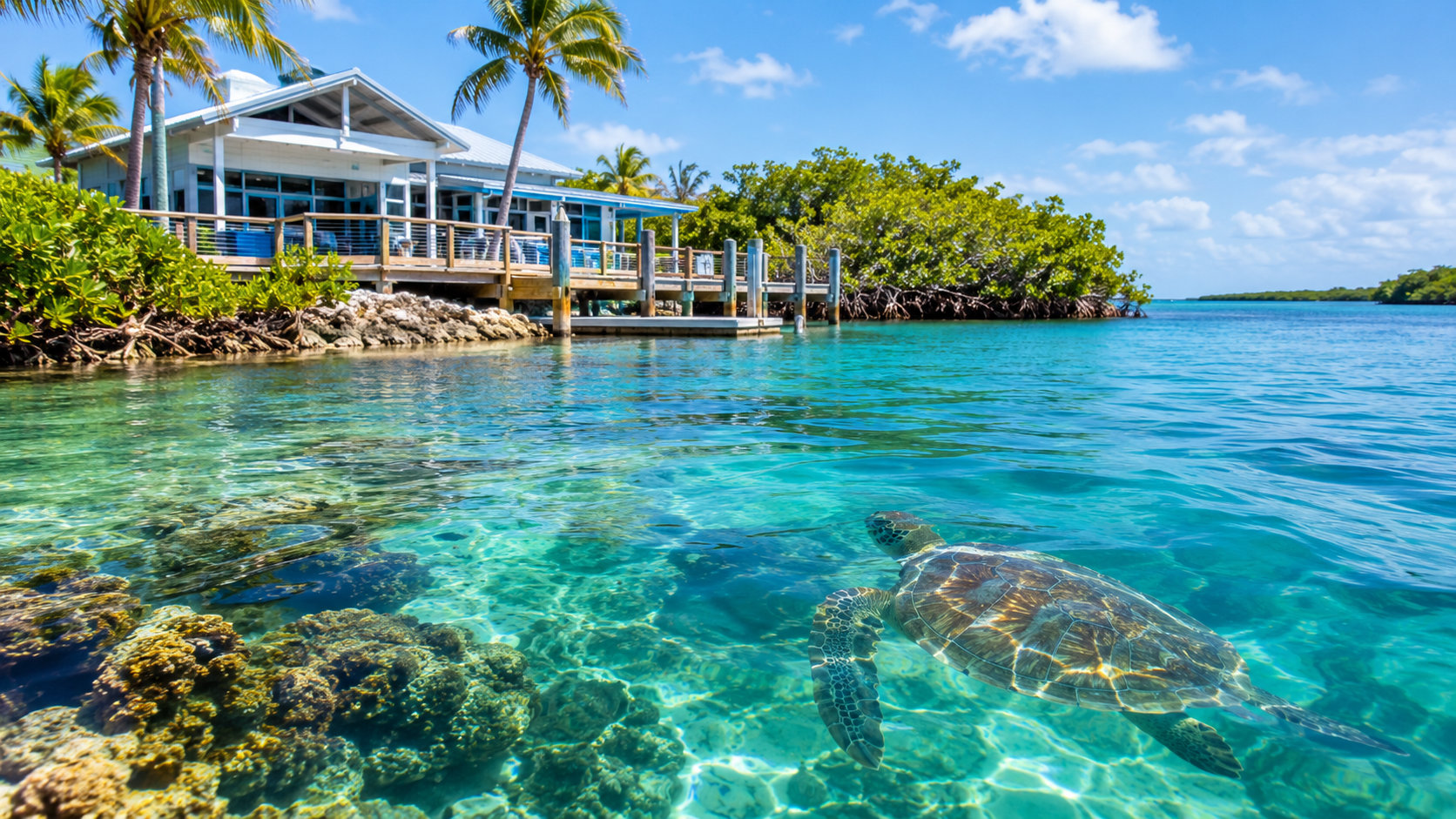
What Is the Florida Oceanographic Coastal Center?
The Florida Oceanographic Coastal Center is a nonprofit marine science and conservation hub on Hutchinson Island in Stuart, Florida. Set between the Atlantic Ocean and the Indian River Lagoon, it focuses on Florida’s coastal ecosystems—sea turtles, rays, and the game fish that headline our waters. Expect salt‑spray learning without the stuffiness: lively aquariums, a stingray touch tank, a Sea Turtle Pavilion, a sprawling game fish lagoon, and shaded nature trails that wander through mangroves and coastal hammock.
It’s the kind of place where families find easy wins—hands-on stations that keep kids curious—and where eco‑minded travelers leave with sharper eyes for the shoreline. Beachgoers pair it with a few lazy hours at nearby Bathtub Reef Beach. Plan on 1.5 to 3 hours, depending on how many programs you catch and how much time you spend on the trails.
Location, Parking & Getting There
Driving
You’ll find the center at 890 NE Ocean Blvd, Stuart, on Hutchinson Island, right near the causeway that links Stuart and Jensen Beach. It’s an easy approach from both US‑1 and A1A. If you’re driving in from farther afield, I‑95 and Florida’s Turnpike both feed into Stuart from Miami, Palm Beach, Orlando, and the Space Coast.
From Downtown Stuart, cross the Evans Crary Bridge toward the island; the entrance is just past the Elliott Museum on the right. From Jensen Beach, take the Jensen Beach Causeway east to A1A and head south—watch for signage as you near the Elliott.
Weekends, holidays, and perfect‑beach days can back up traffic on the causeways and along Ocean Boulevard. Check your GPS for any bridge openings and leave yourself a buffer if you’re aiming for a scheduled talk or feeding.
Parking & Rideshare
Parking is free in the on‑site lot. Arrive early on weekends and during school breaks if you want a close spot. Public transit on Hutchinson Island is limited, so a car or rideshare is by far the simplest option. Rideshare pickups are straightforward; set your pin for the main entrance and wait in the marked area just off Ocean Boulevard.
Hours, Weather & Best Time to Visit
Wildlife activity and Florida heat both reward timing. Mornings or late afternoons tend to be cooler, and animals in the lagoon and touch tanks are more active. Weekdays outside school holidays are the quietest—fewer strollers, easier viewing of talks, and a calmer pace on the boardwalks.
Summer on the Treasure Coast brings steamy afternoons and quick pop‑up storms. Pack water, a light rain layer, and a sense of humor; showers usually pass fast. Hurricane season runs June through November and can affect operations. Always verify current hours and program times on the center’s official website or social channels before you drive, especially after severe weather.
Tickets, Passes & Discounts
How to Buy
You can purchase tickets online in advance or at the gate. Buying online helps you plan around scheduled programs—stingray feedings and naturalist talks are the real showstoppers, and it’s useful to time your arrival so you’re not sprinting from the parking lot.
Keep your confirmation handy on your phone for quicker entry. There’s no fee for parking, which keeps budgeting simple.
Ways to Save
Look for discounts on the official site; they may extend to members, seniors, students, and military with ID. If you’re local—or settling in for a longer Treasure Coast stay—consider an annual membership. Your dollars support conservation and education programs, and the math often works out if you plan more than one visit. Donations are welcome and directly support animal care, rescue, and research.
Exhibits & Can’t‑Miss Experiences
Top Exhibits
Sea Turtle Pavilion — The heart‑tugging stop for most visitors. You’ll learn how the staff supports rescue, rehabilitation, and release efforts for injured sea turtles. Panels and naturalist talks share real‑world stories—boat strikes, entanglements, cold‑stunning—and the path back to the ocean. The pavilion puts faces (and flippers) to conservation headlines and is a great place to ask thoughtful questions about what you can do on the beach to help.
Game Fish Lagoon — This is where coastal food webs come alive. The lagoon is home to native species—think snook, tarpon, redfish—that dart and boil the surface during feedings. If you’re an angler, you’ll appreciate hearing how these fish interact with seagrass, oyster reefs, and mangroves; if you’re not, the spectacle alone sells it. Stake out a spot a few minutes early for the best view during naturalist talks.
Indoor Aquariums — Step inside to explore smaller habitats and species that might be too shy or cryptic to meet outside. These tanks spotlight the tiny architects and oddballs: shrimp that clean, mollusks that build, and corals that form the living scaffolds of our reefs. It’s the perfect reset on hot afternoons and a chance to cool down while deepening your coastal IQ.
Interactive Experiences
Stingray Touch Tank — Calm, mesmerizing, and wildly popular with kids. Guided by staff, you’ll learn how to safely touch and respect these gentle rays, what they eat, and how their unique adaptations help them glide and sense. Follow all instructions—hands flat, slow movements—and you’ll feel that soft, cool brush as a ray sweeps past. Staff presentations here are pitch‑perfect for first‑time visitors and future marine biologists alike.
Hands‑On Learning Stations — Throughout the grounds, you’ll find simple, tactile exhibits that explain complex systems in plain language: how mangroves filter water, why oyster reefs matter, and how dune plants hold the line against storms. Kids get to push, pull, measure, and test; adults gain a clearer picture of how every shoreline piece connects.
Mangrove Boardwalk & Nature Trails — Walk shaded loops through mangroves, hammocks, and coastal scrub. You’ll hear ospreys, spot herons and egrets at the water’s edge, and see the tangle of prop roots that shelter juvenile fish and crabs. Trails are short enough for little legs but rich in detail. Bring bug spray and closed‑toe shoes; sandy patches and roots are part of the fun.
Daily Programs, Tours & Volunteering
Daily Schedule Highlights
Naturalist‑led talks and feedings change with season and staff availability. Typical favorites include stingray feedings, game fish lagoon talks, sea turtle chats, and short guided walks that decode the plants and animals around you. Schedules are posted at the entrance; confirm on arrival so you can stack your visit around the experiences you care about.
To snag the best vantage point—especially for lagoon feedings—arrive 10–15 minutes early. If you’re balancing naps and snack breaks, plan your most wanted program first, then build the rest of your visit around it.
Education & Volunteer Paths
The center runs seasonal camps, field trips, and deeper‑dive programs that turn a spark of curiosity into genuine stewardship. If you’re staying longer, ask about volunteer or citizen‑science opportunities. From water quality monitoring to behind‑the‑scenes support, there are ways to pitch in that match different skill sets and time windows. It’s a meaningful way to put your visit to work for the coast you’ve come to enjoy.
Trails, Beaches & Nearby Things to Do
Close‑By Attractions
Bathtub Reef Beach — Just minutes south of the center, this family‑friendly strand features calm, shallow water when conditions are right, thanks to an offshore worm reef that acts like a natural breakwater. Bring reef‑safe sunscreen, water shoes, and a mask and snorkel on clear mornings. If you snorkel reefs elsewhere in Florida, follow reef‑protection best practices like the ones outlined by the NOAA Florida Keys National Marine Sanctuary: never touch, stand on, or collect living coral; keep your fins up and your distance.
Elliott Museum — Directly across the street, the Elliott pairs perfectly with the Coastal Center for a culture‑and‑nature day. Its exhibits range from classic cars and Americana to local history—an easy win for multigenerational groups.
Downtown Stuart — Ten minutes back over the bridge, you’ll find walkable streets, independent shops, and riverfront restaurants. Grab a seat along the St. Lucie River for sunset, or hit the green market on weekends when it’s in season.
Day‑Trip Ideas
Indian River Lagoon Cruises — From nearby marinas, hop a naturalist‑led tour to watch dolphins bow ride, manatees loaf near the surface, and wading birds hunt the flats. Morning departures usually offer better wildlife sightings and gentler winds.
Jonathan Dickinson State Park — About 30 minutes south off US‑1, this vast park delivers hiking, paddling on the Loxahatchee River, and views from the Hobe Mountain tower. Check Florida State Parks for current hours, entry fees, and any reservation requirements before you go.
Family Tips, Accessibility & What to Bring
Florida sun means business. Pack reef‑safe sunscreen, hats, and polarized sunglasses; reapply sunscreen after you’ve washed hands following animal encounters so residue doesn’t enter touch tanks. Reusable water bottles keep everyone happy and cut down on plastic. Light snacks are smart for kids—confirm on arrival where food is allowed.
Strollers are welcome in most areas, and boardwalks offer smooth rolling. Some trails are sandy or uneven; check accessibility information at the entrance if you have mobility considerations. Closed‑toe shoes are best for trails and boardwalks. If you’re doing both the Coastal Center and the beach, a quick‑dry towel and a change of clothes make transitions easier.
In interactive areas, follow staff guidance closely. Touch tanks have clear rules for the animals’ well‑being and for your safety—hands flat, slow and gentle, no jewelry that could snag. Wash or sanitize after animal encounters and before you snack.
Responsible Wildlife Etiquette & Visitor Rules
The spirit of the Florida Oceanographic Coastal Center is simple: learn, connect, and leave things better than you found them. A few basics keep wildlife safe and your visit smooth:
- Only touch animals when and how staff instruct. Never feed wildlife, here or anywhere along the coast. State rules protect sea turtles, manatees, and other species; harassment and feeding are prohibited—review guidance from the Florida Fish and Wildlife Conservation Commission before you hit the water or beach.
- Stay on marked trails and boardwalks. Mangroves and dunes are fragile, and stepping off‑trail can damage roots or destabilize sand. It also keeps your footing predictable.
- Carry out all trash and minimize single‑use plastics. Refill bottles, skip straws, and recycle when possible—simple choices that add up for the Indian River Lagoon and the Atlantic just across the road.
- Programs and outdoor exhibits can be weather‑dependent. Follow staff directions and any safety announcements during storms or high winds.
- Photography is welcome. Avoid flash near animals unless staff says it’s okay.
If your travels extend to reef snorkeling or diving elsewhere in Florida, be reef‑smart. Keep hands and fins off living coral, never chase turtles or rays, and use mooring buoys where available. You’ll find the why—and the how—in resources from the NOAA Florida Keys National Marine Sanctuary, a solid primer even if you’re outside the Keys.
Sample Half‑Day Itinerary
Arrive by 10:00 a.m. to beat the heat and snag parking. Check the day’s schedule, then walk the nature trails first while it’s cool—listen for ospreys and keep an eye on the mangrove roots for crabs and juvenile fish. Slide into the mid‑morning stingray touch tank program with a front‑row spot, then head to the Sea Turtle Pavilion for a late‑morning talk. Break indoors to explore the aquariums, hydrate, and let kids dive into hands‑on stations. Swing back outside for the early‑afternoon game fish lagoon feeding. Wrap by 1:00–1:30 p.m. and roll across to Bathtub Reef Beach for a few easy hours in the water, conditions permitting.
FAQ: Quick Answers Before You Go
How long does a visit take? Plan 1.5–3 hours, depending on how many talks and feedings you attend and whether you walk the trails.
Is parking free? Yes, free on‑site parking. Arrive early on busy beach days, weekends, and holidays.
Can I buy tickets at the gate? Yes. Online purchases help you plan around program times and speed up entry.
Are the trails stroller‑friendly? Boardwalk sections are smooth; some sandy trails can be bumpy. Closed‑toe shoes recommended.
What should I bring? Reef‑safe sunscreen, hats, sunglasses, reusable water bottles, bug spray for the trails, and a light rain layer in summer.
What if it rains? Indoor aquariums and exhibits keep the day going. Outdoor programs may be delayed or adjusted; follow staff guidance and posted updates.
Why It Belongs on Your Treasure Coast Itinerary
You can spend a Florida day chasing sun and surf, or you can deepen the story behind the water you came to see. The Florida Oceanographic Coastal Center does the latter, and does it well. It’s compact, easy to navigate, and authentic—no fluff, just good science delivered by people who love these shores. Pair it with a swim at Bathtub Reef Beach, a bite in Downtown Stuart, or a paddle on the Loxahatchee, and you’ve built a day that connects.
Whether you arrive with toddlers, teens, or a fishing rod waiting in the trunk, you’ll leave seeing the Treasure Coast with new eyes—and a few simple ways to help it thrive for your next visit.
Frequently asked questions
How long does a visit to the Florida Oceanographic Coastal Center take?
Plan on 1.5 to 3 hours. Your timing depends on how many naturalist programs you catch and how much time you spend on the mangrove boardwalk and nature trails.
Do I need to buy tickets in advance or can I purchase at the gate?
You can purchase tickets online in advance or at the gate. Buying online helps you plan around scheduled programs like stingray feedings and talks, and keeping your confirmation on your phone speeds entry.
Is parking free and is rideshare pickup easy at Florida Oceanographic Coastal Center?
Parking is free in the on-site lot. Public transit on Hutchinson Island is limited, so a car or rideshare is simplest, and rideshare pickups are straightforward at the main entrance just off Ocean Boulevard; arrive early on weekends and school breaks for a closer spot.
When is the best time to visit for wildlife activity and smaller crowds?
Mornings or late afternoons are cooler and tend to have more active animals. Weekdays outside school holidays are the quietest, and you should verify current hours and program times on the center’s official channels, especially during summer storms or hurricane season (June–November).
What are the can’t-miss exhibits and interactive experiences at the center?
Highlights include the Sea Turtle Pavilion, the action at the Game Fish Lagoon during feedings, and the indoor aquariums that spotlight smaller reef species. For hands-on fun, don’t miss the Stingray Touch Tank and the outdoor learning stations, and leave time for the shaded mangrove boardwalk and nature trails—bring bug spray and closed-toe shoes.
Where is the Florida Oceanographic Coastal Center located and how do I get there?
The center is at 890 NE Ocean Blvd in Stuart on Hutchinson Island, near the causeway between Stuart and Jensen Beach. From Downtown Stuart, cross the Evans Crary Bridge and look for the entrance just past the Elliott Museum; from Jensen Beach, take the causeway to A1A and head south, and allow extra time on busy beach days or holidays due to traffic and occasional bridge openings.