
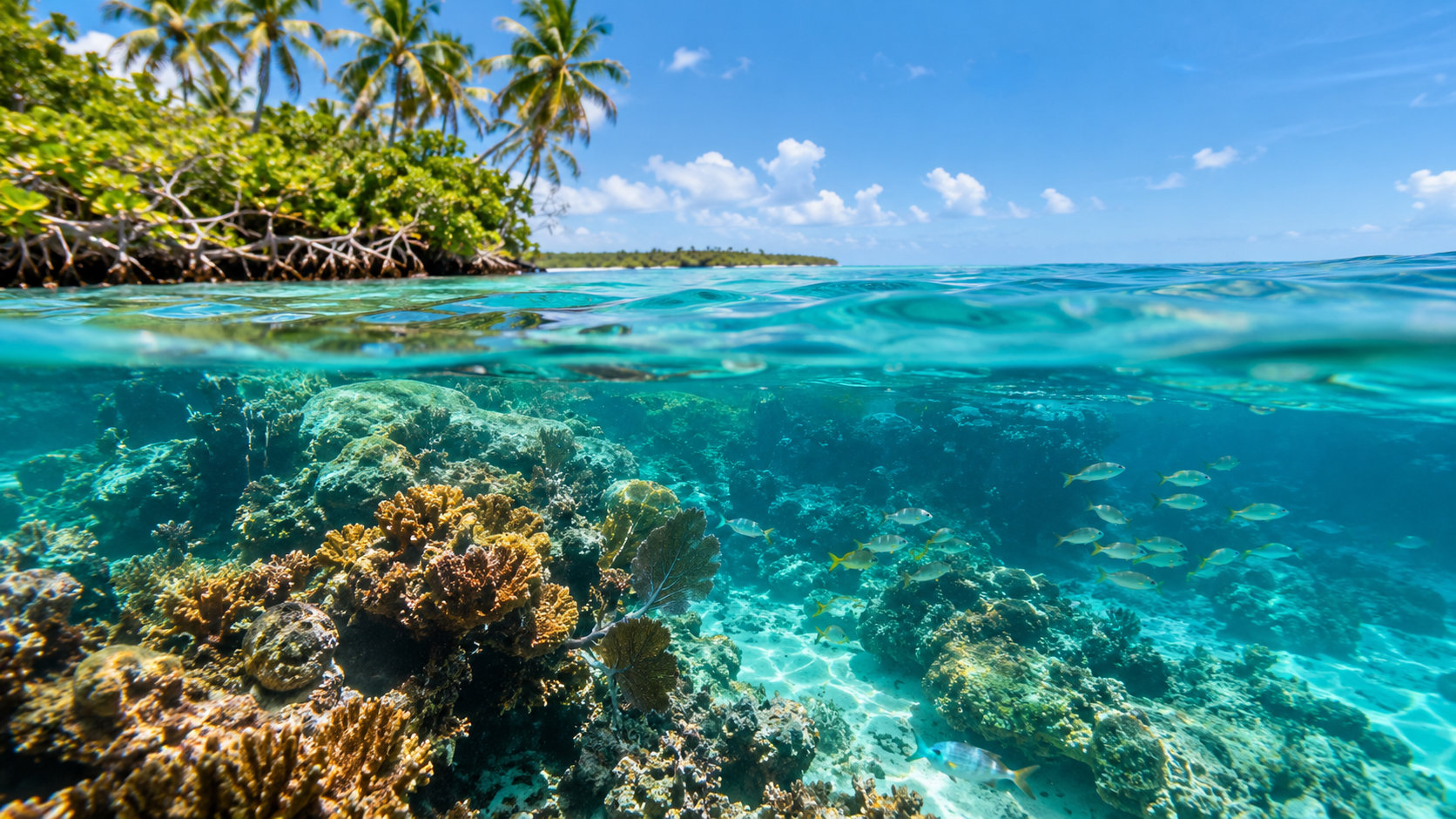
What is a fringe reef?
Fringe vs. barrier vs. patch
A fringe reef grows tight to the shoreline, hugging an island or a continental coast. Swim off the beach or boat a short hop, and you’re already on living coral. That’s different from a barrier reef, which rides farther offshore with a distinct lagoon in between, and different again from a patch reef, which stands alone as an isolated coral head or small cluster on a sandy plain.
Fringing reefs usually carry a shallow, gently sloping top that falls toward spur-and-groove channels—those alternating coral ridges and sandy runnels you see from a drone or glass-bottom boat. In Florida, our coral belt is a hybrid: true barrier sections sit offshore, yet broad nearshore hardbottom and patch complexes around the Keys create fringing-like experiences. In the right coves and along the lee of the islands, you’ll find coral heads, sea fans, and sponges close to land, with swim-depth access and easy snorkeling.
How fringing zones form
Give coral a stable substrate, clean saltwater, sunlight, and time. Along the Keys, ancient limestone and oolitic rock provide the base. Waves and currents sculpt the reef flat and those spur-and-groove lines, funneling sand out of channels and letting corals and gorgonians colonize the higher ground. In protected pockets—behind keys, along banks, and on the edges of shallow flats—colonies creep shoreward where surge is lighter. The result: a fringing zone that’s kinder to beginners and fantastic for lingering with a camera.
Where to find fringe-reef environments in Florida
Florida Keys highlights
Key Largo / John Pennekamp Coral Reef State Park (MM 102.5–104) is the Keys’ snorkel gateway. While the famous outer reef lies several miles offshore, the park also features nearshore coral gardens and shallow patch reefs that deliver a fringe-reef feel—fish-thick, gorgonian-rich, and reachable on short boat rides. Operators target patchy sites like Cannon Patch and Horseshoe Reef in light seas for calm, colorful snorkeling, with sandy bowls and low relief that suit first-timers. The park’s glass-bottom boats run year-round for a dry look at spur-and-groove formations and coral communities.
Islamorada (MM 72–90) offers scattered patch and fringing-style zones on the bay and ocean sides. Protected pockets on the leeward (bay) side shine on windy days, while shallow ocean-side patches bloom with sea fans, knobby brain corals, and schools of grunts. The runs are short, and captains can tuck behind keys for smooth water.
Marathon (MM 47–60) sits mid-Keys with quick access to patch reefs that break the chop. The south side holds an archipelago of shallow mounds and coral fingers, giving you sandy entry points and easy surface swims. On flat days, boats reach the outer reef, but when wind is up, guides pivot to the patches—classic fringe-reef strategy.
Bahia Honda and Big Pine Key (MM 29–37) bring you close to shallow hardbottom peppered with coral heads, sea rods, and sponges. On clear mornings you can spot purple sea fans from the surface. These low-profile areas teem with juvenile fish and invertebrates—ideal for slow snorkeling and macro photography.
Dry Tortugas day-trip ideas
Seventy miles west of Key West, the Dry Tortugas serve up text-book fringe reef. Garden Key, home to Fort Jefferson, and Loggerhead Key both have shore-adjacent reef lines and seagrass-to-coral transitions. On calm days the visibility is superb, and you can fin from the beach to living hard corals and waving gorgonians without a long swim. Day visitors arrive by ferry or seaplane; certified divers and confident snorkelers can work the island edges and sandy channels where turtles, nurse sharks, and rays roam.
Best ways to experience fringe reefs: snorkeling and eco tours
Beginner-friendly options
Guided snorkel trips from Key Largo, Islamorada, Marathon, and Key West target shallow fringing and patch areas when conditions allow. Small-group catamarans and eco rafts slide into protected coves and patch-fringe sites that larger boats skip. Expect mellow depths—often 4 to 15 feet—with plenty of coral life in arm’s-reach water (hands off the reef, though). If you prefer to stay dry, glass-bottom boats in John Pennekamp Coral Reef State Park and out of Key West offer a clear look at spur-and-groove terrain, coral heads, and schools of yellowtail without a mask.
Family with mixed comfort levels? Split the difference: some ride the glass-bottom boat, others jump off for a guided snorkel. Many operators provide flotation vests, noodles, and a patient in-water guide who points out life and leads you around surge-prone edges.
Calm-water strategies
Shallow fringe-reef zones are at their best when the sea is laid back. Book morning departures—winds are typically lighter, visibility steadier, and wildlife more active before the afternoon chop. When the Atlantic kicks up, captains shift to leeward sites where mangroves and islands knock down swell. Patch reefs behind the reef tract or tucked along banks are often the smoothest bet. If heavy rain has flowed off the islands, nearshore visibility can drop; going a little farther offshore usually finds clearer water while staying in fringe-like, easy-depth terrain.
Scuba diving shallow fringing sites
Skills and expectations
Shallow fringe reefs are tailor-made for relaxed dives: 15 to 40 feet, light current most days, and occasional surge near the reef face where spur-and-groove channels funnel water. You’ll spend more time on buoyancy finesse than on depth. Hover over gorgonian canopies, ease along sandy runnels, and look close—macro life thrives here. Photographers love the ambient light and long bottom times. Surges can pulse on the outer edge; time your movements, keep a low profile behind coral ridges, and avoid finning down into the sand.
Notable shallow spots
In the Upper Keys, mooring-buoy sites such as Cannon Patch and Horseshoe Reef deliver that fringe-reef feel with easy access, clear navigation, and plenty of color. Expect sea fans and plumes, mustard hill coral, star and brain corals, and big clouds of grunts and porkfish over sand patches. South toward Marathon and Big Pine, shallow hardbottom sprouts coral heads and barrel sponges 10 to 25 feet deep—great for long, lazy dives. Out at the Dry Tortugas, reef lines track right along Garden and Loggerhead Keys; on the flattest days the water can go gin-clear, and you can follow sandy channels that lead from seagrass into coral without losing the shoreline.
Use established mooring buoys and follow local briefings for site-specific rules inside the Florida Keys National Marine Sanctuary—anchors and coral don’t mix. You can review current sanctuary zones, mooring programs, and responsible practices on the NOAA Florida Keys National Marine Sanctuary site.
When to go: seasons, weather, and visibility
Best months
Late spring through early fall brings warmer water—upper 70s to mid-80s Fahrenheit—and, on average, calmer seas. That’s prime time for shallow fringe-reef snorkeling. Summer also means longer days, so early trips catch glassy conditions. Winter can be excellent between fronts, but cold fronts bump up chop and swing winds north; that’s when leeward sites shine or it’s smart to slide your booking a day.
Daily timing tips
Pick morning departures for lighter winds, settled boat traffic, and the best odds of clear water on shallow reefs. After heavy rain, nearshore runoff may cloud visibility; ask your operator to aim slightly offshore or upcurrent of inlets to find that clearer pocket. If you’re planning two outings in one day, make the shallower fringe-reef snorkel your morning trip and save the deeper wreck or outer reef for the afternoon when the sea (usually) picks back up.
Marine life you’ll see on fringing reefs
Corals and sponges
Fringe-reef zones in Florida are gorgonian country. Purple sea fans tilt into the current, sea plumes sway like wheat, and sea rods lace the water column. Among them, you’ll spot knobby brain corals, mountainous and boulder star corals on the higher knobs, and mustard hill corals scattered across the flats. Color pops from sponges—red encrusting sheets, orange tubes, and the occasional barrel on slightly deeper ledges. Shallow light wakes up every hue, so even a brief snorkel feels saturated.
Reef fish and visitors
Parrotfish rasp along the coral, leaving puffs of sand; grunts and schoolmaster snapper hang in tight packs under ledges; sergeant majors patrol like traffic cops. Bluehead wrasse flash electric streaks, while angelfish—French and gray—cruise the fans. Nurse sharks nap in sandy alleys. Southern stingrays lift from the bottom with a flap. Keep an eye on the waterline for green or hawksbill turtles on the move between grass and coral. Seasonal visitors drift through: tarpon stack near channels in late spring and early summer, and squid line up like punctuation marks over shallow turtle grass at dusk.
Responsible reef etiquette and safety
Protecting coral
Corals are living animals with delicate tissue. Don’t touch, stand on, or kick them. Keep your body horizontal, control your fins, and use slow, deliberate movements. If you need a rest, float on your vest or hover over sand. Inside the sanctuary, know your zones and rules before you go; anchoring on reef is prohibited, and mooring buoys are provided at many sites. Review current guidance and zone maps on the Florida Keys National Marine Sanctuary site. Skip aerosol sunscreens on the boat and choose a mineral, reef-friendly lotion—or better yet, wear a long-sleeve rash guard to reduce chemicals entering the water.
Staying comfortable
Avoid brushes with fire coral by giving yellow-tinted, fuzzy-looking growth a respectful buffer. Watch your hands around urchins and keep eyes open for moon jellies in warmer months. Many boats carry vinegar or safe wipes for minor stings; ask during the briefing. If you’re prone to motion sickness, dose per label or use wristbands before boarding, and pick a spot mid-ship. Hydrate, but skip heavy meals right before you go. A snug mask and a pea-sized drop of defog are worth their weight in gold.
Planning your visit and what to pack
Gear checklist
- Mask, snorkel, and fins that fit well; a soft silicone skirt and adjustable straps prevent leaks.
- Optional snorkeling vest for extra buoyancy and bright visibility.
- Long-sleeve rash guard or thin wetsuit top (2–3 mm in winter), plus a hat and light cover-up for the boat ride.
- Towel, water bottle, and light snacks; pack out what you bring.
- Motion-sickness remedy if you’re sensitive to chop.
- Defog solution and a small microfiber cloth for lenses.
- Waterproof phone pouch or compact dry bag for keys and ID.
Family tips
For kids and first-timers, choose shallow sites in the 4–12 foot range with sandy entries or sand channels for easy rests. Start with a short session—20 to 30 minutes—then regroup on the boat. Practice breathing through a snorkel in the marina or from a beach before the trip. Bright rash guards make it easy for guides to spot your crew, and photo IDs on lanyards help operators manage larger families. If you’re combining activities, book a morning fringe-reef snorkel and save kayaking or a wildlife center visit for the afternoon.
Tours, permits, and park logistics
Keys and sanctuary rules
Much of the reef tract from Key Largo to Key West sits within the Florida Keys National Marine Sanctuary. Obey posted zones, use mooring buoys, and follow your captain’s briefing on where you can and can’t anchor, fish, or collect. Sanctuary updates, mooring programs, and responsible recreation tips are posted by NOAA’s Florida Keys National Marine Sanctuary. If your trip includes fishing outside no-take areas, Florida law requires a recreational fishing license; details and purchasing are handled by the Florida Fish and Wildlife Conservation Commission.
John Pennekamp Coral Reef State Park is the departure point for many snorkel and glass-bottom boat tours in Key Largo. The park charges entry and parking, and tour reservations are recommended during weekends and holidays. For current park hours, fees, and reservation links, check Florida State Parks.
Dry Tortugas reservations
Reaching the Dry Tortugas requires advance planning. The Yankee Freedom ferry and Key West seaplane services book up, especially from March through June and holiday weeks. Reserve months ahead, understand baggage and cooler rules, and read up on snorkeling zones and beach access at Garden Key and Loggerhead Key. The National Park Service’s Dry Tortugas page lists current schedules, fees, and rules for day trips and camping. Weather can delay departures; build flexibility into your Key West itinerary.
How to pick your fringe-reef day
Match the forecast to the site
Look at wind speed and direction. Under 12 knots from the east or southeast? Patch-fringe sites on the Atlantic side often shine. Strong north wind after a front? Head for leeward, bay-side pockets. Ask your operator about tide timing—some channels clear out beautifully on a falling tide. If rain has been heavy, aim for slightly deeper patches with ocean flushing rather than tight-to-shore hardbottom.
Build in a backup
Good operators hold multiple site options. If the outer reef is choppy, a fringe-reef snorkel over patches can save the day. Keep your schedule loose so you can slide to the following morning if the wind spikes. The fringe reef will wait, and it’s better in calm water anyway.
Sample itineraries
Key Largo half day
Morning glass-off, depart from Key Largo marina for Cannon Patch. Snorkel 60–90 minutes over sea fans and sandy bowls. Short move to a second shallow patch for angelfish and wrasse. Back to shore for a late lunch and a mangrove paddle.
Marathon family circuit
Book a small-group catamaran. First stop in 8–12 feet, kids float in vests over soft corals. Second stop in a slightly deeper patch with spur-and-groove channels for older swimmers. Afternoon treat at a Keys bakery, then a sunset walk on the Old Seven Mile Bridge.
Dry Tortugas day
Catch the first ferry, snorkel the moat wall route at Garden Key with a slow pass over sand channels. Lunch in the shade, then a second session along the outer edge where gorgonians give way to hard coral spurs. Rinse gear, climb the fort for the view, and cruise home with a sunlit wake.
Photography tips on fringe reefs
Snorkel shots
Shoot in the first two hours after sunrise for calm surfaces and warm color. Get low over sand and aim up to silhouette sea fans against the sun. Use a red filter or set white balance manually in 6–15 feet to correct blues.
Dive images
Shallow light is your friend. Keep strobes pulled wide to avoid backscatter in the sand channels. Macro hunters: search the bases of gorgonians for flamingo tongues and look for arrow crabs tucked into sponge crevices.
What makes Florida’s fringe-reef experience special
Access. You don’t need a long boat ride or a deep cert to see living coral, schools of reef fish, and the sweep of spur-and-groove. From Key Largo to Big Pine, the combination of shallow hardbottom, patch reefs, and nearshore coral gardens puts the fringe reef within easy reach—perfect for families, photographers, and anyone who prefers color and life to depth and current. Add a Dry Tortugas day, and you’ll check off classic fringing lines that start almost at your toes.
Frequently asked questions
Where can I snorkel fringe-reef environments in the Florida Keys?
Key Largo (John Pennekamp Coral Reef State Park), Islamorada, Marathon, and the Bahia Honda/Big Pine Key area all offer shallow, nearshore coral and patch reefs with a fringing feel. These spots feature coral heads, sea fans, and sponges in easy depths, with short boat rides and protected coves that suit first-timers.
Are the Dry Tortugas good for shore-access snorkeling on fringing reefs, and how do you get there?
Yes—Garden Key and Loggerhead Key have reef lines right off the beach where you can fin from seagrass into living corals and gorgonians. Day visitors reach the islands by ferry or seaplane, and on calm days visibility can be superb with turtles, nurse sharks, and rays cruising sandy channels.
When is the best time of year and day to visit shallow fringing reefs in Florida?
Late spring through early fall offers warmer water (upper 70s to mid-80s Fahrenheit) and generally calmer seas, making it prime for shallow snorkeling. Mornings are typically better for lighter winds, steadier visibility, and more active wildlife, with afternoons more prone to chop.
Are fringing-reef snorkel trips in the Keys beginner-friendly, and how deep are they?
Yes—guided trips often target protected fringing and patch areas with mellow depths around 4 to 15 feet. Small-group catamarans and eco rafts access calm coves, and many operators provide flotation aids and in-water guides; glass-bottom boats offer a dry alternative with clear views of coral terrain.
What’s the plan if it’s windy or after heavy rain—can I still see fringing reefs?
Captains shift to leeward sites where islands and mangroves knock down swell, and to patch reefs tucked behind the main reef tract for smoother water. After heavy rain lowers nearshore visibility, going slightly offshore or upcurrent of inlets usually finds clearer water while staying in easy, fringe-like depths.
What marine life and corals will I see on Florida’s fringing reefs?
Expect gorgonians—purple sea fans, sea plumes, and sea rods—plus knobby brain corals, mountainous and boulder star corals, and mustard hill corals. Colorful sponges such as red encrusting sheets, orange tubes, and occasional barrels add contrast in the shallow light.