
What and Where Is the Florida Reef?
Fast facts
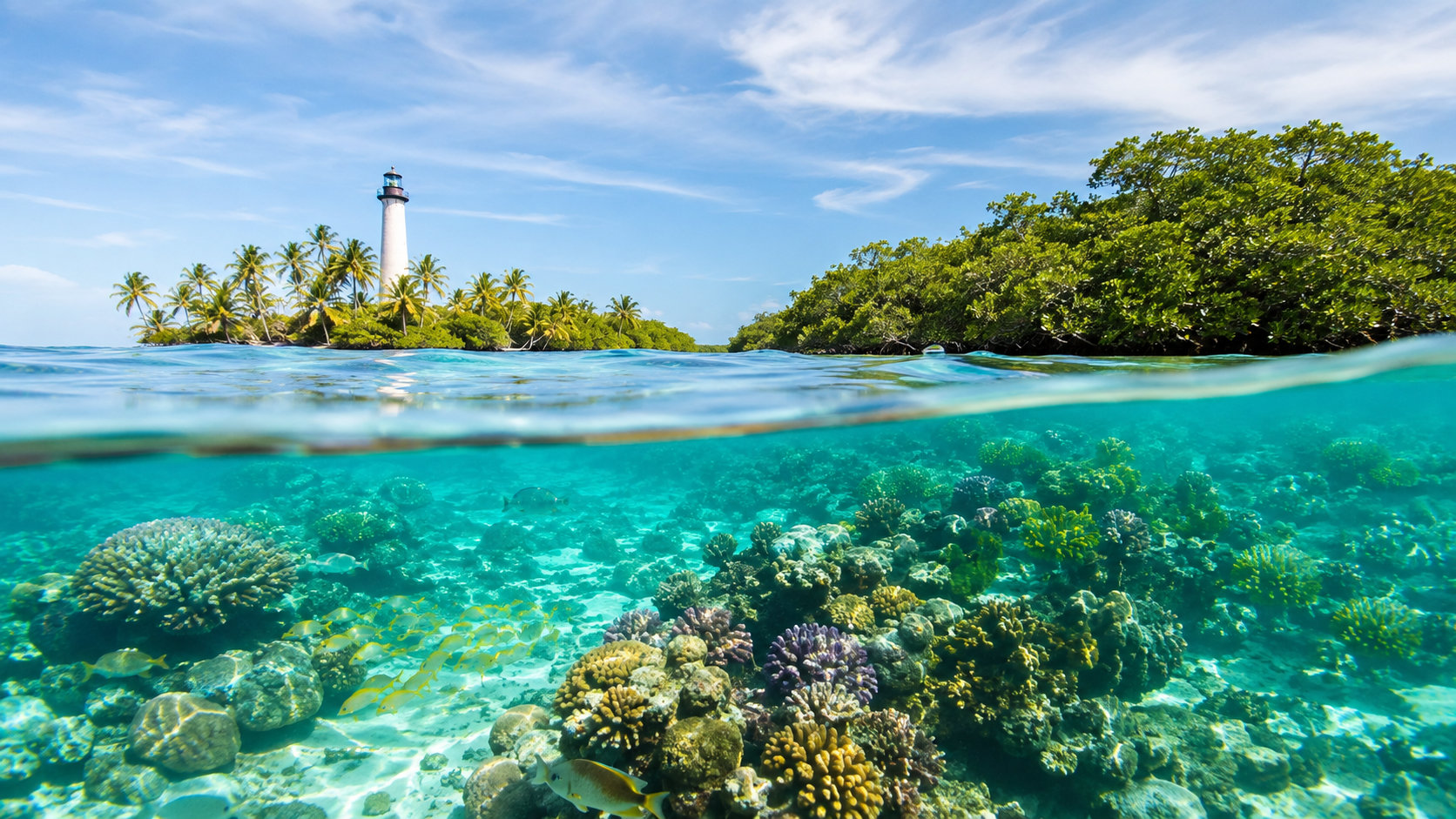
The Florida Reef is America’s only living coral barrier reef and the third-largest such system on the planet. It unfurls for roughly 350 miles along the edge of the Florida Keys and beyond, beginning near Biscayne National Park south of Miami, tracing past Key Largo, Islamorada, Marathon, and Key West, then tapering off west of the Marquesas and into Dry Tortugas National Park. Shallow coral heads, spur-and-groove formations, and historic lighthouses mark the line where the clear aquamarine of the reef shelf meets the deeper blue of the Straits of Florida.
Much of this habitat falls inside the Florida Keys National Marine Sanctuary, a protected seascape with marked Sanctuary Preservation Areas (SPAs), wildlife management zones, and mooring buoys to keep anchors off coral. These protections shape how you visit and what you can do on the water—from where boats tie up to which areas are look-but-don’t-touch. You’ll see the boundaries on nautical charts and even on tour briefings before you splash in.
How to get there
The easiest on-ramps to the Florida Reef run down U.S. 1. From Miami, head an hour to Key Largo (around Mile Marker 100) for the quickest hop to shallow reefs in John Pennekamp Coral Reef State Park. Islamorada (MM 80–72) and Marathon (MM 54–47) offer a mix of beginner-friendly patches and iconic lighthouse reefs. In the Lower Keys, boats reach Looe Key from Big Pine and Ramrod Keys. Key West departures target Western Sambo and outer reefs a few miles offshore. Farther afield, Dry Tortugas trips leave from Key West by ferry or seaplane for coral heads near Garden Key.
Best Time to Visit and Water Conditions
Seasonal overview
Clear water and smooth seas usually arrive with summer. From May through September, winds tend to relax, visibility often improves, and water temperatures climb to about 82–87°F. Midday trips make the most of overhead sun penetrating the water column, lighting up elkhorn canopies and brain coral ridges like a stage set.
Cool fronts roll through fall and winter. Between December and March, expect more wind, choppier rides, and cooler water in the 70–75°F range. Conditions can still be great, especially on calmer days after a front passes, but plan for a windbreak and a spring suit or shorty for longer snorkels. Hurricane season runs June through November, peaking in late summer and early fall. Keep an eye on marine forecasts and your operator’s advisories; rescheduling is common when seas kick up or visibility drops. The National Weather Service Key West marine forecast is the go-to for wind, waves, and offshore conditions across the Lower and Middle Keys.
Top Reef Sites for Snorkeling and Diving
Key Largo
Key Largo is the gateway to the florida reef, with shallow sites minutes from the dock and deeper walls for divers just beyond. Molasses Reef is the headliner—spread across coral fingers filled with grunts, yellowtail snapper, and cleaning stations where neon gobies tend bigger fish. Visibility here often sparkles, and the mooring field offers options from 15 to 60 feet, so boats can match the site to the day and the crowd aboard.
Just north, the famous Christ of the Abyss statue rests in about 25 feet at Dry Rocks inside John Pennekamp Coral Reef State Park. Snorkelers can float above schools of sergeant majors, then kick gently to the bronze figure while staying well clear of coral heads. Other nearby favorites include North Dry Rocks, Grecian Rocks, and French Reef—patches dotted with sea fans and sponges where hawksbill turtles sometimes amble past.
Islamorada & Marathon
Islamorada’s Alligator Reef Lighthouse rises offshore like a steel spider. The shallow sand around it is prime for first-timers, with clear lanes between coral bommies and frequent parrotfish patrols. Cheeca Rocks, closer to shore, has protected, low-relief coral gardens perfect for relaxed snorkeling and long camera drifts. Expect elkhorn thickets, finger corals, and curious chubs brushing the surface in tight schools.
Marathon gives access to Sombrero Reef beneath another iron lighthouse. The spur-and-groove topography creates alleys where divers swim through clouds of chromis and schools of grunts. Snorkelers stick to the shallows around 8–20 feet. On calms days, Coffins Patch can be crystal, with lazy stingrays on sand tongues and green morays tucked beneath ledges. Many boats out of Marathon split a trip between Sombrero and nearby patches to match comfort levels aboard.
Lower Keys & Dry Tortugas
Looe Key, reached from Big Pine and surrounding Keys, offers a classic Keys profile: shallow fingers with dramatic drop-offs into channels where barracuda and tarpon cruise the edges. It’s popular and for good reason—visibility can be excellent, and the mix of depths suits both snorkelers and divers. Closer to Key West, Western Sambo and the surrounding reefs feature soft coral gardens laced with sea fans and gorgonians swaying in the current.
Dry Tortugas National Park sits about 70 miles west of Key West. Day trips bring you to Garden Key for the brick walls of Fort Jefferson and nearby sandy shallows with scattered coral heads; advanced snorkelers often swim out along the moat wall to find clearer water. North of Garden Key, guides sometimes point out the “Little Africa” coral formations—shallow, brain-shaped clusters teeming with juvenile fish on calm days. The park’s access rules, ferry schedules, and fees are set by the National Park Service; see the Dry Tortugas visitor information before you book.
Ways to Experience the Reef
Group tours
Joining a group boat is the most cost-effective way to see the Florida Reef. In Key Largo, two-stop snorkel trips typically run 2.5–3 hours, with a mix of shallow patch reefs and one signature site like Molasses or Grecian. Introductory resort courses get first-time divers in the water under instructor supervision, usually with pool or dock practice first. Certified divers can book two-tank charters that hit a shallow reef followed by a deeper site or a wreck like the Benwood.
Private charters
Private boats buy you flexibility. Captains can choose sites based on wind direction, tide, and the comfort of your group. Families often pair a morning snorkel with an afternoon sandbar stop—Islamorada’s Whale Harbor channels or the flats near Marathon on the right tide. Sailboats and catamarans keep rides smoother when the chop builds, and there’s more room to spread out with gear, cameras, and snacks. Prices scale with size and duration, but the trade-off is a custom day matched to your pace.
Non-swimmer options
Not everyone jumps off the stern. Glass-bottom boats allow families and non-swimmers to float above elkhorn forests without getting wet. The viewing wells are surprisingly clear on calm days, and naturalists onboard point out turtles and eagle rays. Some sailing trips include a mix of reef time for swimmers and a scenic cruise for those who prefer the breeze and a drink on deck. In town, aquariums and touch-free marine exhibits fill a weather day if the ocean fails to cooperate.
Marine Life You’ll See
Reef highlights
Start with the architects. Elkhorn and staghorn corals build antlered thickets in the shallows while massive brain corals and star corals anchor the mid-depths. Sea fans ripple purple and tan across the flats. Sponges—barrel, vase, and rope—dot the bottom in oranges and reds. Look closely and the city comes alive.
Fish paint the scene. Parrotfish chew coral and leave puffs of sand in their wake. Blue tangs flash like coins in the sun. Sergeant majors guard egg patches on rock faces and will let you know if you get too close. Angelfish—queen and French—glide between ledges like they own them. Over the sand, southern stingrays lift off slowly while yellow rays streak from shadow to shadow.
Larger visitors cruise the edges. Loggerhead and hawksbill turtles rise for air and dip back down into the alleys. Nurse sharks nap beneath ledges and occasionally amble past snorkelers with a lazy sweep of tail. Barracuda hold steady mid-water, curious and unbothered. Spotted eagle rays appear like kites on long tethers. On the ride out or back, dolphins sometimes bow-ride a few glorious minutes, and in the shallows of patch reefs you may spot a squad of reef squid changing colors in sync.
Responsible Reef Etiquette and Rules
Protect the reef
The reef is alive, fragile, and slow to recover. Never touch or stand on coral or any marine life. Even a light fin kick can snap a branching coral; a glove on a rock can crush a dozen polyps. Use mooring buoys whenever they’re available, and if you’re operating a vessel, know that anchoring on coral is off-limits inside Sanctuary Preservation Areas. Many zones are look-but-don’t-take—observe posted markers and your captain’s briefing on where you can fish or lobsters can be taken in season. For official maps, rules, and mooring guidance, consult the Florida Keys National Marine Sanctuary.
Choose reef-safe sun strategies. A long-sleeve rashguard and mineral sunscreen (zinc oxide or titanium dioxide) reduce chemical load in shallow water where coral lives. Pack out what you pack in—snack wrappers, water bottles, defog packets. Booking with Blue Star or other eco-certified operators supports better practices: captains who brief buoy etiquette, provide trash bags, and pick sites with conditions in mind.
Tour Planning: Departures, Durations, and Costs
Where to depart
Common departure hubs line the Overseas Highway: Key Largo for Pennekamp reefs; Islamorada for Alligator Reef and Cheeca Rocks; Marathon for Sombrero and Coffins Patch; Big Pine and Ramrod Key for Looe Key; and Key West for Western Sambo and outer reef lines. In mainland Miami, Biscayne area charters reach shallow patch reefs and the fringe of Biscayne National Park. Dry Tortugas day trips leave exclusively from Key West, either by high-speed ferry or seaplane, and book up well in advance during spring and summer.
What it costs
Budget for time on the water and, if diving, air and gear. Typical group snorkel tours run about $55–$95 per person depending on season and boat size. Certified diver spots on two-tank charters usually fall around $90–$160 for the boat and air only; full rental kits are extra. Private charters vary widely: a half-day center console might match the high end of group pricing per person once split among a small crew, while a sailing catamaran or luxury motor yacht will climb from there.
What’s included
Snorkel tours generally include mask, snorkel, fins, and required flotation (vests or noodles). Many provide defog on board. Dive charters include tanks and weights; BCDs, regulators, and computers rent individually or as a package. Most boats offer coolers with ice and drinking water—bring a refillable bottle. Alcohol policies vary and are usually “after you’re done swimming.” Dry Tortugas ferry fares wrap in park admission and snorkeling gear; camping permits, if you’re staying overnight on Garden Key, are separate and must follow park rules listed by the National Park Service.
Safety and Skill Tips
On the water
Listen to the briefing. Captains and mates cover site-specific hazards, currents, and how to signal if you need help. Wear the flotation provided; it keeps your head up while you focus on what’s below and saves energy on a longer swim. Stay within roped areas or close to the guide float, especially if visibility dips or the current picks up. Use the buddy system—point things out for each other and keep tabs so no one drifts off.
Boat traffic is real on popular reefs. Surface near the boat’s stern ladder and watch for other groups. If you do need to cross open water, tow a dive flag or stay close to the guide who has one in tow. Seasickness can ruin a perfect day, so take medication in advance if you’re prone, eat a light, non-greasy breakfast, and hydrate before departure. Flexible timing helps too: conditions drive reef trips, and operators may shift a morning run to the afternoon when the wind lays down or cancel if visibility tanks after a blow.
Conservation and Current Conditions
How to help
The Florida Reef has taken some hard hits—marine heatwaves, bleaching events, and stony coral tissue loss disease among them. Recovery is possible when stress eases, and restoration groups plant nursery-grown corals to speed that rebound. Read up on threats and best practices with the NOAA Coral Reef Conservation Program, then put it to work: don’t touch, reduce sunscreen in the water by covering up, and support operators running low-impact trips.
Coral Restoration Foundation in Key Largo, Mote Marine Laboratory’s Keys programs, and local volunteer groups host outplant days and citizen science. Ask your tour operator about current site conditions—some areas may have temporary depth limits or closures to protect stressed colonies. On your boat and on the dock, skip single-use plastics, secure hats and wrappers before they blow, and carry a small dry bag for trash so nothing ends up on the tide line.
What to Pack for a Reef Day
Essentials checklist
- Swimwear and a long-sleeve rashguard to cut sun and reduce sunscreen use
- Mineral, reef-safe sunscreen (zinc or titanium), applied early so it sets
- Large towel and a dry bag for clothes, phone, and keys
- Refillable water bottle and light snacks if the operator allows food onboard
- Your own mask and snorkel if you prefer a personal fit; fins if you’re picky about sizing
- Anti-fog or baby shampoo for masks; a small microfiber cloth for lenses and cameras
- Photo gear: waterproof phone case or action camera with a float strap
- Light layer or windbreaker for the ride back, especially in winter
- Motion-sickness tablets or bands taken in advance if you’re sensitive
Putting It Together: Sample Day Trips
Key Largo two-stop snorkel
Book a 9 a.m. departure from a Pennekamp marina. After a 20–30 minute ride, you’ll tie to a mooring at Grecian Rocks for an easy warm-up among sea fans and turquoise sand. The second stop might be Molasses if the wind cooperates. Expect 45–60 minutes in the water per site, back by lunchtime for conch salad and key lime pie in town.
Islamorada family sail
Choose an afternoon catamaran that pairs Alligator Reef with a calm sandbar. Non-swimmers enjoy the ride and glassy shallows, while confident snorkelers spend their energy among staghorn clusters. You’ll be back at the dock by sunset, salt-dried and smiling.
Key West outer reef and sunset
Opt for a late-day reef stop at Western Sambo, then a slow motor back as the sky goes sherbet over the Gulf. Lights come up on Mallory Square by the time you return, and you’ve balanced water time with a classic Key West evening.
Dry Tortugas day
Catch the first ferry from Key West. On arrival, tour Fort Jefferson, then swim the moat wall and sandy flats for schools of jacks and rays. Bring a hat, water, and a sense of space—this is the edge of the map, with coral heads that feel far from the highway. Mind park guidance on where to swim and when to be back at the dock; the last horn leaves no stragglers.
Local Know-How: Conditions and Site Choices
Reef trips depend on wind direction. An easterly breeze often favors the Upper Keys’ inshore patches; a light southerly can make offshore lighthouses shine. After a winter front, wait a day if you can—sediment settles and visibility rebounds. Captains check the latest marine forecasts from the Keys and pick moorings that suit both the sea and the swimmers aboard. If a marquee site is blown out, a tucked-away patch in 12 feet can deliver the best fish show of the week.
Respect the Sanctuary
The Florida Reef is a living museum. Its rules aren’t red tape so much as trail markers—stay on the path and it stays beautiful. Obey no-take zones, tie to buoys, and keep hands off the reef. When in doubt, ask your captain. Their job is to get you to the good stuff and back with stories, not scars.
Final Tips Before You Book
Plan for the season you’re in. Summer means warm, clear water and a higher chance of pop-up storms; winter brings cooler seas and more wind but fewer crowds and glorious low-angle light for photos. Book morning trips for calmer seas, or target midday for the brightest reef colors. Check the day’s wind and wave heights before you lock in your plans using the Keys marine forecast from NWS Key West, then confirm with your operator the evening prior.
Above all, be flexible. The florida reef reveals itself on its own terms. When the light hits right and the water lays down, even a simple patch reef turns into a cathedral—arches of elkhorn, purple fans in chorus, clouds of blue tangs drifting through like confetti. That’s the memory you’re coming for, and it’s there, waiting just offshore.
Frequently asked questions
How long is the Florida Reef and where does it run?
It stretches roughly 350 miles, starting near Biscayne National Park south of Miami and continuing past Key Largo, Islamorada, Marathon, and Key West before tapering west of the Marquesas toward Dry Tortugas. Along this line you’ll find shallow coral heads, spur-and-groove formations, and historic lighthouses marking the reef edge.
What is the best time of year to snorkel the Florida Reef?
May through September typically brings calmer winds, better visibility, and warm water around 82–87°F. December to March is windier and cooler at about 70–75°F but can still offer good days, especially right after a front; hurricane season runs June–November, so always check marine forecasts and operator advisories.
How do I get to popular Florida Reef sites from the Keys?
Key Largo (around Mile Marker 100) is the quickest hop to shallow reefs in John Pennekamp Coral Reef State Park, with boats also reaching Molasses, Grecian, and Dry Rocks. Islamorada and Marathon access Alligator Reef Lighthouse, Cheeca Rocks, Sombrero Reef, and Coffins Patch, while the Lower Keys launch to Looe Key and Key West boats target Western Sambo; Dry Tortugas trips depart Key West by ferry or seaplane.
Which Florida Reef spots are best for beginner snorkelers?
Shallow, protected areas like Cheeca Rocks in Islamorada and the sands around Alligator Reef Lighthouse are prime for first-timers. In Key Largo, Dry Rocks and the Christ of the Abyss at about 25 feet are popular, while Marathon’s Sombrero Reef has 8–20 foot shallows suitable for easy snorkeling.
How long do group snorkel tours in Key Largo usually last?
Typical two-stop snorkel trips run about 2.5 to 3 hours. Operators often mix a shallow patch reef with a signature site like Molasses or Grecian to match the day’s conditions and the group’s comfort.
Can I see the Florida Reef without swimming?
Yes—glass-bottom boats let you view elkhorn forests and marine life without getting in the water. Some sailing trips split time between reef stops for swimmers and a scenic cruise for those who prefer to stay dry, and local aquariums offer touch-free exhibits for windy or rough-sea days.