
Sunset Sail vs Sunset Cruise: What Each Really Means
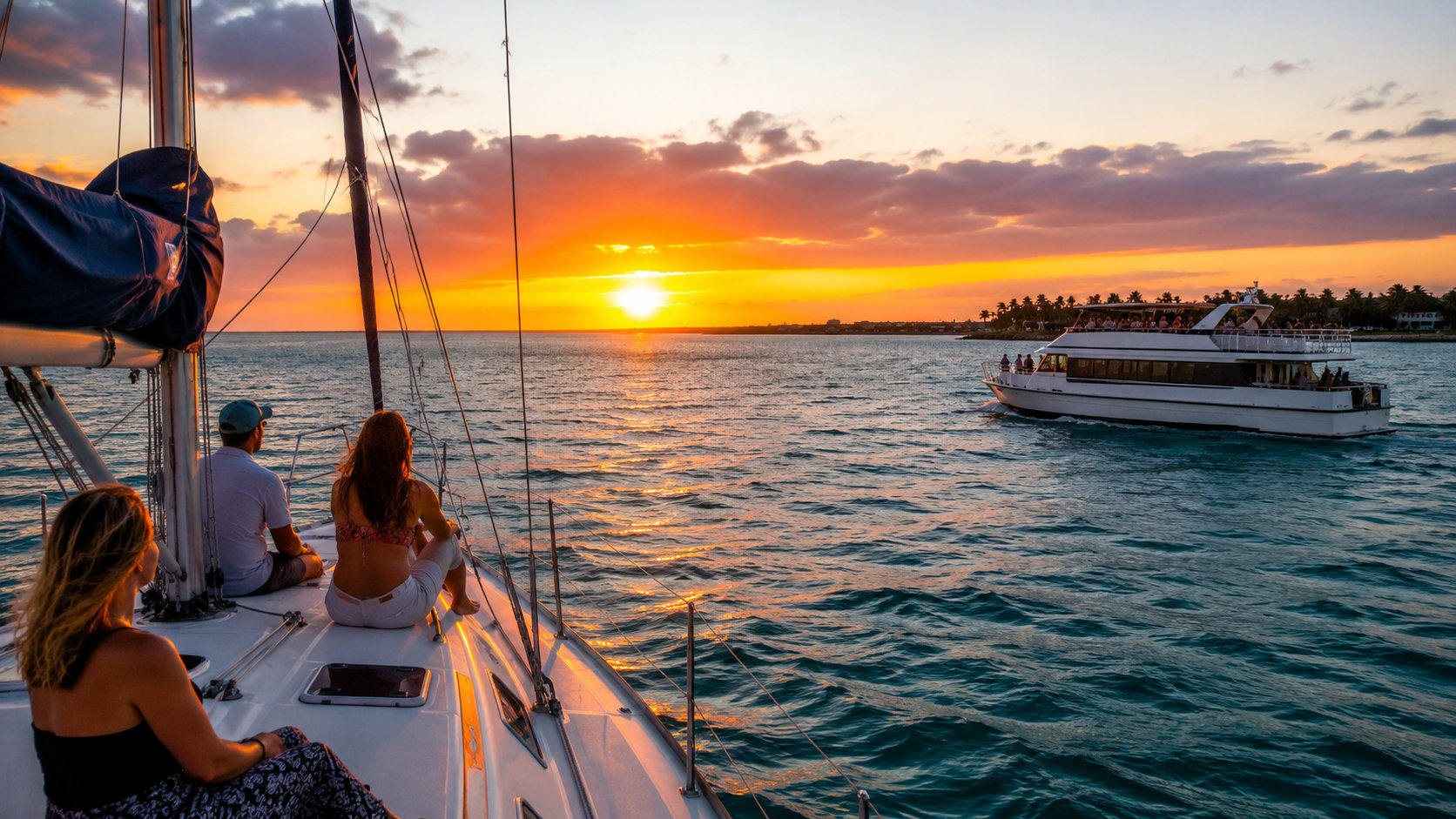
Same sun, different ride. A Key West sunset sail typically means a wind-powered schooner or sailing catamaran slipping past Mallory Square under canvas. Crews trim sheets, the boat heels a touch, and conversations drop to a murmur as the rig sings. A sunset cruise is almost always motor-powered. Think steady timing, bigger decks, more amenities, and a set pace regardless of wind.
Both chase the same golden hour off the island’s western edge, usually with drinks in hand and music rolling. The difference is the feel. Sails lean into romance and tradition—the whoosh of hull through water, masts framed against a pink sky. Cruises lean into convenience and comfort—plenty of seating, clear sight lines, and predictable schedules.
Quick take: choose a sunset sail for serenity and the classic Key West vibe; choose a sunset cruise for reliability, space, and extras.
Experience and Atmosphere: Vibe, Pace, and Crowd Size
Vibe & Crowd
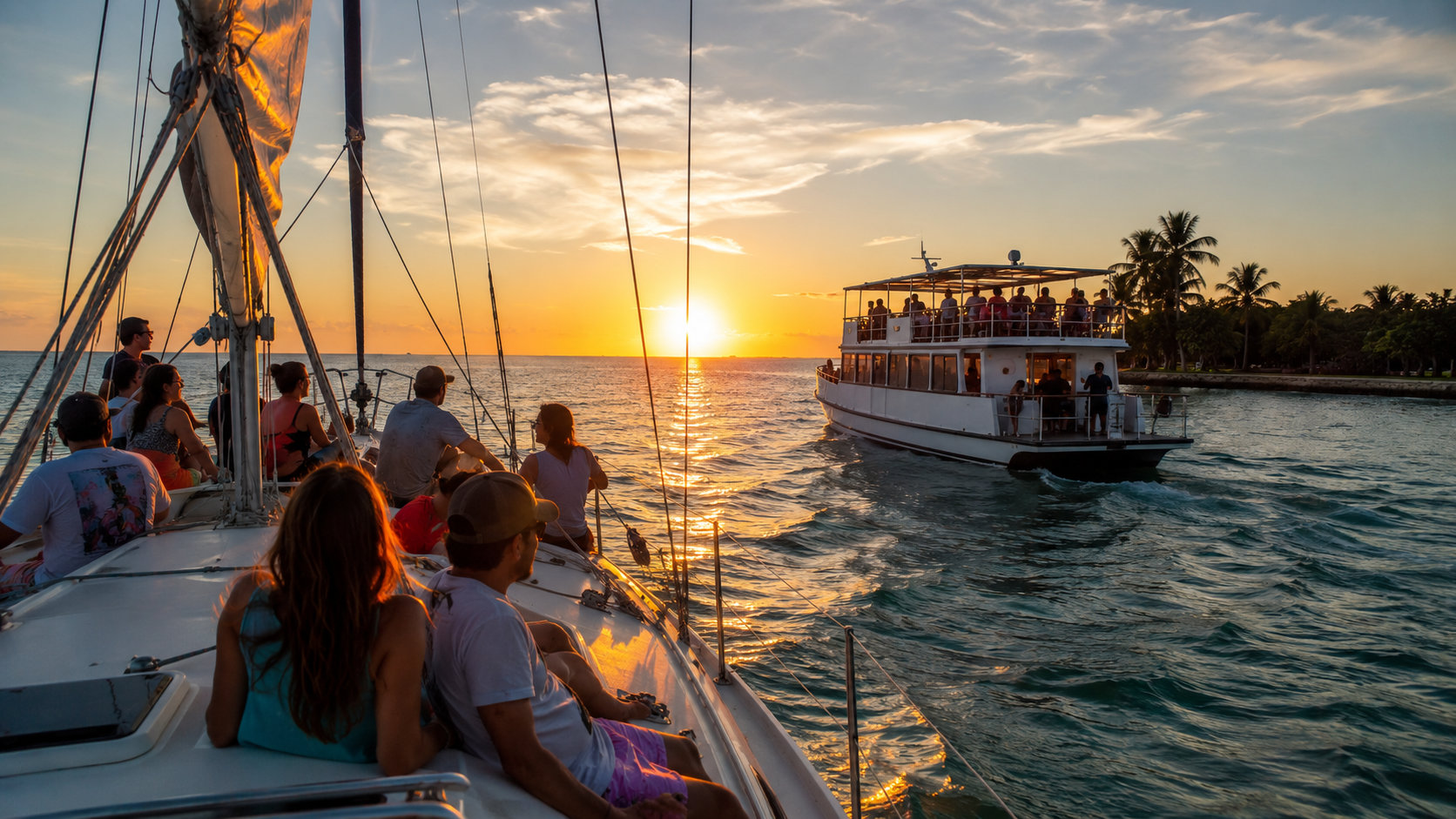
Sunset sails tend to be intimate. Schooners like the Appledore II or America 2.0 cap capacity, spreading guests along the rail and on cushioned bench seats. You’ll hear the creak of rigging, feel the lift of a gust, and watch dolphins arc without a soundtrack stepping on the moment. Expect smaller groups and easier conversation with crew.
Sunset cruises often dial up the social energy. Larger power catamarans—think outfits like Fury or Sebago—welcome more passengers, which means a livelier deck, more mingling, and a range of ages and travel styles. These boats handle groups well, from family reunions to bachelor parties, without feeling cramped thanks to wide, open layouts.
Onboard Ambience
On a sail, the boat is the show alongside the sunset. Canvas bellies with the trades, lines hum, and the skyline slips by at a glide. Music, if any, stays background-level. Photo ops come naturally: silhouettes of masts and teak against a tangerine sky, gulls wheeling over Sunset Key, the lighthouse winking to starboard.
On a cruise, entertainment and service take the front row. You’ll find spacious decks, shaded seating, and often a hosted bar with a proper lineup of beer, wine, and cocktails. Music rides the breeze—acoustic sets on some trips, upbeat playlists on others. Photos are easy here too thanks to broad, unobstructed rails and stable footing, especially nice for families and anyone shooting video.
Motion-wise, sails “breathe” with the wind. You’ll feel gentle acceleration, then a hush as the boat settles into a groove. Motor vessels deliver consistent momentum with less variation. If you prefer uniform movement, the cruise wins. If you like the natural rhythm of wind and water, the sail speaks your language.
Vessels, Routes, and Weather Dependence
Vessels & Stability
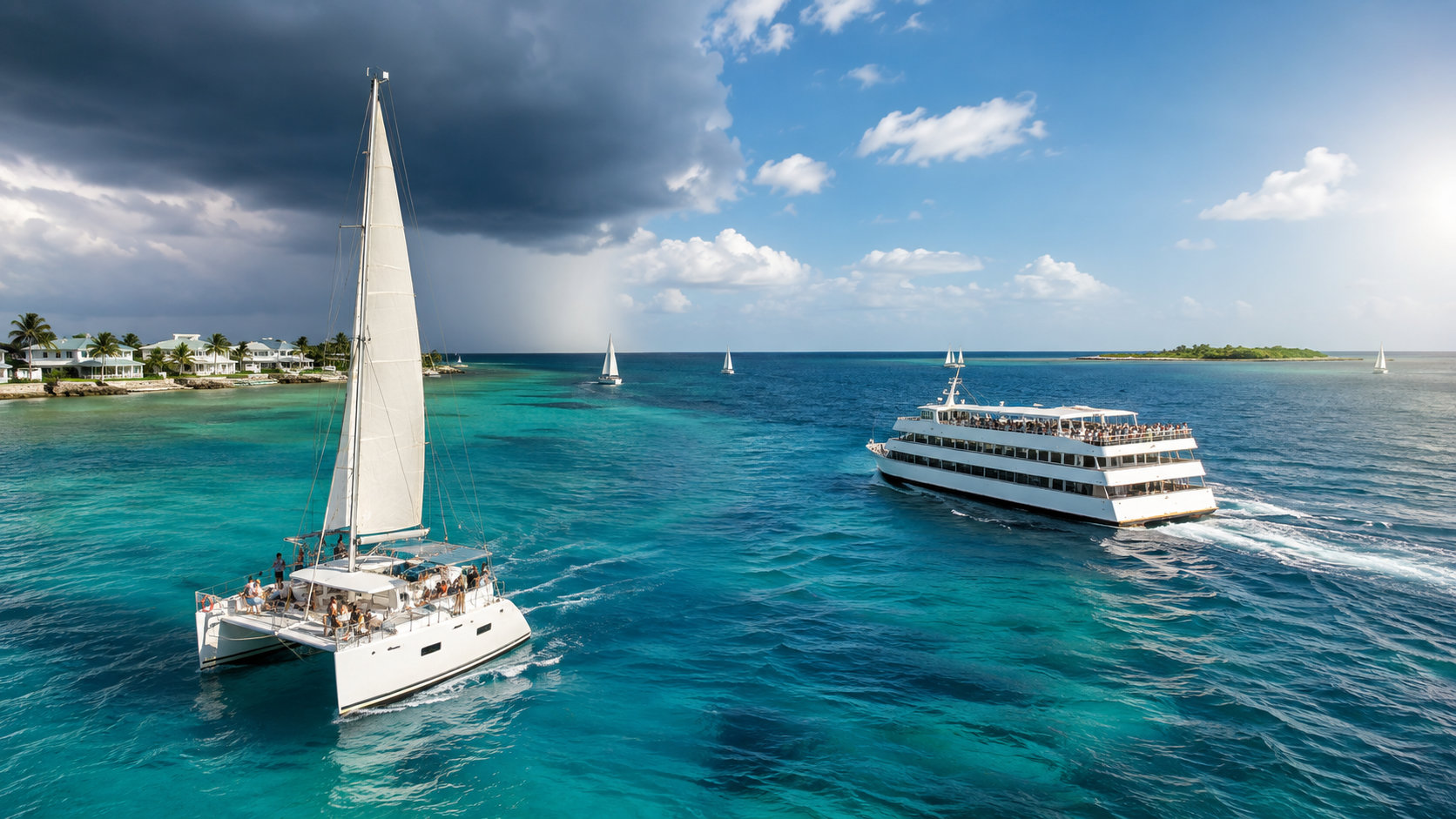
Schooners and traditional monohulls rely on wind. When the trades fill in, they fly; when the breeze is light, they may motor-sail or keep to closer waters. Sailing catamarans add beam and stability, spreading out the motion and keeping passengers comfortable in light chop.
Motor vessels stick to the clock. Power cats and mono-hulled cruisers keep range and timing regardless of a lull in the wind. In general, catamarans—sail or power—feel more stable than monohulls when the sea ruffles, which makes them a solid pick if you’re wary of motion.
Route & Weather
Most routes aim west and northwest for clear sunset sightlines beyond Sunset Key and Wisteria Island. You’ll likely pass by the Historic Seaport on departure, skirt the edge of the Northwest Channel, and angle toward the Gulf side for that postcard fade of light. On calmer days, some captains swing south to catch a different angle on the reef line or sweep by Fort Zachary Taylor’s beaches.
Windy days heighten the sailing experience—more speed, more canvas aloft, more drama in the sky. Calm evenings flatter motor cruises, which hold their ground and chase the best patch of horizon without worrying about boat speed. Crews regularly adjust for passing clouds, squalls, or reports of turtles and dolphins, shifting the boat a mile or two to catch the clearest window. Weather happens in Key West—especially June through October—so operators keep plans flexible to put guests in the best possible light.
Inclusions, Amenities, and Value for Money
Amenities & Access
Sunset cruises more often feature creature comforts: multiple restrooms, shaded seating, wide steps or gangways for boarding, and easy-access bars. Those larger deck plans matter if you’re traveling with kids, grandparents, or anyone with mobility concerns.
Sunset sails can feel cozier—narrower companionways, lower cabin headroom, and fewer indoor spaces. That’s part of the charm, but it’s smart to match the boat to your needs. If you require wheelchair access or prefer not to navigate steps, choose a larger catamaran and confirm boarding details before you book.
Food & Drinks
Open bars are common across both styles, though menus vary. Expect domestic and craft beers, house wines, and a handful of cocktails (rum punch, margaritas, or champagne for the “cheers” at sundown). Many motor cruises carry a fuller bar list and pour faster with multiple tenders working.
On the food front, some sails serve light bites—think charcuterie, fruit, and crackers—keeping the focus on the sailing. Others, like certain wine-and-hors d’oeuvres sails, elevate the spread with artisanal cheeses and pairings. Cruises may include appetizers, sliders, or dessert bites and often lean into live music or a DJ to round out the experience. Always check what’s included; “open bar” can mean beer and wine on one trip and a full cocktail menu on another.
Pricing & Value
Expect broad overlap. Most Key West sunset options run 1.5 to 2 hours and typically price from about $59 to $109 per adult depending on season, vessel size, and inclusions. Larger cruise boats can deliver more amenities per dollar—bigger bar programs, more food, live entertainment—because of scale. Boutique sails trade volume for atmosphere and hands-on service. If you measure value by extras, cruises tend to edge ahead; if you weigh ambiance and tradition, sails feel worth the premium.
Who Should Choose What, Plus Timing and Seasons
Best For
- Pick a sunset sail if you’re a couple chasing a quiet moment, a photographer chasing lines and texture, or a maritime enthusiast who wants to feel the boat earn its way across the water.
- Pick a sunset cruise if you’re traveling with family or a big group, prefer defined amenities and easier boarding, or want a guaranteed pace even when the wind stalls.
- If you’re prone to seasickness, favor a large catamaran (sail or power) on a calmer-day departure and stay topside in the breeze.
Timing & Seasons
Peak season in Key West runs December through April. Boats sell out—especially Friday to Sunday—so book several days in advance. Shoulder months in May and November deliver softer crowds and warm water. Hurricane season, June through November, brings pop-up storms and the odd squall line; flexibility helps, and many operators offer rebooking during dicey forecasts.
Departure times slide with the sun. In summer, expect check-in around 6:15–6:30 p.m. for a 7 p.m. sail; in winter, you might check in at 4:45–5 p.m. for a 5:30 p.m. departure. Plan to arrive 30–45 minutes early for boarding and a first round from the bar before lines off. If you’re comparing a Key West sunset sail vs sunset cruise strictly by timing, motor boats keep tighter schedules when daylight is short.
Booking Tips with The Florida Key
How to Book Smart
The Florida Key makes it easy to stack options side by side. Before you buy, compare these specifics rather than just the headline price:
- Vessel type and capacity: schooner, sailing catamaran, or power cat; max passengers; seating layout.
- Inclusions: beer/wine vs full open bar, appetizers vs light bites, live music vs playlist.
- Accessibility: boarding steps or ramp, restroom access, shaded seating.
- Route notes: typical direction of travel and how captains adjust for weather or wildlife.
- Cancellation policy: standard windows, weather rebooking, and cutoffs for refunds.
Also check the exact dock. Key West departures usually leave from the Historic Seaport (around Elizabeth and Greene Streets), the Mallory Square area, or Garrison Bight (north side of the island). Parking differs at each. If you’re ridesharing, plug in the operator’s booth name to avoid a last-minute sprint along the boardwalk.
What to Know Day-Of
- Verify sunset time and boarding cutoff in your confirmation. Many boats close the gate 10–15 minutes before departure.
- Bring a light layer. Evenings can turn breezy on the Gulf, even in August with the A/C of passing squalls.
- Wear non-slip shoes. Decks get wet with spray or condensation after sundown.
- Carry a valid ID for bar service and a credit card if you plan to tip the crew or purchase upgrades.
- Use a phone lanyard or wrist strap. One lurch, and that perfect sunset shot sinks to the bottom.
- Look for weather guarantees or easy rebooking options during stormy periods, especially late summer and early fall.
One last angle: if the forecast shows a front with gusty northeast winds, a traditional schooner can turn that into a showstopper. If the forecast shows glassy calm, a motor cruise will roam for the best perspective and lean on its service game. Either way, the sun will drop, the sky will fire up, and Mallory Square’s cheers will carry across the water to meet you. That’s the Key West promise—choose your ride, and let the evening do the rest.
Frequently asked questions
How long are Key West sunset sails and cruises and how much do they cost?
Most trips run 1.5 to 2 hours and typically price from about $59 to $109 per adult. Prices vary by season, vessel size, and what’s included, with larger cruise boats often packing in more amenities and boutique sails focusing on atmosphere and hands-on service.
What’s the difference between a Key West sunset sail and a sunset cruise?
A sunset sail is wind-powered on a schooner or sailing catamaran, offering a quieter, romantic vibe with the feel of the boat and rigging. A sunset cruise is motor-powered with bigger decks, more amenities, predictable timing, and a livelier social atmosphere.
What time do Key West sunset cruises and sails depart in summer and winter?
In summer, expect check-in around 6:15–6:30 p.m. for a 7 p.m. departure. In winter, check-in is typically 4:45–5 p.m. for a 5:30 p.m. departure, and you should plan to arrive 30–45 minutes early for boarding and a first round from the bar.
Which Key West sunset option is best if I get seasick or want the most stability?
Catamarans—sail or power—generally feel more stable than monohulls when the sea ruffles. If you’re prone to seasickness, choose a large catamaran on a calmer-day departure and stay topside in the breeze for comfort.
Do Key West sunset trips include drinks or food, and what’s the bar like?
Open bars are common across both styles, but menus vary from beer and wine to full cocktail lists. Sails may offer light bites or elevated hors d’oeuvres on specialty trips, while cruises often include heartier appetizers and may feature live music; always check what “open bar” includes for your specific tour.
Where do Key West sunset tours depart from and how should I plan arrival?
Most departures leave from the Historic Seaport (around Elizabeth and Greene Streets), the Mallory Square area, or Garrison Bight. Parking differs at each, so if you’re ridesharing, enter the operator’s booth name to avoid a last-minute dash along the boardwalk.