
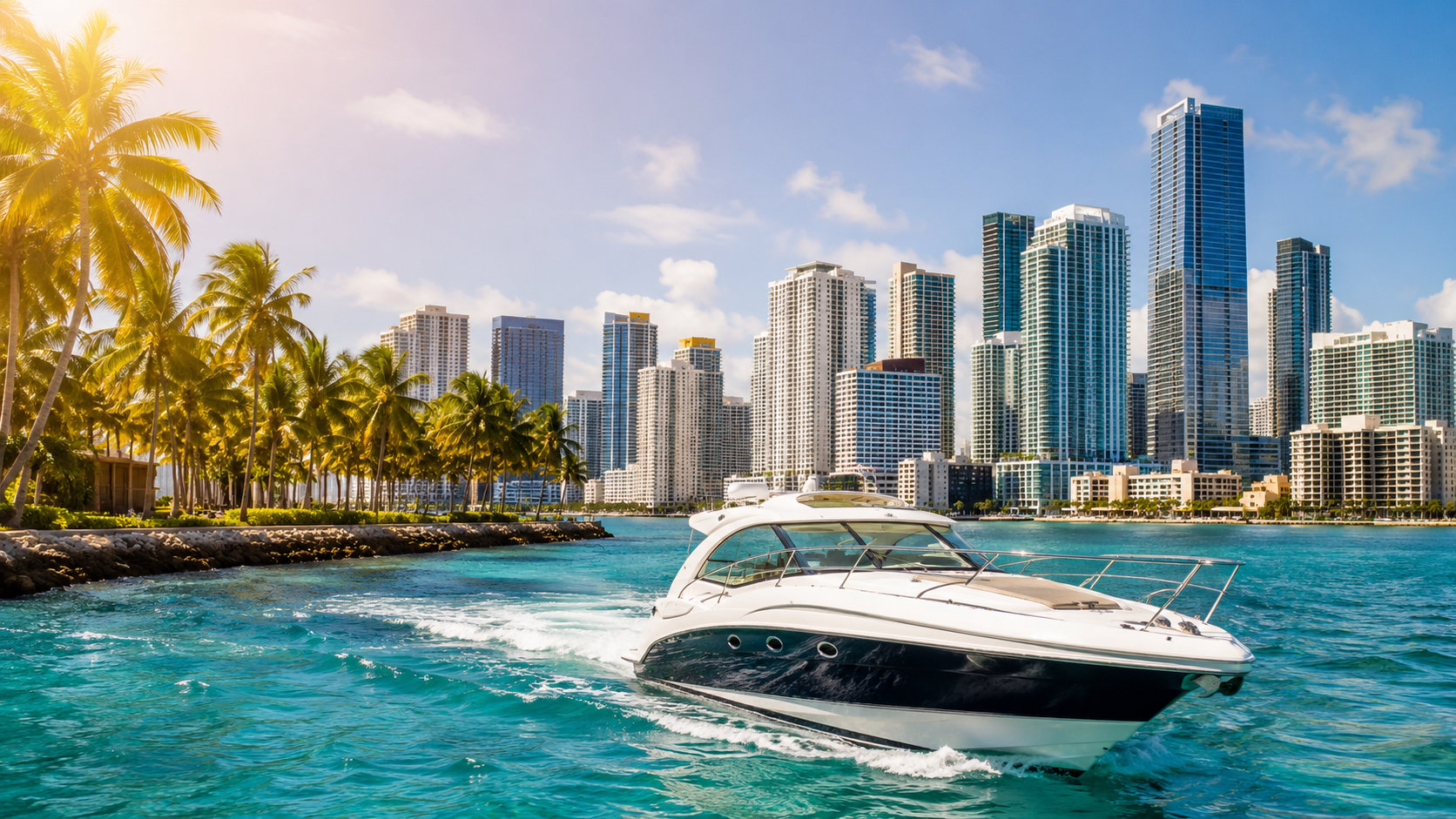
Why the Miami skyline belongs on your itinerary
Miami’s skyline doesn’t sit behind glass. It breathes with the bay. Stand along Biscayne and you’ll see glass towers bending light, sail masts pricking the horizon, and low slivers of barrier islands guarding the edge of the Atlantic. That mix—glittering high-rises flanked by blue water and green isles—gives the city its signature look.
The light seals the deal. A sunrise in winter throws cool, sharp detail across Brickell Key and the Icon Brickell towers; summer mornings arrive warm and hazy, with ibis skimming the channel. Golden hour paints the bay copper and turns Downtown silhouettes into a stack of graphic shapes. At night the skyline flips: office floors glow, the Kaseya Center pulses during a Heat game, cruise ships at PortMiami ignite like floating cities, and reflections tremble across the water.
Easy pairing helps. A skyline session drops neatly into a day bouncing between Brickell’s restaurants, the Pérez Art Museum and Museum Park, Bayside Marketplace, and a South Beach Art Deco stroll. Families can keep it short and sweet on a 60-minute bay loop. Couples can climb to a rooftop and linger after a sunset sail. Photographers—first-timers or veterans—get angles for days, from the Venetian Causeway to South Pointe Pier.
Bottom line: if you’re coming to Miami and you skip the skyline, you’re missing the city’s face.
Best ways to see the skyline
By water: boats, yachts, and catamarans
The bay gives you the closest, most cinematic angles. From a low deck, towers rise like a wall while mangrove islets and celebrity homes drift past in the foreground. Shared sightseeing boats out of Bayside Marketplace run frequent 60–90 minute loops—affordable, efficient, and perfect for first-time visitors. Step up to a sailing catamaran for a smoother ride and more deck space to move between viewpoints. Private yachts unlock custom routes, sundowner timing, and space for a small group to spread out with a skyline that feels like it’s yours alone.
Expect a different skyline mood depending on your vessel. Open-deck boats wash you with sea breeze and put cameras close to the waterline. Enclosed cabins keep you shaded and dry if a short shower swings through. If motion is a concern, wide-beam catamarans handle chop better in the PortMiami channel and along the Rickenbacker Causeway.
By air: helicopter and seaplane
Helicopter and seaplane tours collapse Miami into one sweeping frame: Atlantic surf lines, bright beach sand, the teal fan of Biscayne Bay, and the vertical edge of Downtown and Brickell. Flights as short as 15–20 minutes still catch the skyline, South Beach, and the Venetian Islands in a single arc. Longer flights skim to Key Biscayne’s lighthouse and back over the cruise port for a postcard shot of the city’s front door. It’s not the cheapest option, but for impact—and for photographers chasing that clean, layered composition—it delivers.
By land: rooftops and bayside promenades
Not every great view needs a boat or a rotor. Rooftop lounges in Brickell and Downtown make the skyline your table mate—plan an early reservation to catch the shift from day to night. At ground level, set your feet on the wide promenade at Maurice A. Ferré Park to frame museum lawns against the water and towers. South Pointe Park Pier on the south tip of Miami Beach faces back to the skyline with cruise ships gliding past, while the MacArthur Causeway’s Watson Island pull-offs (where legal and safe to stop) give that classic angle of the city beyond the causeway bridges.
Budget-friendly, flexible, and as long or short as you want—land-based viewpoints are the most forgiving choice if your plans keep changing.
Top routes and vantage points to consider
Biscayne Bay and PortMiami channel
A classic loop leaves Bayside Marketplace, slips across Biscayne Bay, and tracks the PortMiami channel with Brickell and Downtown stacked to port. Go at golden hour if you can. The cranes at the port frame the buildings, the water goes metallic, and the sun tucks behind the skyline for an easy silhouette shot. Boats often swing near Museum Park and the Kaseya Center before looping past the cruise terminals—when mega-ships are in, you’ll get a sense of scale that makes the towers look even taller.
Venetian and Star Islands loop
This route is a favorite on miami skyline tours because it blends architecture, gossip, and geometry. The Venetian Causeway stitches across the bay with low bridges and a string of residential islands; Star and Palm Islands add grand houses and palm-lined seawalls. As the captain points out celebrity addresses, you’ll see the skyline peeking between palms, then opening wide as you clear each causeway span. The interplay—low island foregrounds with vertical city beyond—makes strong photos without needing a long lens.
Rickenbacker Causeway and Key Biscayne
Head southeast from the mainland and the view flips again. From the Rickenbacker Causeway’s pull-offs, Miami’s towers hover above a broad sheet of water that mirrors the scene on calm days. Fishermen work the railing, paddleboarders slice past, and downtown looks almost suspended. Continue to Key Biscayne for wide-open horizons. Crandon Park and Bear Cut let you place sea grass, channel markers, and the skyline on the far rim of the bay. On a very still morning, reflections can be mirror-clean, especially in winter when the air is drier.
On foot, Watson Island’s green spaces and South Pointe Park supply two of the easiest “postcard” angles with room to set a tripod or let kids run while you shoot.
Day vs. golden hour vs. night
Daylight is about clarity. Building lines pop, water goes turquoise, and details like the Brickell Key seawall, marina pilings, and downtown’s rail link stand out. Midday glare can be harsh, so polarized sunglasses—and a polarizer on your camera—help cut surface shine and deepen the water’s color.
Golden hour tilts warm. Windows throw back honeyed light, clouds pick up pink edges, and long shadows etch depth into the skyline. If you’re on a boat, position yourself where you can shoot both west toward the sun and north toward the cooler tones that linger over the beach.
Night is drama. Towers light up, the InterContinental’s facade animations flicker, and the Kaseya Center glows on game nights. Night cruises slow the pace so you can linger on reflections; bring a steady hand or brace on a rail to keep shots sharp while moving.
Photographer notes: carry ND filters for bright daytime water smoothing, and faster lenses (f/2.8 or better) at night. On boats, image stabilization beats a tripod, which is cumbersome on deck.
What you’ll see: landmarks and neighborhoods
Brickell punches above its square mileage. The Icon Brickell trio forms a sculptural anchor beside Brickell Key’s tidy ring of condos and the Mandarin Oriental’s arc. From the bay, that cluster reads as a single scene—dense, modern, and unmistakably Miami.
Downtown opens wider. You’ll swing past Bayside Marketplace, where sightseeing boats queue, and the Kaseya Center—still “the arena” to locals—sits proud on the water. Museum Park spreads lawns in front of the Pérez Art Museum Miami and the Frost Science Museum’s shark-tooth roof. When a regatta or weekend sail-school fills the water, the juxtaposition between glass towers and white sails is pure Miami texture.
Cross to Miami Beach and the skyline edge softens. South Beach leaves you with Deco details—porthole windows, neon strips on Ocean Drive—while the high-rises of SoFi and mid-beach lurk farther up the shore. From South Pointe Park, the skyline becomes backdrop to fishing lines, cruise ships threading Government Cut, and the Atlantic’s open mouth.
Threading between them are the Venetian Causeway and the starry roster of Star and Fisher Islands. You’ll use those low-slung shapes as framing elements—palms, docks, and garden walls setting off the towered horizon beyond.
How to choose the right tour
Match your time and temperament to the format. Most travelers do well with 45–90 minutes on the water; you’ll loop the bay, pass the islands, and score the angles you came for. If you want to anchor off an island sandbar, swim, or add a slow sail to Key Biscayne, block two to four hours on a private charter.
Pick your vibe:
- Small-group boats: social, value-forward, easy to book last-minute on weekdays.
- Private charters: control the playlist and route, celebrate a birthday, or propose at sunset without strangers in the shot.
- Party cruises: DJ, dancing, skyline as a moving backdrop—fun for groups who want energy over commentary.
Decide how much narration you want. Some operators deliver steady, informed commentary on history, architecture, and celebrity properties; others lean music-first with a few light notes between songs. If you’re a photographer, minimal narration usually means fewer position changes and more time to compose.
Departure points matter. Bayside Marketplace is central and walkable from many Downtown hotels but can be busy on weekends and during cruise turnarounds. Miami Beach pickups along Collins Avenue save a rideshare across the causeway. Brickell docks often bundle valet or validated parking with a lunch or dinner stop nearby—handy if you’re pairing with a rooftop later.
Pricing, value, and booking tips
When to book
Sunset and weekend departures sell out first. From December through April, when Miami runs at full speed with festivals and snowbirds, lock in prime slots several days ahead. Weekday mornings and late evenings on non-holiday weeks often have same-day seats, especially for shared boats.
Ways to save
Shared sightseeing boats typically land between $35 and $69 per person depending on duration and inclusions. Helicopter tours start around $149 per person for short routes and climb with time and exclusivity. Private charters vary widely by vessel size, season, and extras—expect hourly rates that multiply with captain, fuel, and catering.
Combo deals can stretch your dollar. Look for packages that bundle a skyline cruise with a Little Havana walking and tasting tour or a half-day Everglades visit. If you’re heading to the Everglades, check official National Park Service pages for current access info and regulations around airboat use before you buy.
What’s included
Before you click purchase, skim the inclusions with a practical eye:
- Shade or enclosed cabin for midday sun and passing showers.
- Drinks—some boats include a beer or cocktail, others are BYOB or sell onboard.
- Restroom availability, which matters on 90-minute loops and with kids.
- Hotel pickup or validated parking, especially for Miami Beach departures at rush hour.
- Seating style—assigned, open, upper deck access—so you can plan your vantage point.
What to bring and what to wear
Miami dresses casual with a purpose. Think function first, style second, and your skyline time goes smoothly.
- Light layers. Sea breeze can turn cool after sunset, even in spring.
- Polarized sunglasses and reef-safe sunscreen for daytime glare and reflection.
- Camera strap and a microfiber cloth—spray and humidity fog lenses fast.
- Non-slip footwear for boat decks; save slick soles for the rooftop later.
- A compact bag only. Deck space is communal, and large backpacks become trip hazards.
Photographers: bring spare batteries (humidity and stabilization eat power) and a lens hood to fight flare when you’re shooting toward the sun over the bay.
Accessibility, safety, and weather
Accessibility varies by dock and vessel. Some piers involve steps, narrow gangways, or moving ramps that change with tide; call ahead if you use a wheelchair or need boarding assistance so the operator can match you to the right boat and departure.
Weather shifts fast in summer. Showers roll through, clear, and leave polished air behind. Confirm your operator’s rain and reschedule policies when you book so you know whether they wait, reroute, or rebook on stormy days.
If you’re sensitive to motion, choose larger, more stable catamarans and target calmer windows—mornings often see lighter winds. Follow crew instructions on where to stand or sit when the boat accelerates, and secure hats, scarves, and loose items in windy segments. For life jacket guidance and other on-the-water rules, the U.S. Coast Guard Boating Safety site outlines requirements that reputable operators follow.
Make it a full Miami day
Build a day that layers city, water, and flavor. Start with a late-morning skyline loop, then head to Wynwood for murals and a bite—coffee at Panther, tacos at Coyo, or a brewery flight. If Little Havana calls, stroll Calle Ocho for guava pastelitos, a cortadito at a ventanita, and a peek at the domino tables at Máximo Gómez Park.
Want big contrast? Pair the urban shine with nature. Spend half a day in the Everglades on an airboat and boardwalks, then return for a golden-hour sail along the PortMiami channel. The shift from sawgrass and herons to cranes and high-rise windows is Miami in two moods.
For an evening arc, book a sunset cruise and finish with a rooftop dinner—Brickell has a clutch of sky-high restaurants where the towers feel close enough to touch. Families can slot in the Phillip and Patricia Frost Museum of Science, a quick play on Museum Park’s lawns, or an hour on South Beach between boat and dinner. Keep it simple, keep it flexible, and let the skyline be the through line.
Practical picks: putting it all together
Ready to choose? Start with your must-have: water, air, or land. If it’s your first time and you want the classic experience, book a 60–90 minute bay boat from Bayside or Miami Beach around golden hour. If you collect cityscapes and want the widest perspective, spring for a helicopter or seaplane and line it up close to sunset. If you’re building a long, low-key afternoon, walk the promenade at Maurice A. Ferré Park, grab a cafecito, and time your rooftop table for twilight.
Whichever route you take, miami skyline tours reward a little planning: watch the light, pick a vantage, and give yourself the space to stop talking and just look. The city will do the rest.
Frequently asked questions
How long is a Miami skyline boat tour?
Most shared sightseeing boats run 60–90 minute loops on Biscayne Bay. That window is enough to pass the islands, swing by Museum Park and the Kaseya Center, and track the PortMiami channel for classic views. If you want to anchor at a sandbar or add a slow sail to Key Biscayne, plan 2–4 hours on a private charter.
Where do Miami skyline boat tours leave from?
Shared sightseeing boats depart frequently from Bayside Marketplace. Typical loops cross Biscayne Bay, trace the PortMiami channel, and often swing near Museum Park and the Kaseya Center before passing the cruise terminals.
What’s the best time of day to see the Miami skyline?
Golden hour is the sweet spot, with copper light on the bay and easy silhouette shots as the sun tucks behind the towers. Daylight brings the most clarity and turquoise water, while night turns on building lights and reflections, with some cruises slowing down so you can linger on the views.
Are catamarans better if I’m worried about motion on the water?
Yes—wide-beam catamarans handle chop better in the PortMiami channel and along the Rickenbacker Causeway. They also offer smoother rides and more deck space to move between viewpoints compared to smaller mono-hull boats.
How long are Miami helicopter or seaplane tours for the skyline?
Flights as short as 15–20 minutes still cover the skyline, South Beach, and the Venetian Islands in a single arc. Longer routes extend to Key Biscayne’s lighthouse and back over the cruise port for a postcard view of the city’s front door.
Can I get great Miami skyline views without booking a boat?
Yes—land-based spots like the promenade at Maurice A. Ferré Park, South Pointe Park Pier, and Watson Island pull-offs offer classic angles. Rooftop lounges in Brickell and Downtown also set you up for the day-to-night transition, and these options are budget-friendly and flexible if your plans change.