
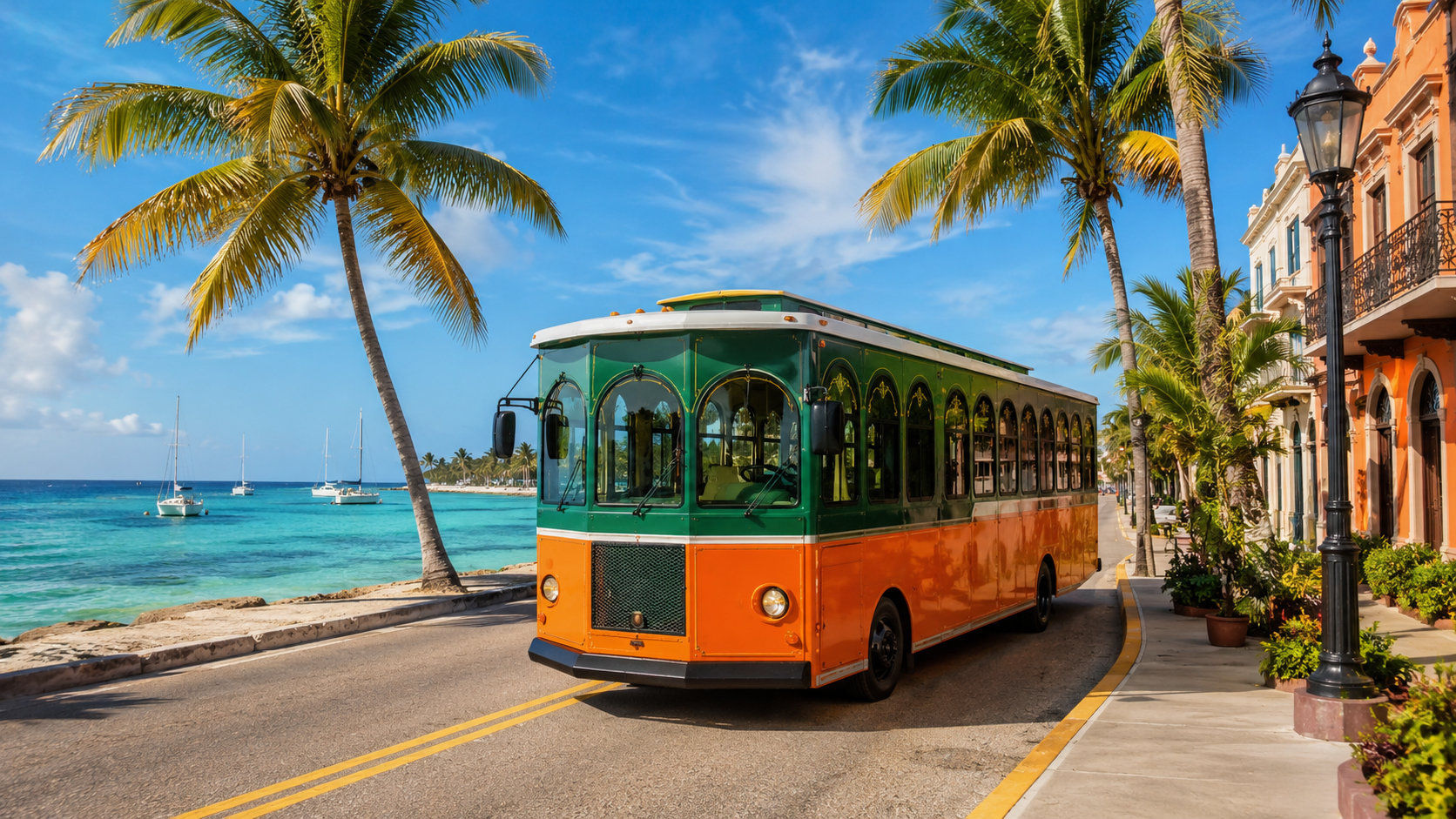
What Old Town Trolley Tours Offer
How hop-on hop-off works
Old Town Trolley Tours run open-air, orange-and-green trolleys on fixed loops with live guides narrating as you go. Buy a day pass, hop on at a marked stop, ride as long as you like, then hop off to explore a neighborhood or attraction. When you’re ready, re-board the next trolley and continue the loop. It’s sightseeing without the hassle of parking, a rolling orientation to the city with local color layered over the landmarks.
Guides weave in history and street-level tips—where to find the best conch fritters, which museum is worth the line, the side street that spills out onto a perfect photo of a fort or lighthouse. You’ll get a big-picture overview and still set your own pace at each stop.
Florida cities served
In Florida, Old Town Trolley Tours operate in two history-packed waterfront cities: Key West at the end of US-1 and St. Augustine on the First Coast. Both systems are built for first-time visitors and repeat travelers who want to roam without a car. The routes focus on compact, attraction-rich districts—Old Town Key West and the Colonial Quarter around St. George Street in St. Augustine—yet they reach out to farther stops you’d otherwise cab or bike to.
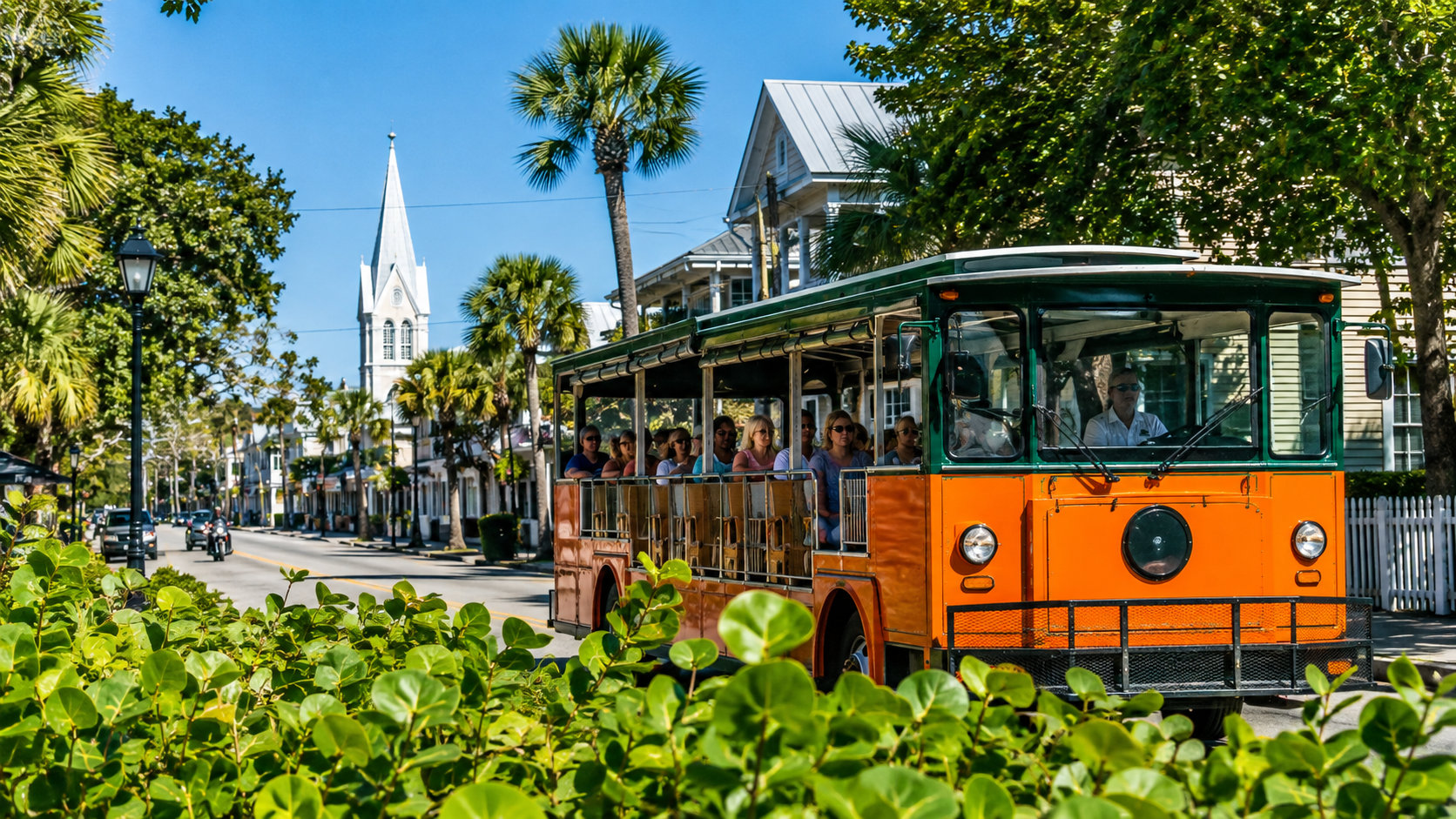
Key West Old Town Trolley Overview
Top stops and neighborhoods
Key West’s loop circles the heart of Old Town, linking together the postcard stops with the places locals actually spend time. Expect easy access to:
- Mallory Square and the waterfront, where street performers warm up long before sunset.
- Duval Street, from the quieter art galleries near Upper Duval to the nightlife thrum by Irish Kevin’s and Sloppy Joe’s.
- The Hemingway Home area on Whitehead Street, steps from the Key West Lighthouse and its keeper’s quarters museum.
- Southernmost Point at Whitehead and South Streets—quick photo ops, shorter lines if you arrive before 10 a.m.
- The Historic Seaport and Harbor Walk, lined with charter boats, happy hour spots, and grab-and-go seafood shacks.
The trolley also angles through pockets many visitors miss on foot: the Bahama Village edge by Petronia Street, the Truman Annex with shaded lanes and the Little White House complex, and the waterfront at Truman Waterfront Park.
Schedules and frequency
Typical service runs daily with trolleys circulating every 15–30 minutes, faster in winter high season and on cruise-ship mornings, a bit slower during steamy midsummer afternoons. Plan for the last full loop to depart in the late afternoon, with the final pick-ups roughly an hour later depending on the day and time of year. If your time is tight—say you’ve only got five hours in port—start early and do one full loop before you begin hopping on and off. You’ll map the city in your head and flag where to return.
Where to board
The main boarding hub sits near Mallory Square and the Old Post Office, a few minutes’ walk from the ferry terminal and cruise pier. From there, you’ll find signed stops along Whitehead, Simonton, Caroline, Front, and Truman, plus at major sights such as the Hemingway Home and the Southernmost Point. Look for the orange-and-green signs and small crowd of sunhats. If you’re based at a hotel in Old Town, odds are you’re within a 5–10 minute walk of a stop.
On cruise days, this is one of the easiest ways to cover the highlights without renting a car or battling for parking on narrow streets. Ride to Mallory or the Seaport for lunch, swing by the lighthouse, snap your Southernmost photo, and glide back to the ship with time to spare.
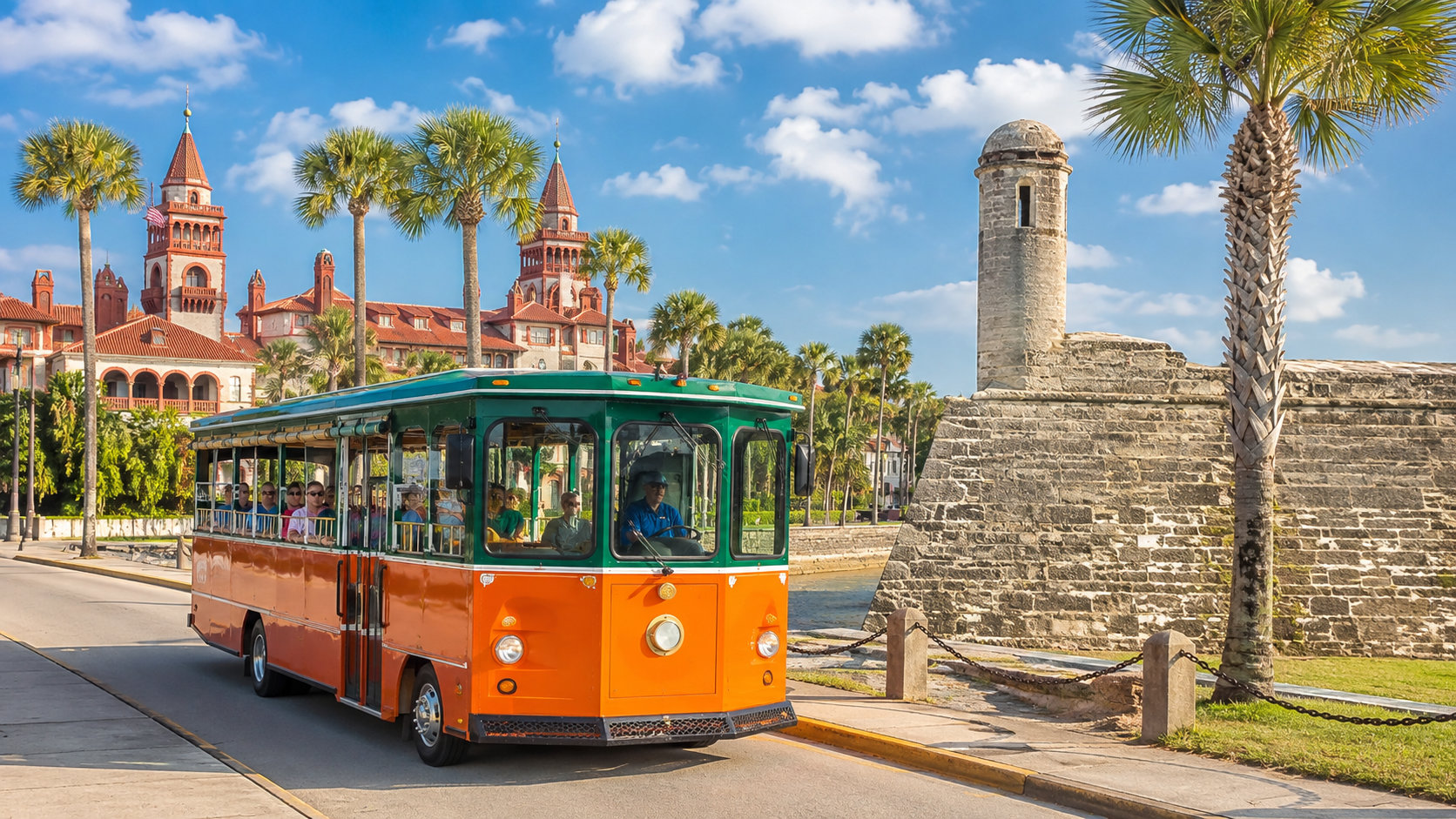
St. Augustine Old Town Trolley Overview
Top stops and landmarks
St. Augustine’s loop traces 450+ years of history across a surprisingly spread-out core. Expect stops at:
- Castillo de San Marcos, the 17th-century coquina fort guarding Matanzas Bay.
- The Colonial Quarter and St. George Street, packed with shops, eateries, and living-history corners.
- Lightner Museum inside Henry Flagler’s former Alcazar Hotel—Gilded Age architecture with eclectic collections.
- Ponce de Leon’s Fountain of Youth Archaeological Park along scenic Magnolia Avenue.
- The Old Jail and Oldest Store Museum—quirky, fun with kids, and a quick walk to the Old Town Trolley depot.
You’ll also reach Mission Nombre de Dios and the Great Cross, the Old City Gates, and the Victorian-era charm around Aviles Street. Having wheels here pays off; the city’s most popular sights sit in multiple pockets divided by the bayfront and US-1, and sidewalks can get jammed midday.
Schedules and frequency
Trolleys typically circle every 15–30 minutes, with extra vehicles on weekends, during Nights of Lights, and on festival days. Expect extended evening hours during big events and holidays. As with any hop-on system, actual wait times vary by traffic, boarding crowds at the Castillo and the Visitor Center, and bridge delays. If your must-see list is long, make the first trolley of the morning and use lunch as a reset break in the heat of the day.
Visitor centers and boarding
Most visitors start at the St. Augustine Visitor Information Center (VIC) complex, home to a large parking garage and a primary trolley boarding area. It’s a short stroll to the City Gates and St. George Street. Marked stops dot the bayfront near the Bridge of Lions, the Lightner Museum district, and the Fountain of Youth corridor. The boarding flow is simple: queue at the sign, confirm your ticket or mobile voucher with the driver, and find a seat facing outward for the best breeze.
Tickets, Passes, and Money-Saving Bundles
Online vs on-site purchase
Buying tickets online secures your date and often the best deal. In peak months—December to April in Key West, March to May and late November to early January in St. Augustine—same-day tickets can sell out during midday surges. Mobile vouchers are widely accepted; have your phone brightness up for quick scanning. On-site booths near Mallory Square in Key West and the VIC in St. Augustine work well if you prefer to buy day-of and chat through options with a person.
Combo tours and attractions
Bundled passes can stretch your dollars if you plan to hop off for museums. In Key West, popular add-ons pair the trolley with the Harry S. Truman Little White House or the Hemingway Home and Museum. In St. Augustine, look for packages that include the Old Jail, the Oldest Store Museum, and occasionally the Potter’s Wax Museum. If your party likes to keep moving, the basic day pass may be enough; museum-heavy days favor the combos.
Typical pricing
Adult base fares generally run in the $35–$60 range depending on city and season, with deals for kids and families. Young children often ride free with a paying adult up to a set age; the exact cutoff varies by city and current promotion. Seniors and military discounts may appear seasonally. If you’re comparing with parking and rideshares, remember the trolley doubles as your day-long shuttle—no re-parking or surge pricing as crowds swell.
Refunds and weather policy
Florida weather moves fast. Summer squalls blow in and out; cold fronts in winter can bring wind and a quick sprinkle. Service can be modified by lightning, street closures, or severe conditions. Check same-day alerts on the operator’s site before you head out and look for flexible rebooking language when purchasing. For stormy stretches or late-season systems in the Keys, keep an eye on the local forecast and any marine advisories via the National Weather Service Key West.
Best Time to Ride and Planning Tips
Beating crowds and heat
First trolley of the morning is gold. Seats are easy to come by, the streets are cooler, and you’ll reach photo stops like Southernmost Point, the Castillo ramparts, or the Lighthouse overlooks before the lines stack up. Midday—11 a.m. to 3 p.m.—is both the hottest and the busiest, especially from March through August and on weekends. Use that window for indoor museums or a shaded lunch, then hop back on when the sun softens.
Do a full loop as your opener. It’s a 60–90 minute overview depending on traffic and season. You’ll hear the history, note your favorites, and make a plan. After that, hop off only at your must-see stops. Two or three longer visits plus a few quick photo hops make for a satisfying day without rushing.
Bring a refillable water bottle, sunscreen, a brimmed hat, and a light rain layer. Open-air seats feel great when the breeze kicks up, less so under a midday sun or passing drizzle. Trolleys provide shade, but Florida reflects heat off pavement and water. Hydration beats a mid-afternoon crash every time.
Cruise days and events
Key West’s schedule intensity rises with cruise calls. If you’re staying on the island, glance at the day’s ship count—one large ship at Pier B moves thousands of riders into Old Town between 9 a.m. and 2 p.m. Work around it: tour early, break for lunch away from Duval, then circle back for a quieter late afternoon. In St. Augustine, weekend festivals, Nights of Lights (late November through January), and spring break weeks swell lines at the VIC stops. Expect extended hours on big event days and consider evening rides to see the city lit up without the midday heat.
Accessibility, Families, and Practicalities
Wheelchair access
Selected Old Town Trolleys in both cities have wheelchair lifts and space for one secured mobility device. Because capacity is limited and not every vehicle is lift-equipped, call ahead for timing guidance if a lift is essential, and arrive a few minutes early at major boarding points so the team can coordinate. Curb cuts at most stops are solid, though brick and coquina sidewalks in St. Augustine can be uneven. In Key West, short distances between many sights make it easy to combine a ride with gentle rolling along Whitehead or the Seaport boardwalk.
Strollers and pets
Strollers typically need to be folded before boarding for aisle clearance. Pack a lightweight umbrella-style stroller if possible. Service animals are permitted; bring identifying gear to ease boarding conversations. Policies for non-service pets vary by city and operator version—if you’re traveling with a small dog, call ahead to confirm the current rules. Either way, plan rest breaks for kids at shaded parks: Truman Waterfront Park in Key West and the Plaza de la Constitución in St. Augustine both offer room to roam.
There are no restrooms on board. Build in stops at attractions, museums, or the Visitor Information Center facilities. Snacks and sealed drinks are generally fine, but save messy meals for off-trolley time to keep the ride comfortable for everyone.
Old Town Trolley vs Conch Tour Train and Other Options
Hop-on flexibility vs continuous tour
In Key West, the comparison comes up a lot: Old Town Trolley or the Conch Tour Train? The trolley is a hop-on, hop-off system—great if you want to step into the Hemingway Home, linger at the Seaport, or grab a slice of Key lime pie without watching the clock. The Conch Tour Train runs as a continuous seated tour. You board once, roll through Old Town with a steady narrative, and return to your starting point without hopping off at every stop. It’s an easy-breeze option if you prefer to sit, listen, and shoot photos from your seat.
When to choose each
Pick the trolley when you want flexibility, have specific attractions in mind, or plan to use it as your all-day shuttle. It’s also the better match if you’re traveling with kids who need wiggle breaks. Choose the train when you’re short on walking time, traveling with someone who prefers a set seat and a single loop, or you’re visiting in the heat of summer and want a contained, narrative-first tour.
Both pair well with other ways to get around. In Key West, the free Duval Loop bus covers much of the entertainment corridor and runs in a big figure-eight—handy for short hops between bars, galleries, and the Seaport once you’ve finished the trolley loop. Rideshares and bikes fill gaps. In St. Augustine, walking the bayfront and St. George Street is half the fun; use the trolley to connect districts, then slow down on foot inside each zone.
Parking, Pickup, and Getting Around Car-Free
Park-and-ride ideas
Key West rewards travelers who ditch the car. Street parking in Old Town is a mix of residential zones and metered spots with tight time limits, and private lots fill early. If you’re driving in for the day, aim for municipal garages or lots on the edge of Old Town and let the trolley do the rest. Many hotels offer day parking for guests only; if you’re staying overnight, leave the car put and walk to your nearest stop.
In St. Augustine, the Visitor Information Center garage anchors the north end of the historic district and sits beside a primary trolley boarding area. Park once, step onto the trolley, and fan out to the Castillo, Flagler-era landmarks, and the Fountain of Youth area without circling for a second spot. On busy Saturdays and during Nights of Lights, the garage can fill; arrive early or plan for an evening loop after dinner when departures thin out.
Using trolleys as a day shuttle
Think of your ticket as an all-day shuttle pass. In Key West, ride from breakfast on Caroline Street to the Lighthouse and Hemingway block, hop to the Southernmost area for a beach interlude at South Beach, then jump back toward the Seaport for late-afternoon oysters. In St. Augustine, link the VIC to the Colonial Quarter, then onward to the Lightner Museum and a sunset stroll by the Bridge of Lions—no re-parking, no bridge backups, no guessing at two-hour limits on a side street.
Seasonal Events and Special Tours
Holiday lights and ghost tours
Night tours add a different flavor. Both cities host Ghosts & Gravestones evening runs, a campfire-style mix of local lore, odd history, and theatrics that steers past cemeteries and shadowed lanes you won’t see by day. In St. Augustine, the seasonal Holiday Lights tours sell out quickly during Nights of Lights (typically late November through January). The trolley’s open-air seats turn into front-row viewing as millions of white lights outline the bayfront and Plaza. Book early for weekends and aim for a post-dinner departure when the air cools and the reflections shimmer on Matanzas Bay.
Weather and hurricane season
Summer rides bring heat and humidity; pack water and plan indoor breaks from noon to mid-afternoon. Pop-up thunderstorms are common from June through September, usually short but intense. Late summer and fall also overlap with the Atlantic hurricane season. For Key West trips, check conditions and any advisories through the National Weather Service Key West before you set a tight sightseeing schedule, especially if you’re pairing a trolley day with water-based plans.
On days with heavy rain or lightning, routes and frequencies can shift to keep operations safe. Flex your plan: start with museums, target outdoor viewpoints for early or late, and use the hop-on nature of the trolley to dodge weather cells. When a front clears, the air turns gorgeous—and the open sides of the trolley catch every bit of the breeze.
Sample One-Day Itineraries
Key West first-timer game plan
Be at the Mallory Square stop for the first departure. Ride a full loop while noting your top three stops. Hop off at the Lighthouse/Hemingway block, tour both (90 minutes total), then roll to Southernmost Point for a quick photo. Skip back toward the Historic Seaport for lunch—Half Shell, Pepe’s, or a shrimp roll by the water. After lunch, dip into the Truman Little White House or the Custom House Museum, then re-board for Mallory Square. End with sunset performers and a slice of pie.
St. Augustine highlights in a day
Park at the VIC and board early. Get off at Castillo de San Marcos as the gates open, explore the ramparts, then re-board for the Colonial Quarter and St. George Street. After a stroll and coffee, ride to the Lightner Museum for architecture and exhibits. Post-lunch, make for the Fountain of Youth and Magnolia Avenue’s live oaks for photos. Finish back at the bayfront, walking the Bridge of Lions at golden hour before an evening trolley loop to see the lights flick on.
Insider Tips from the Road
Sit on the right side for bayfront views in St. Augustine; in Key West, the left side gives you great angles along Whitehead toward the Lighthouse and the Southernmost Point queue. Keep small bills on hand for tips or a bottle of cold water at a quick stop. Ask your guide where they’d eat—most will happily steer you to a lunch counter or happy hour special nearby. If you’re traveling with a group, split up the lines: two in the photo queue while two grab seats on the next trolley, then swap. It keeps the day moving.
Finally, embrace the pace. You’ll see more from an open-air bench than you will hunting parking or craning through a windshield. Let the commentary set the scene, jump off where it calls to you, and leave room for a serendipitous stop or two. That’s the sweet spot for old town exploring in both Key West and St. Augustine.
Frequently asked questions
How much do Old Town Trolley tickets cost in Florida?
Adult base fares generally run $35–$60 depending on the city and season. There are deals for kids and families, and young children often ride free with a paying adult up to a set age (the exact cutoff varies by city and promotion). Seniors and military discounts may appear seasonally.
How often do the Key West Old Town Trolleys run and when do they finish for the day?
Trolleys typically come every 15–30 minutes in Key West. Service is faster in winter high season and on cruise-ship mornings, a bit slower on steamy midsummer afternoons; the last full loop usually departs in the late afternoon with final pickups roughly an hour later depending on the day and time of year.
Where do you board the Old Town Trolley in Key West?
The main boarding hub is near Mallory Square and the Old Post Office. Signed stops line Whitehead, Simonton, Caroline, Front, and Truman Streets, as well as major sights like the Hemingway Home and Southernmost Point, and most Old Town hotels are within a 5–10 minute walk of a stop.
Where do you board the St. Augustine Old Town Trolley and is parking available?
Most visitors start at the St. Augustine Visitor Information Center complex, which has a large parking garage and a primary trolley boarding area. Marked stops also dot the bayfront near the Bridge of Lions, the Lightner Museum district, and the Fountain of Youth corridor, and you simply queue, have your ticket or mobile voucher checked by the driver, and grab a seat.
How long does a full Old Town Trolley loop take?
A complete loop takes about 60–90 minutes depending on traffic and season. Many travelers ride one full circuit first to get the overview, then start hopping on and off at their must-see stops.
What’s the best time of day to ride the Old Town Trolley to avoid crowds and heat?
The first trolley of the morning is the best for easy seating, cooler temperatures, and shorter lines at popular photo stops. Midday from about 11 a.m. to 3 p.m. is both the hottest and busiest, so plan indoor museums or a shaded lunch then and resume riding as the sun eases.