
1. Plan Your Miami Departure and Drive Timing
Best Time to Leave
Set your alarm. Leaving Miami at sunrise — think 6:30 to 7:00 a.m. — puts you ahead of the traffic that backs up on US-1 through Homestead and gives you first crack at parking at Bahia Honda and John Pennekamp before the lots fill. Friday afternoons and holiday weekends are a different story entirely: the Overseas Highway becomes a slow crawl from Florida City all the way to Key Largo, turning a 90-minute stretch into a genuine endurance test. If you have any flexibility, aim for a Tuesday or Wednesday departure.
How Long It Takes
Without stops, Miami to Key West runs about 3.5 to 4 hours on a clear weekday morning. With stops — and you'll want several — budget a full day or, better yet, two. Before you cross into the Keys proper, top off the gas tank and load up on snacks in Florida City or Homestead. Fuel stations exist along the Overseas Highway, but prices climb the further south you go, and you don't want to make decisions under pressure. Download an offline map, too. Cell service dips noticeably around the Lower Keys, and a mile marker (MM) list printed or saved on your phone is genuinely useful when you're squinting at roadside signs doing 55 mph.
2. Key Largo Kickoff (MM 108–90): Reefs and First Pull-Offs
Don't-Miss Mile Markers
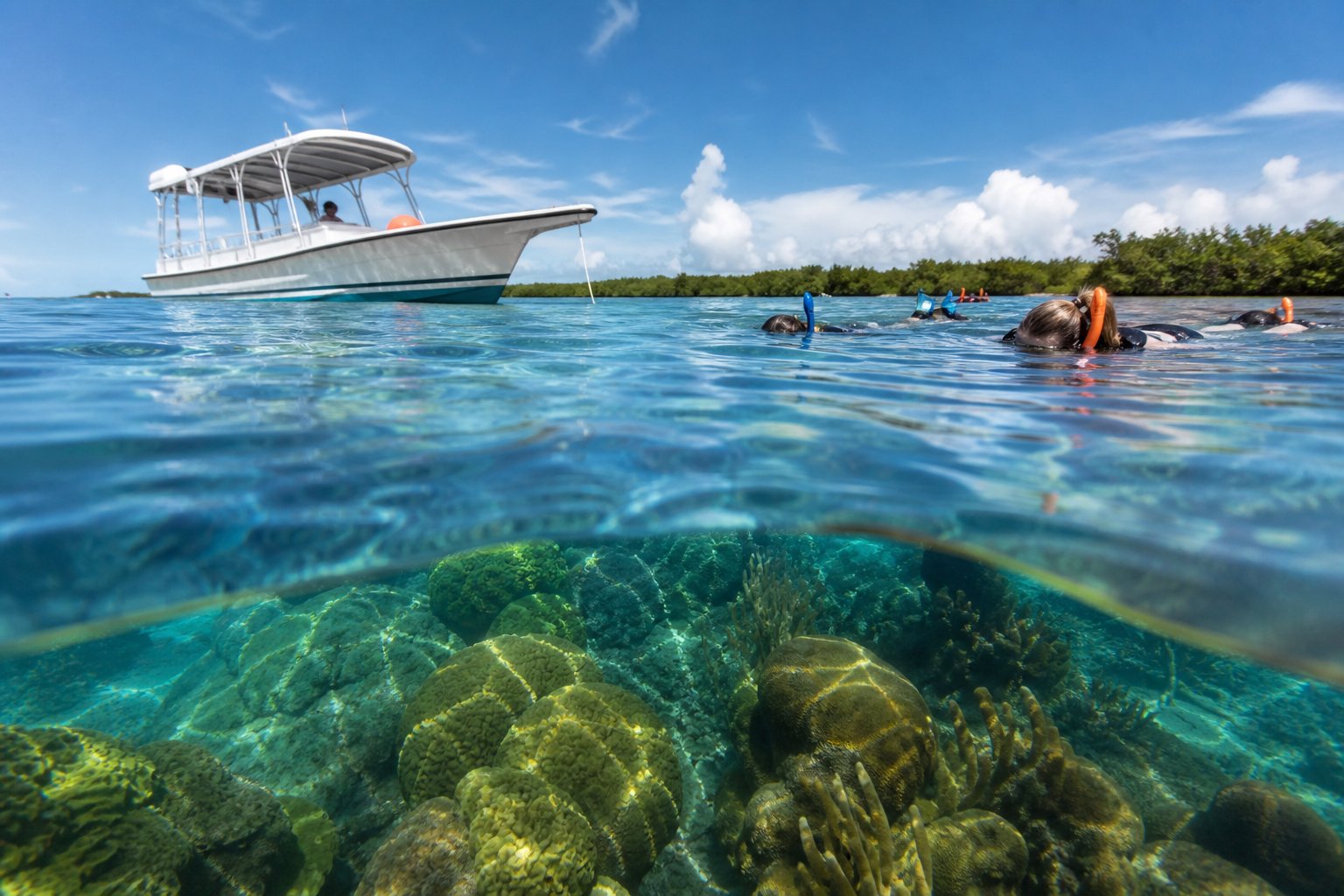
Key Largo sets the tone fast. The water changes color somewhere around MM 105, going from the murky fringe of Biscayne Bay to that particular shade of green-blue that makes first-timers reach for their phones. Your first real stop should be John Pennekamp Coral Reef State Park at MM 102.5, the first underwater state park in the United States. Snorkel tours run throughout the morning, typically departing at 9 a.m. and noon — call ahead or book online since slots sell out on busy winter weekends. There's also a small beach and a visitor center aquarium worth a quick walk-through even if you're not getting in the water.
Just up the road at MM 104, the Caribbean Club is a classic Keys dive bar with a waterfront deck overlooking Blackwater Sound. It's a good excuse to stretch your legs and grab a photo that actually looks like the Florida Keys road trip you imagined. Nearby, Dagny Johnson Key Largo Hammock Botanical State Park near MM 106 offers a shaded trail through one of the largest tracts of West Indian tropical hardwood hammock in the United States — a stark contrast to the open water views everywhere else, and genuinely cool under the canopy even in July.
At MM 100, Key Largo Chocolates and Ice Cream makes for a quick, no-guilt detour. The Florida Keys Overseas Heritage Trail also has paved pull-offs throughout this stretch — safe alternatives to stopping on the highway shoulder when the urge to photograph the bay gets irresistible.
3. Islamorada (MM 90–72): Sandbars, Art, and Tarpon
Top Stops by MM
Islamorada calls itself the Sport Fishing Capital of the World, and walking around Robbie's Marina at MM 77.5 makes that claim feel earned. Massive tarpon congregate at the dock waiting to be fed — you can buy a bucket of baitfish for a few dollars and hand-feed fish that weigh more than your carry-on luggage. Beyond the tarpon spectacle, Robbie's hosts an artisan market, fishing charters, and kayak rentals, making it a genuine half-day stop if your schedule allows.
Windley Key Fossil Reef Geological State Park at MM 84.9 is one of the more underrated stops on the entire mile marker guide. Short trails wind through an old quarry where you can see brain coral and star coral fossils embedded in the rock face — remnants of an ancient reef exposed by Henry Flagler's railroad crews over a century ago. Admission is minimal and crowds are thin.
The Islamorada Beer Company at MM 82 pairs well with a late morning — they open early enough that a noon beer and a lobster Reuben counts as lunch. The attached distillery produces a solid rum if you want something local to bring home. Then push south to Anne's Beach at MM 73, a free, county-maintained beach with a wooden boardwalk through the mangroves, shallow warm water that's perfect for kids, and surprisingly easy parking compared to other Keys beaches. If you miss the sunset spots along this stretch, aim for the bayside pull-offs between MM 81 and MM 79 — they face west and the light show over Florida Bay can be extraordinary.
4. Marathon (MM 54–47): Beaches, Bites, and a Midway Reset
Family-Friendly Picks
Marathon sits roughly at the geographic midpoint of your florida keys road trip, making it the logical place to decompress, eat a real meal, and reset. Sombrero Beach at MM 50 is the destination: a wide, Atlantic-facing beach with picnic pavilions, outdoor showers, volleyball nets, and calm enough water for swimming most of the year. Parking is free and the facilities are well-maintained. It's the kind of beach that reminds you why people drive this highway in the first place.
A short hop away, Keys Fisheries around MM 50 is a working waterfront seafood market and restaurant with picnic tables over the water and a lobster Reuben sandwich that has developed a genuine cult following. Arrive before noon on weekends to avoid a wait. For something more structured, the Turtle Hospital at MM 48.5 offers behind-the-scenes tours of their sea turtle rehabilitation facility — book in advance, because tours run on limited slots and fill weeks ahead in winter. Kids and adults alike find it unexpectedly moving.
If you have a kayak rental or a few extra hours, Curry Hammock State Park at MM 56 is worth a detour. The mangrove channels are calm, shallow, and full of wildlife — a quiet counterpoint to the open-water spectacle of the highway itself.
5. Historic Seven Mile Bridge (MM 47–40): Iconic Views and Walks
Photo Tips
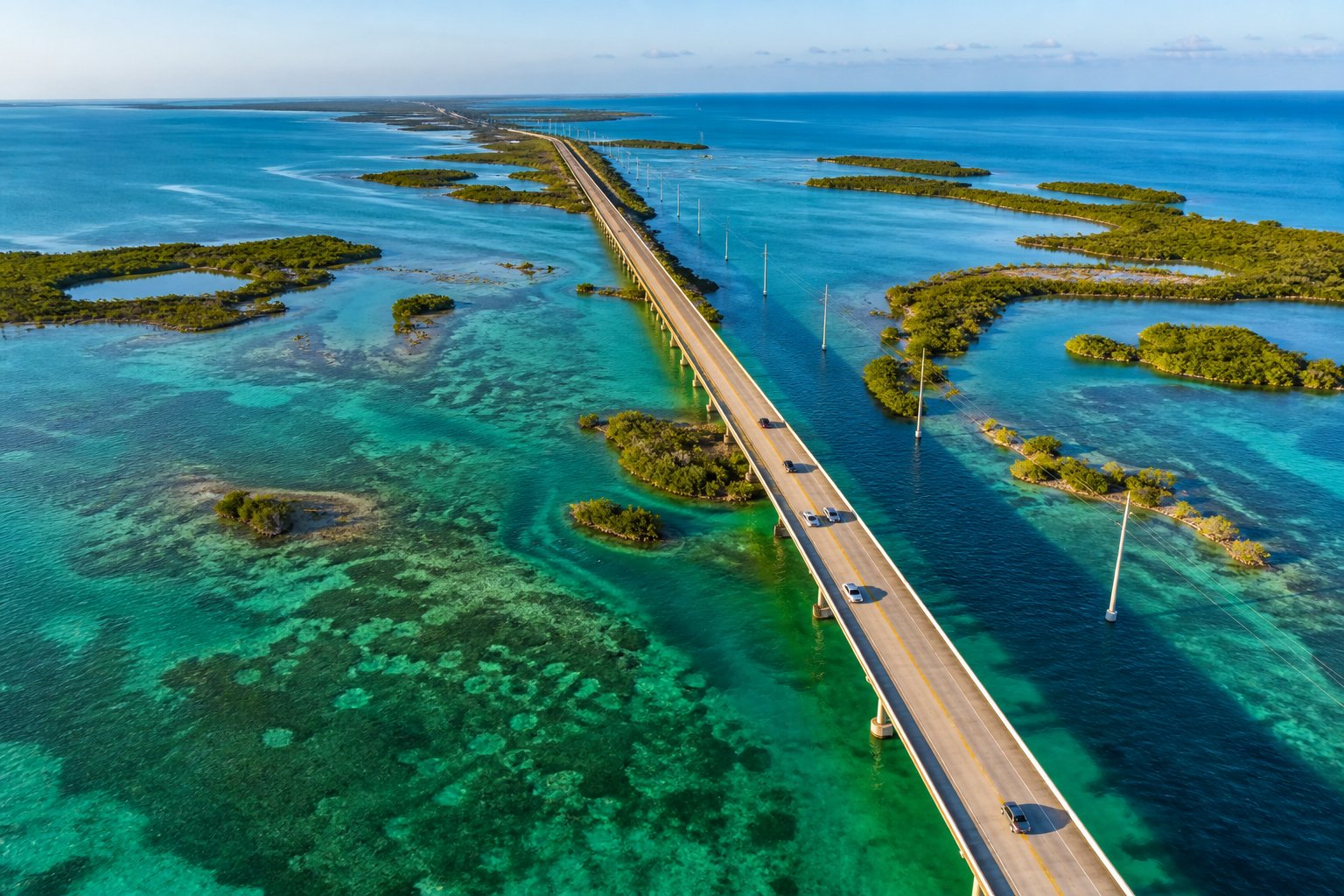
Few road moments in America match crossing the Seven Mile Bridge. The water opens up on both sides, the horizon flattens out, and on a clear day the color gradients from aquamarine to deep blue are almost unreasonably photogenic. Golden hour — the hour after sunrise or before sunset — intensifies everything, turning the water surface into something close to hammered copper. Secure your hat before you get out of the car; the wind on the bridge and at the pedestrian access points is consistent and has claimed many a baseball cap.
Safety Notes
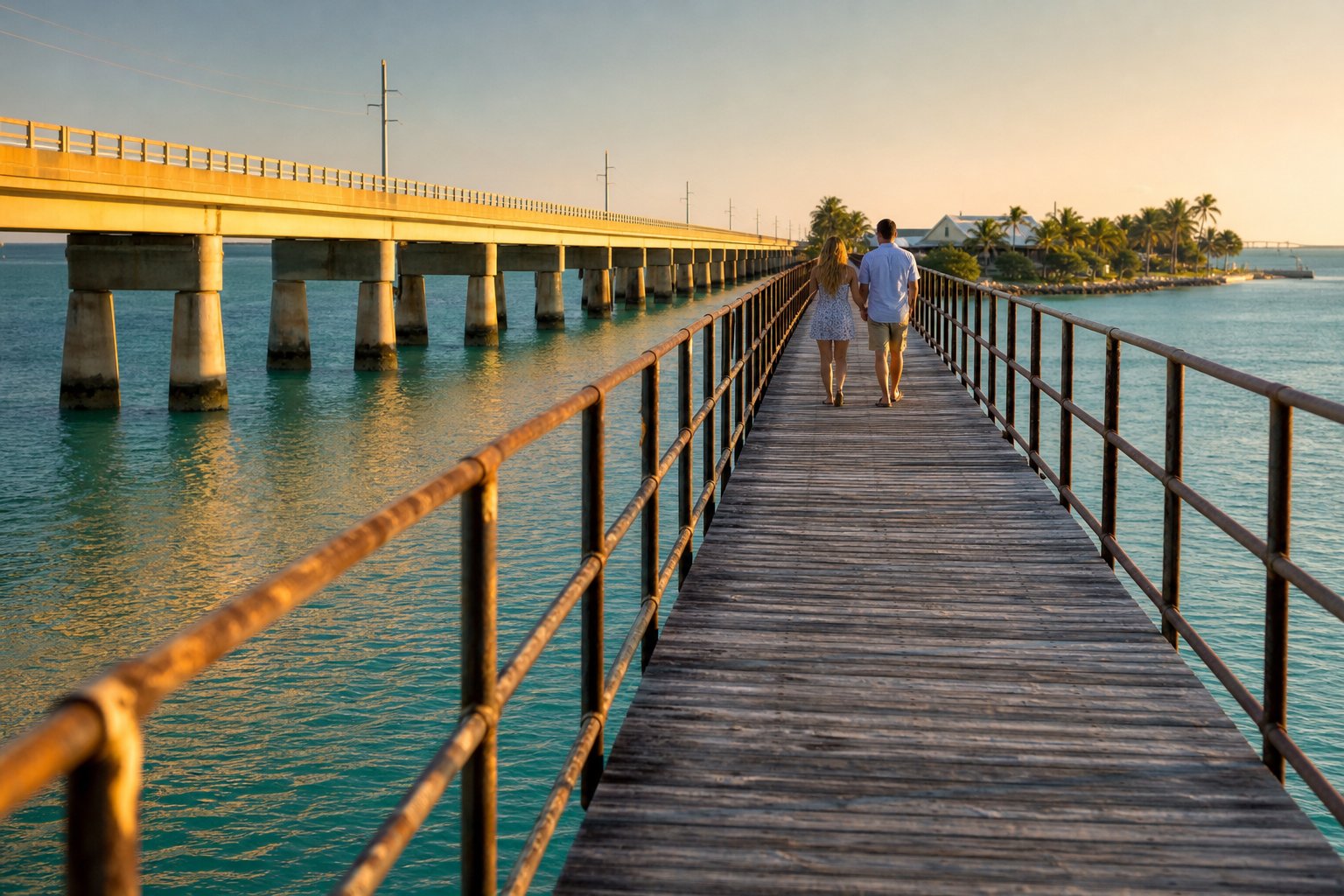
There is no safe shoulder stopping on the new bridge. Full stop. Use the designated parking areas near MM 47 to access the old Seven Mile Bridge pedestrian span, which stretches toward Pigeon Key — a small historic island that served as a work camp during Flagler's railroad construction. The views from the old span are among the best along the entire Overseas Highway. Check Pigeon Key's museum hours before you go if you're planning to visit the island itself; ferry access runs on a limited schedule.
6. Bahia Honda State Park (MM 37–33): Beaches and Bridge Lookouts
Best Beaches
Bahia Honda is, by most measures, the best beach stop on the entire drive. Calusa Beach on the bayside and Loggerhead Beach on the Atlantic side both offer fine sand — genuinely fine, not the rocky or weedy shoreline you find at many Keys beaches — along with clear, swimmable water and dramatic views of the old Bahia Honda Bridge spanning the channel overhead.
That bridge is worth lingering under and looking up at. The original railroad bridge structure is still partly intact, and the contrast between the rusted iron trestles and the turquoise water below it is one of the signature images of a Keys road trip. Snorkeling is possible directly from shore on calm days, but check the flags and current conditions with the park rangers before you wade in — the channel sees real tidal movement. Parking fills fast, often by mid-morning on winter weekends. Arrive before 9 a.m. or wait until mid-afternoon when day-trippers start to leave.
7. Big Pine and the Lower Keys (MM 33–10): Key Deer and Quiet Flats
Wildlife Etiquette
The Lower Keys feel different. Traffic thins, the landscape gets quieter, and the roadside shifts from commercial strip to something approaching wilderness. This is Key deer country — the National Key Deer Refuge protects the only habitat on earth for this miniature subspecies of white-tailed deer, which stand about two feet tall and have absolutely no instinct to avoid cars. Drive slowly at dawn and dusk. The posted speed limits through Big Pine are enforced, and for good reason: deer deaths spike whenever visitors treat US-1 like a highway rather than a neighborhood road.
Stop at the National Key Deer Refuge Visitor Center at MM 30.2 for maps and a quick orientation to what you're looking at. A short drive from there, Blue Hole at MM 30.5 is a former quarry that now fills with freshwater — the only freshwater lake in the Keys — and supports a small population of American alligators along with herons, anhingas, and the occasional Key deer coming down to drink. It's a ten-minute stop that punches well above its weight.
Before you push south, consider the detour to No Name Pub on No Name Key — reached via a series of small bridges off Big Pine. It's a genuinely eccentric slice of old Keys culture, the walls papered with signed dollar bills accumulated over decades, and the pizza is better than it has any right to be in a place this remote.
8. Where to Break the Trip Overnight: Best Bases by MM
One-Night Plan
If you're splitting the drive across two days, Islamorada around MM 80 is the sweet spot. You get access to the best dining corridor in the Keys, easy sandbar and charter access in the morning, and enough boutique lodging options that you don't have to settle for a chain motel. Alternatively, anchor at Key Largo near MM 100 for a shorter first day — it puts you perfectly positioned for a morning reef snorkel at Pennekamp before continuing south.
Two-Night Plan
Two nights lets you breathe. Spend the first in Islamorada and the second in Marathon around MM 50, which works especially well for families — Sombrero Beach, the Turtle Hospital, and Keys Fisheries are all within a few minutes of each other. If solitude is the goal, Big Pine or Bahia Honda in the MM 37–30 range offers a genuinely quiet nature base, though rooms are limited and book out far in advance, particularly during winter season (December through April) and around lobster mini-season in late July. Don't wait until a month out to make reservations anywhere in the Keys during peak periods.
9. Rolling into Key West (MM 4–0): Final Stops and Parking
Arrival Tips
Key West arrives gradually — a causeway, a few traffic lights, and then suddenly you're in a city. Before you surrender to Duval Street, pull over at Higgs Beach and the White Street Pier on the Atlantic side. It's a low-key stretch of lawn and ocean where locals walk dogs and watch pelicans, and it gives you a moment to exhale after the drive. The pier extends out over clear water and frames a clean shot of the Atlantic without a crowd in it.
For sunset, Mallory Square is the famous destination — street performers, food carts, and a communal ritual of watching the sun drop into the Gulf of Mexico that has been going on here for decades. Arrive 60 to 90 minutes early if you want a decent position near the waterfront; it fills up, and the energy builds gradually rather than all at once.
The smartest move for the rest of your stay is to ditch the car early. The Park N Ride Old Town Garage near the intersection of Grinnell and Angela Streets gives you a central base from which to walk almost everywhere worth going: the Hemingway Home on Whitehead Street, Fort Zachary Taylor with its Civil War-era fortifications and the best swimming beach in Key West, and the length of Duval Street itself. Key West is a walking city. The Overseas Highway got you here — now leave the car behind and finish the trip on foot.
Frequently asked questions
What time should I leave Miami for the Florida Keys to avoid traffic?
Leaving Miami at 6:30–7:00 a.m. puts you ahead of the US-1 backups through Homestead and helps you snag early parking at Bahia Honda and John Pennekamp. Fridays and holiday weekends can turn the stretch from Florida City to Key Largo into a crawl, so if possible aim for a Tuesday or Wednesday departure.
How long is the drive from Miami to Key West without stops?
Miami to Key West takes about 3.5 to 4 hours on a clear weekday morning without stops. If you plan to sightsee, budget a full day or even two, and top off gas in Florida City or Homestead as prices rise farther south.
What time do snorkel tours at John Pennekamp State Park leave?
Snorkel tours typically depart at 9 a.m. and noon from John Pennekamp Coral Reef State Park at MM 102.5. Slots sell out on busy winter weekends, so call ahead or book online.
Where can I feed tarpon in Islamorada and what mile marker is it?
Robbie’s Marina at MM 77.5 is the spot to feed massive tarpon right from the dock. You can buy a bucket of baitfish for a few dollars, and the marina also has an artisan market, fishing charters, and kayak rentals.
How do I safely access the Old Seven Mile Bridge and Pigeon Key?
Use the designated parking areas near MM 47 to access the Old Seven Mile Bridge pedestrian span. There is no safe shoulder stopping on the new bridge, and if you plan to visit Pigeon Key, check museum hours because ferry access runs on a limited schedule.
Which beaches at Bahia Honda are best and when should I arrive for parking?
Calusa Beach (bayside) and Loggerhead Beach (Atlantic side) are the top picks at Bahia Honda for fine sand, clear water, and views of the old bridge. Parking often fills by mid-morning on winter weekends, so arrive before 9 a.m., and only snorkel from shore when conditions are calm after checking flags with rangers.